
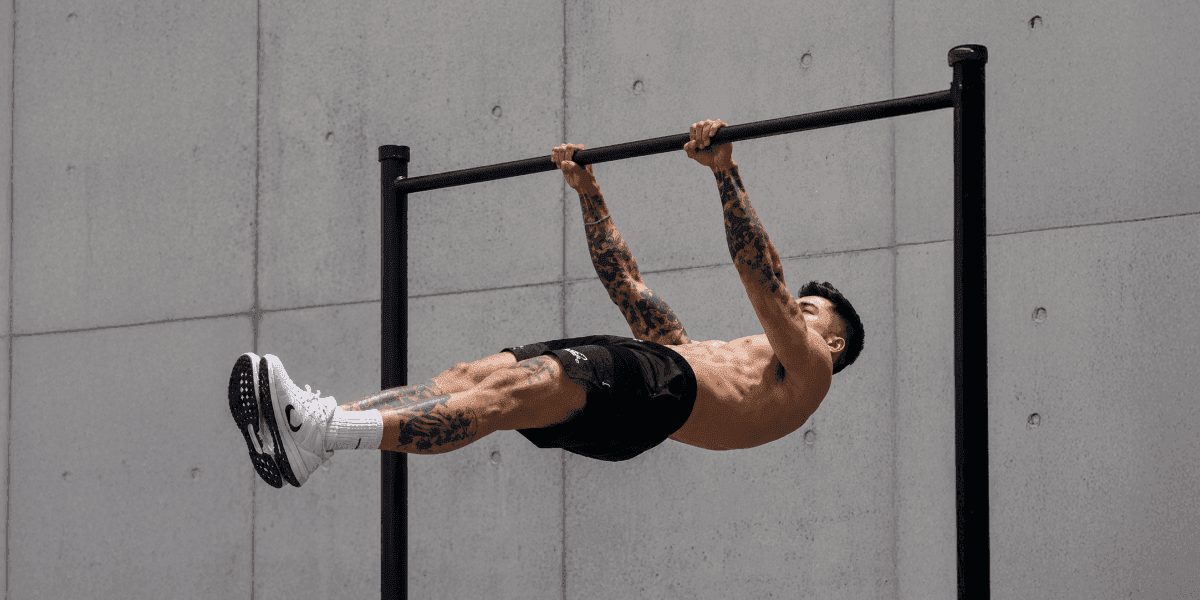
What Is Calisthenics? Definition and Etymology
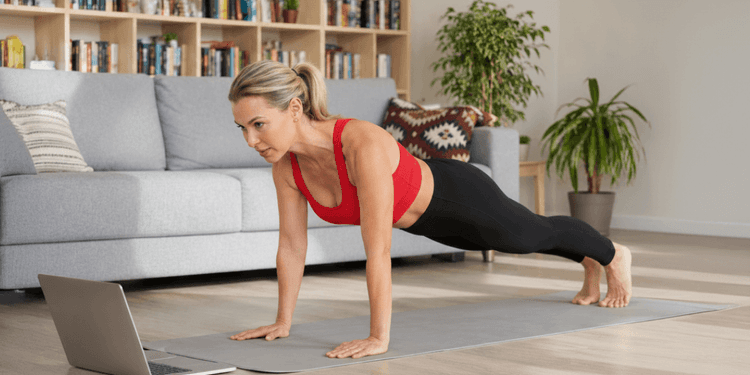
Calisthenics is a form of strength training that uses your own body weight as resistance. No barbells, machines, or gym membership required. Body weight exercises like push ups, squats, and planks form the foundation of every calisthenic routine. These compound movements train multiple muscle groups at once through natural patterns: pushing, pulling, squatting, and holding positions.
The word calisthenics comes from ancient Greek. It combines “kalos” (κάλλος), meaning beautiful, with “sthenos” (σθένος), meaning strength. The literal translation is “beautiful strength,” which captures the grace and control that defines this training method.
People have practiced bodyweight exercises for thousands of years. Ancient Greek soldiers trained in gymnasia, public grounds where athletes exercised to build strength and agility. Spartan warriors used bodyweight drills to prepare for battle. In India, wrestlers performed dands and baithaks (traditional push ups and squats). Chinese Shaolin monks incorporated bodyweight training into martial arts practice.
Modern calisthenics evolved through military fitness programs in the 19th century, particularly in Sweden and the United States. The street workout movement that emerged in the 2000s brought calisthenics to parks and urban spaces worldwide, creating a global community of practitioners who train outdoors using bars, benches, and open ground.
Calisthenics exercises are among the most versatile strength training exercises available. You can build an entire calisthenics routine from just 5-6 movements. The core principle remains unchanged across centuries: using natural movement patterns to build functional fitness. Whether you perform a simple squat or an advanced front lever, you train your body to move efficiently through space using just your body weight.
What Are Calisthenics Exercises?
Calisthenics exercises fall into five main categories based on movement patterns. Each category of calisthenic exercises targets specific muscle groups while engaging your core muscles for stability. Understanding these calisthenic exercises helps you build a complete calisthenics workout that trains your entire body.
Push Exercises
Push exercises build your chest, shoulders, and triceps through horizontal and vertical pressing movements. The push up is the foundation, with dozens of variations that increase difficulty through leverage changes.
Push up progression ladder:
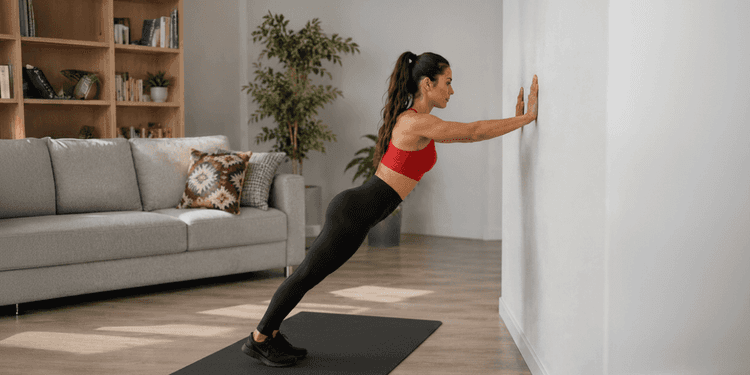
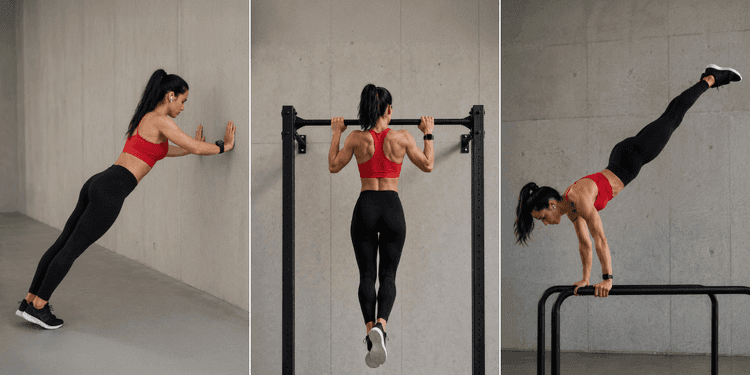
Wall push ups (beginner)
Incline push ups (hands elevated)
Knee push ups (modified)
Standard push ups (full body weight)
Decline push ups (feet elevated)
Diamond push ups (hands together)
Archer push ups (one-arm emphasis)
One-arm push ups (advanced)
Dip variations train the same muscles through a different angle:
Bench dips (feet on floor)
Parallel bar dips (feet hanging)
Ring dips (unstable surface, advanced)
For overhead pressing with just your body weight, pike push ups progress toward handstand push ups:
Pike push ups (hips elevated)
Elevated pike push ups (feet on box)
Wall handstand push ups (partial range)
Freestanding handstand push ups (advanced)
Pull Exercises
Pull exercises develop your back, biceps, and grip strength. The pull up bar is the most common tool, though you can perform rows using a table, rings, or any sturdy horizontal surface.
Pull up progression ladder:
Dead hang (grip strength only)
Scapular pull ups (shoulder engagement)
Negative pull ups (slow lowering)
Assisted pull ups (band or partner)
Standard pull ups (full)
Wide grip pull ups
Chin ups (palms facing you)
Archer pull ups (one-arm emphasis)
Muscle ups (dynamic transition over bar)
Row variations build back strength with adjustable difficulty:
Table rows (beginner)
Inverted rows (feet on floor)
Elevated feet rows (harder angle)
Ring rows (unstable surface)
These movements strengthen your upper body while developing the grip and core muscles needed for advanced skills.
Leg and Lower Body Exercises
Lower body calisthenics training builds your quadriceps, hamstrings, glutes, and calves. Bodyweight squats form the foundation, progressing toward single-leg variations that demand serious strength and balance.
Squat progression ladder:
Assisted squat (holding support)
Bodyweight squats (standard)
Pause squats (hold at bottom)
Jump squats (explosive)
Bulgarian split squats (rear foot elevated)
Shrimp squats (leg behind body)
Pistol squats (single-leg, advanced)
Lunge variations train each leg independently:
Forward lunges
Reverse lunges
Walking lunges
Lateral lunges (side-to-side)
Bulgarian split lunges
Additional lower body work includes calf raises, glute bridges, Nordic curls, and plyometric movements like box jumps. Single-leg exercises develop balance while addressing strength imbalances between legs.
Core and Stabilization Exercises
Core exercises build the abdominal muscles, obliques, and deep stabilizers that support every other movement. A strong core transfers force between your upper body and lower body efficiently.
Plank progression ladder:
Forearm plank (beginner)
Standard plank (hands)
Side plank (lateral stability)
Single-arm plank
Hollow body hold (gymnastics foundation)
Advanced core holds:
L-sit (legs extended horizontal)
Tuck front lever (progression)
Front lever (horizontal body, face up)
Dragon flag (advanced control)
Dynamic core movements add variety:
Mountain climbers (cardio integration)
Leg raises (lying or hanging)
Dead bugs (coordination)
Windshield wipers (rotational control)
These exercises create the core stability required for advanced calisthenics skills like handstands and levers.
Full-Body Integration Exercises
Full body calisthenics workout movements combine multiple patterns in single exercises. These build cardiovascular conditioning alongside strength.
Burpees combine a squat, push up, and jump in one fluid movement. These full body exercises are among the most effective exercises in calisthenics. When you perform full body exercises like burpees, you train strength and cardio simultaneously. Variations include:
Standard burpees
Burpee pull ups (adding a pull up at top)
Burpee box jumps
Single-leg burpees
Locomotion patterns train coordination and full body strength:
Bear crawls (quadruped forward movement)
Crab walks (face up, backward movement)
Inchworms (walking hands out and back)
Complex movements like muscle ups combine pulling and pushing into one skill. Sport-specific drills integrate calisthenics exercises with movement quality for athletic performance.
What Is Calisthenics Good For? Science-Backed Benefits
Builds Strength and Muscle Mass
Research shows calisthenics builds muscle strength and mass comparable to weight training for beginners and intermediate athletes. A study on progressive push up training found significant increases in muscle thickness and strength over weeks of consistent practice.
Progressive overload through leverage changes drives continuous adaptation. When standard push ups become easy, decline push ups increase difficulty. When those become manageable, archer push ups create greater challenge. This progression provides years of strength development using just your body weight.
The compound nature of calisthenics exercises engages multiple muscle groups simultaneously. A single pull up trains your back, biceps, forearms, and core muscles together. This efficient approach builds functional strength that transfers directly to everyday tasks and athletic performance.
Improves Cardiovascular Health
Circuit-style bodyweight training with minimal rest elevates heart rate for aerobic benefits comparable to treadmill exercise. An 8-week study on older adults with metabolic syndrome using calisthenics-based high-intensity interval training found remarkable results.
Participants trained three 40-minute sessions per week with no equipment. The study showed significant reductions in systolic and diastolic blood pressure, improved glucose and lipid profiles, and better insulin resistance. The MetS-Z score (a measure of metabolic syndrome severity) dropped by 84%, from approximately 1.59 to 0.26.
Research on patients with dyslipidemia found that combining aerobic exercise with calisthenic exercises improved LDL cholesterol, HbA1c (a blood glucose marker), VO2peak, and metabolic equivalents (METmax) compared to aerobic exercise alone. This suggests calisthenics adds cardiovascular benefits beyond standard cardio.
Enhances Flexibility and Mobility
A 2015 study showed calisthenics training significantly improved flexibility in elderly adults over 12 months of consistent practice. Full range of motion movements like deep squats, hanging, and bridge work maintain and enhance joint mobility.
Many calisthenics exercises demand complete range of motion at multiple joints. A full squat requires ankle, knee, and hip mobility. Pull ups require shoulder mobility and scapular control. This natural stretching through movement maintains joint health better than static flexibility work alone.
The emphasis on movement quality in calisthenics training helps identify and correct mobility limitations. Restricted movement becomes obvious when attempting exercises that require full range, guiding practitioners toward targeted flexibility work.
Supports Mental Health and Cognitive Function
Exercise including resistance training increases BDNF (brain-derived neurotrophic factor) production, which enhances learning by 20% post-workout. Regular physical activity through calisthenics reduces anxiety, improves mood, and builds confidence through progressive skill mastery.
The goal-oriented nature of calisthenics provides clear milestones. Achieving your first pull up, holding a handstand, or completing a muscle up creates measurable progress that builds self-efficacy. Each new skill demonstrates capability and encourages continued practice.
Training outdoors in parks and natural settings adds environmental benefits. Sunlight exposure, fresh air, and community connection through street workout culture contribute to mental wellbeing beyond the physical exercise itself.
Improves Body Composition
Calisthenics works to burn calories through compound movements that demand full body energy. Combined with proper nutrition, bodyweight training builds lean muscle while reducing body fat percentage.
The metabolic cost of compound exercises exceeds isolated movements. A burpee engages more muscle mass than a bicep curl, requiring more energy both during and after the workout. This elevated metabolism continues post-exercise as your body recovers and builds muscle.
Body recomposition happens when you simultaneously gain muscle and lose fat. Calisthenics facilitates this transformation even when scale weight stays constant. You may weigh the same but look completely different due to changes in muscle mass and body composition.
Accessibility and Cost-Effectiveness
The most significant benefit of calisthenics is accessibility. No gym membership required. No major training equipment to purchase. No commute to a fitness facility. You can train anywhere with floor space: living room, hotel room, park, backyard, office.
This accessibility removes every barrier to consistent exercise. Bad weather? Train indoors. Traveling? Hotel room workout. Tight schedule? Twenty minutes at home. The zero-setup nature of bodyweight exercises makes it impossible to excuse skipping a session.
The financial benefit compounds over years. Gym memberships cost hundreds annually. Home gym equipment costs thousands. Calisthenics costs nothing beyond perhaps a pull up bar and yoga mat. This makes physical fitness accessible to anyone regardless of economic circumstances.
How Does Calisthenics Work?
Calisthenics works through progressive overload achieved by manipulating leverage instead of adding external weights. When you change body position, you change difficulty. A wall push up supports most of your body weight through your legs. A standard push up supports more through your arms. A decline push up with feet elevated shifts even more weight forward.
This leverage-based progression provides continuous challenge for years. Consider the push up: from wall to incline to standard to decline to diamond to archer to one-arm. Each step increases the percentage of body weight supported by fewer points of contact or worse mechanical advantage.
Compound movement patterns engage multiple muscle groups simultaneously. A pull up requires your lats, rhomboids, biceps, forearms, and core muscles to work together. A squat engages quads, hamstrings, glutes, and core. This integration trains your body to function as a coordinated unit rather than isolated parts.
Neuromuscular adaptation occurs as your nervous system learns efficient movement patterns. Early strength gains come primarily from better muscle recruitment and coordination. Your muscles fire more completely and in better sequence. This neural efficiency precedes visible muscle growth.
The scalable difficulty of calisthenics ensures you never outgrow the training method. When standard exercises become easy:
Change leverage (elevate feet, narrow hand position)
Add tempo manipulation (slow negatives, pauses)
Increase volume (more reps, more sets)
Progress to harder variations (single-limb versions)
Add static holds (pause at difficult positions)
Each calisthenics exercise integrates strength, balance, coordination, and flexibility. Holding a handstand requires shoulder strength, core stability, balance, and wrist mobility simultaneously. This comprehensive stimulus creates well-rounded physical fitness rather than isolated strength.
Types of Calisthenics Training
Basic Foundational Calisthenics
Basic calisthenics focuses on mastering fundamental movement patterns with proper form. This is where every fitness journey begins, regardless of goals.
Foundational exercises include:
Push ups (starting at appropriate difficulty)
Bodyweight squats
Planks and hollow body holds
Inverted rows or assisted pull ups
Lunges
Dips (bench or parallel bar)
The emphasis at this stage is movement quality over intensity. Learning proper positioning prevents injury and builds patterns for advanced work. Most people benefit from 3 sessions per week, 20-30 minutes each, focusing on 5-6 exercises with perfect form.
This base-building phase typically lasts 2-3 months for complete beginners. During this time, you develop the strength training foundation, joint integrity, and body awareness needed for progressive advancement.
Street Workout and Urban Calisthenics
Street workout is urban calisthenics performed on outdoor equipment: pull up bars, parallel bars, benches, and park structures. It emphasizes dynamic movements, bar combinations, and freestyle flow.
The street workout culture creates community around training. Parks become meeting places where practitioners share skills, spot each other, and push collective progress. This social aspect keeps training enjoyable and consistent.
Competitive street workout includes freestyle events where athletes perform choreographed routines judged on difficulty, execution, and style. Organizations like the World Street Workout & Calisthenics Federation (WSWCF) and World Calisthenics Organization (WCO) hold international championships.
Street workout style often incorporates:
Dynamic bar transitions
Swing movements
Combinations of skills
Creative expression through movement
Music-coordinated routines
Skill-Based and Advanced Calisthenics
Skill-based calisthenics focuses on mastering specific holds and movements that require exceptional strength and control.
Static holds:
Handstands (freestanding balance)
Planche (horizontal body, face down)
Front lever (horizontal body, face up)
Back lever (horizontal body, face down, arms behind)
Human flag (lateral hold on vertical pole)
Dynamic skills:
Muscle ups (pulling over the bar in one movement)
Handstand push ups (pressing while inverted)
One-arm pull ups
Clapping pull ups
These skills require dedicated practice over months to years. The front lever might take 6-12 months of focused training. A full planche could require several years of progressive work through tuck, advanced tuck, straddle, and full positions.
The journey toward these skills builds tremendous strength along the way. Someone working toward a front lever develops exceptional pulling strength through all the progressive variations, regardless of whether they achieve the final position.
Military and Tactical Calisthenics
Military calisthenics combines high-intensity bodyweight training with cardiovascular conditioning for functional combat readiness. This style prioritizes durability, mental toughness, and real-world applicable fitness.
Training typically includes:
High-volume push ups and pull ups
Bodyweight circuits with minimal rest
Running and plyometric integration
Loaded carries using body weight
Partner exercises and group drills
The MadMuscles app includes a Military Calisthenics program designed around these principles. Learn more about the Military Calisthenics program
This approach builds muscular endurance alongside strength. The ability to perform high repetitions under fatigue translates to sustained performance in demanding situations.
Rehabilitative and Adaptive Calisthenics
Adaptive calisthenics modifies exercises for seniors, people with limited mobility, and those in physical therapy or rehabilitation.
Modifications include:
Chair-based exercises (seated squats, chair dips)
Wall-supported movements (wall push ups, wall sits)
Reduced range of motion variations
Assisted versions using bands or supports
Balance-focused progressions
Physical therapy applications use bodyweight exercises for controlled loading during injury recovery. The scalable nature of calisthenics makes it possible to find an appropriate starting point for nearly any physical condition.
For older adults, calisthenics maintains functional capacity for everyday tasks: standing from a chair (squat pattern), reaching overhead (shoulder mobility), walking up stairs (single-leg strength). These practical applications make bodyweight training particularly valuable for aging populations.
How to Perform Key Calisthenics Exercises
Proper form separates effective exercises from wasted effort. Here is how to perform the most important calisthenics movements correctly.
Push Ups
Start in a plank position with hands shoulder width apart, slightly wider than your shoulders. Keep your body in a straight line from head to heels. Lower your chest toward the floor with a slight bend in your elbows, keeping them at a 45-degree angle. Push back to the starting position. This movement targets your chest, shoulder muscles, and triceps. Beginners can start with hands on a wall or elevated surface to reduce difficulty.
Bodyweight Squats
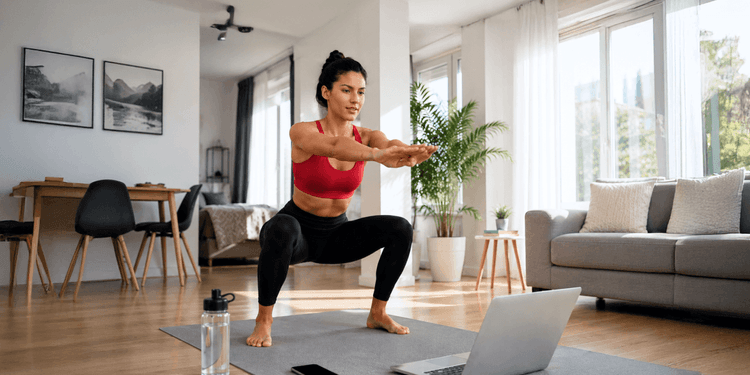
Stand in an upright standing position with feet shoulder width apart. Push your hips back and bend your knees, lowering until your thighs are parallel to the floor. Keep your chest up, knees tracking over your toes, and weight on your heels with feet flat on the floor. Drive through your feet to return to the starting position. Squats build strength in your quads, glutes, and hamstrings.
Pull Ups
Grip the bar with hands slightly wider than shoulder width apart, palms facing away from you. Hang with arms fully extended. Pull your body upward until your chin clears the bar. Lower with control to the starting position. To perform pull ups when you cannot yet do a full rep, use a resistance band looped over the bar for assistance, or practice slow negatives: jump to the top and lower yourself over 3-5 seconds. Pull ups build strength in your back, biceps, and grip.
Plank
Start on your forearms with elbows directly below your shoulders. Extend your legs behind you with feet together. Engage your abdominal muscles and hold your body in a straight line. Do not let your hips sag or pike upward. Focus on bracing your core as if someone were about to push you. Planks develop core stability that supports every other calisthenics exercise.
Lunges
From a standing position, step forward with one foot. Lower your body until both knees form 90-degree angles. Your left knee and right knee should both bend with control. Keep your torso upright and feet flat on the ground for the front foot. Push through your front heel to return to the starting position. Alternate legs each rep. Lunges build strength in your quads, glutes, and improve single-leg balance.
L-Sit
Sit on the floor with legs forward and straight. Place your hands beside your hips with fingers pointing forward. Press down through your palms and lift your entire body off the ground with knees bent initially. As you build strength, extend your legs forward until they are parallel to the floor. The L-sit targets your abdominal muscles, hip flexors, and triceps. It is one of the most challenging calisthenics exercises for core strength.
Dips
Grip parallel bars or place your hands on a sturdy bench behind you. Start with arms straight in the starting position. Lower your body by bending your elbows until your upper arms are parallel to the floor. Keep a slight bend forward at the torso for chest emphasis, or stay upright for tricep focus. Press back to the starting position. Dips develop your chest, shoulder muscles, and triceps.
Calisthenics vs Weight Training: Key Differences
Understanding the differences helps you choose the right approach for your goals. Neither method is universally superior; each offers distinct advantages.
Progressive Overload Method
Weight training: Add plates to the bar. Simple, measurable, linear progression. Calisthenics: Change leverage, angle, tempo, or variation. More complex but equally effective.
Equipment and Accessibility
Weight training: Requires gym access or expensive home equipment. Free weights, barbells, machines cost hundreds to thousands of dollars. Calisthenics: Requires little or no equipment. A pull up bar and yoga mat cover most needs. Can train anywhere.
Movement Patterns
Weight training: Can isolate specific muscles. Easier to target weak points. More controlled loading. Calisthenics: Compound movements predominate. Trains multiple muscles together. Greater balance and coordination demands.
Injury Risk
Weight training: External weight creates greater joint loading. Form breakdown under heavy load can cause acute injury. Calisthenics: Body weight provides natural load limit. Advanced skills (planche, human flag) carry risk if progression is rushed.
Cost Analysis
Weight training: Gym membership ($300-600 annually) or home gym ($1,000-5,000). Ongoing costs. Calisthenics: One-time purchase of pull up bar ($30-100). Optional gymnastic rings ($30-50). Gymnastic rings are the single most versatile piece of calisthenics equipment you can own. Nearly free long-term.
When to Choose Each
Choose calisthenics if you value accessibility, want to train anywhere, prefer bodyweight control, or have budget constraints. Choose weight training if maximal absolute strength is the goal, you want easier progressive overload tracking, or you prefer gym environment. Choose both if you want comprehensive fitness. Many athletes use calisthenics for upper body and skill work while adding weight training for lower body strength.
For beginners, research shows calisthenics and weight training produce similar gains in upper body strength over 8 weeks when training to failure with progressive overload. The best program is one you will actually follow consistently.
Common Questions About Calisthenics Answered
Is Calisthenics a Sport?
Yes, competitive calisthenics exists as a recognized sport discipline. The World Street Workout & Calisthenics Federation and World Calisthenics Organization organize international championships.
Competition categories include:
Freestyle (choreographed routines judged on difficulty, execution, style)
Strength competitions (maximum reps or static hold duration)
Team events
Judging criteria typically evaluate:
Technical difficulty of skills performed
Execution quality and control
Transitions between movements
Creativity and style
Overall routine composition
The sport continues growing worldwide, with national federations in dozens of countries. While not yet an Olympic event, competitive calisthenics has established formal rule sets and professional-level athletes.
What Does Calisthenics Do to Your Body?
Regular calisthenics training produces multiple physical adaptations:
Muscular changes:
Increased muscle mass (hypertrophy)
Greater muscle strength
Improved muscular endurance
Better muscle definition
Structural changes:
Improved posture (stronger postural muscles)
Increased bone density (from weight-bearing exercise)
Stronger tendons and ligaments
Better joint stability
Functional improvements:
Enhanced balance and coordination
Improved flexibility and mobility
Greater body awareness (proprioception)
Better neuromuscular function
Cardiovascular and metabolic:
Lower resting heart rate
Improved cardiovascular system efficiency
Better blood pressure regulation
Enhanced metabolic health markers
These changes accumulate over months and years of consistent training, transforming body composition and physical capability.
Can You Build Muscle with Only Calisthenics?
Yes. Progressive overload through leverage changes, tempo manipulation, and volume increases drives muscle growth. Many athletes have built impressive physiques using only body weight exercises.
Research comparing muscle growth in calisthenics versus weight training shows comparable results for beginners and intermediates. Studies on progressive push up training demonstrate measurable increases in muscle thickness over weeks of consistent practice.
The principles of muscle growth remain constant regardless of resistance source:
Mechanical tension (muscles working against resistance)
Metabolic stress (the “burn” from accumulating byproducts)
Progressive overload (increasing challenge over time)
Calisthenics provides all three through advanced variations. However, limitations exist for advanced trainees:
Lower body loading becomes challenging at high strength levels
Maximal strength development may plateau without external weights
Very high strength-to-weight athletes may need weighted calisthenics
For most people, bodyweight training provides sufficient stimulus for significant muscle mass development.
How Long Until You See Results?
Strength improvements: 2-3 weeks. Early gains come from neural adaptation. Your nervous system learns to recruit muscles more efficiently before visible changes occur.
Visible body composition changes: 6-8 weeks with consistent training and appropriate nutrition. Muscle definition increases as you build lean tissue and reduce body fat.
First pull up achievement: 4-8 weeks for most beginners following a proper progression. Starting from dead hangs, progressing through negatives and assisted variations.
Skill achievements:
First muscle up: 3-6 months for those with solid pull up foundation
Freestanding handstand: 3-12 months depending on practice consistency
Front lever: 6-18 months of dedicated training
Planche: 1-3+ years for most practitioners
Results depend heavily on:
Training consistency (3-4 sessions per week minimum)
Proper progression (appropriate difficulty increases)
Recovery (sleep, nutrition, rest days)
Starting fitness level
Age and individual factors
How to Get Started with Calisthenics
Starting calisthenics requires no new exercise program signup fees or equipment purchases. You can begin today in your living room.
Beginner program structure:
3 sessions per week
20-30 minutes per session
5-6 foundational exercises
2-3 sets of each exercise
Rest 60-90 seconds between sets
Essential starting exercises:
Push ups (wall or incline version if needed): feet shoulder width apart, hands slightly wider than shoulder width, maintain a straight line from head to heels
Bodyweight squats: standing position, feet shoulder width apart, squat until thighs parallel to ground, knees bent tracking over toes
Planks: forearms on ground, maintain straight line from shoulders to ankles
Inverted rows (using table or low bar): lie under surface, pull chest to bar, lower with control
Lunges: step forward, lower until left knee nearly touches ground, push back to starting position
Dead hangs (if pull up bar available): hang with shoulder width grip, hold for time
Progression tracking:
Advance when current difficulty feels manageable for 3 sets of 10-12 reps (or 30+ seconds for holds). Move to the next variation in the progression ladder. Track workouts to ensure consistent challenge increases.
Common beginner mistakes:
Progressing too quickly (insufficient base building)
Neglecting warm-ups (increased injury risk)
Attempting advanced exercises prematurely
Inconsistent training schedule
Poor form prioritizing reps over quality
Check out beginner workout options
Using the MadMuscles App:
In the MadMuscles app, select Calisthenics as your workout type during the quiz. Choose your equipment level:
No equipment (floor exercises only)
Basic equipment (pull up bar, yoga mat)
Full equipment (bars, rings, dip station)
Learn about calisthenics equipment options in your plan
The app generates a personalized program with video demonstrations showing proper form. Automatic difficulty progression adjusts workouts based on your performance, ensuring appropriate challenge without manual calculation.
How to change your workout type
Conclusion
Calisthenics is strength training using your own body weight as resistance. From ancient Greek warriors to modern street workout athletes, the principles remain unchanged: push, pull, squat, hold, progress. This training method builds strength, muscle, and body control while requiring nothing but your body and floor space.
The scalability of calisthenics makes it accessible to everyone. Wall push ups welcome complete beginners. One-arm muscle ups challenge elite athletes. Every fitness level finds appropriate challenge within the same movement patterns. Progressive variations provide years of continuous development.
Scientific research confirms the effectiveness of bodyweight training. Studies show improvements in strength, cardiovascular health, metabolic markers, flexibility, and body composition. An 8-week calisthenics program reduced metabolic syndrome severity by 84% in older adults. Push up progressions build measurable muscle thickness. The evidence supports calisthenics as legitimate resistance training.
The accessibility advantage is transformative. No gym membership. No expensive equipment. No commute. Train in your living room, hotel, park, or backyard. This removes every barrier to consistent exercise, making physical fitness achievable for anyone willing to start.
The MadMuscles app offers personalized calisthenics programs based on your fitness level and available equipment. Select Calisthenics as your workout type, complete the quiz, and receive a customized exercise program with video demonstrations and automatic difficulty adaptation.
Learn about MadMuscles premium access
Explore MadMuscles guides and printable workouts
Start your fitness journey today. Find your starting position on each progression ladder. Master the basics with perfect form. Progress steadily through harder variations. Calisthenics works if you do.