
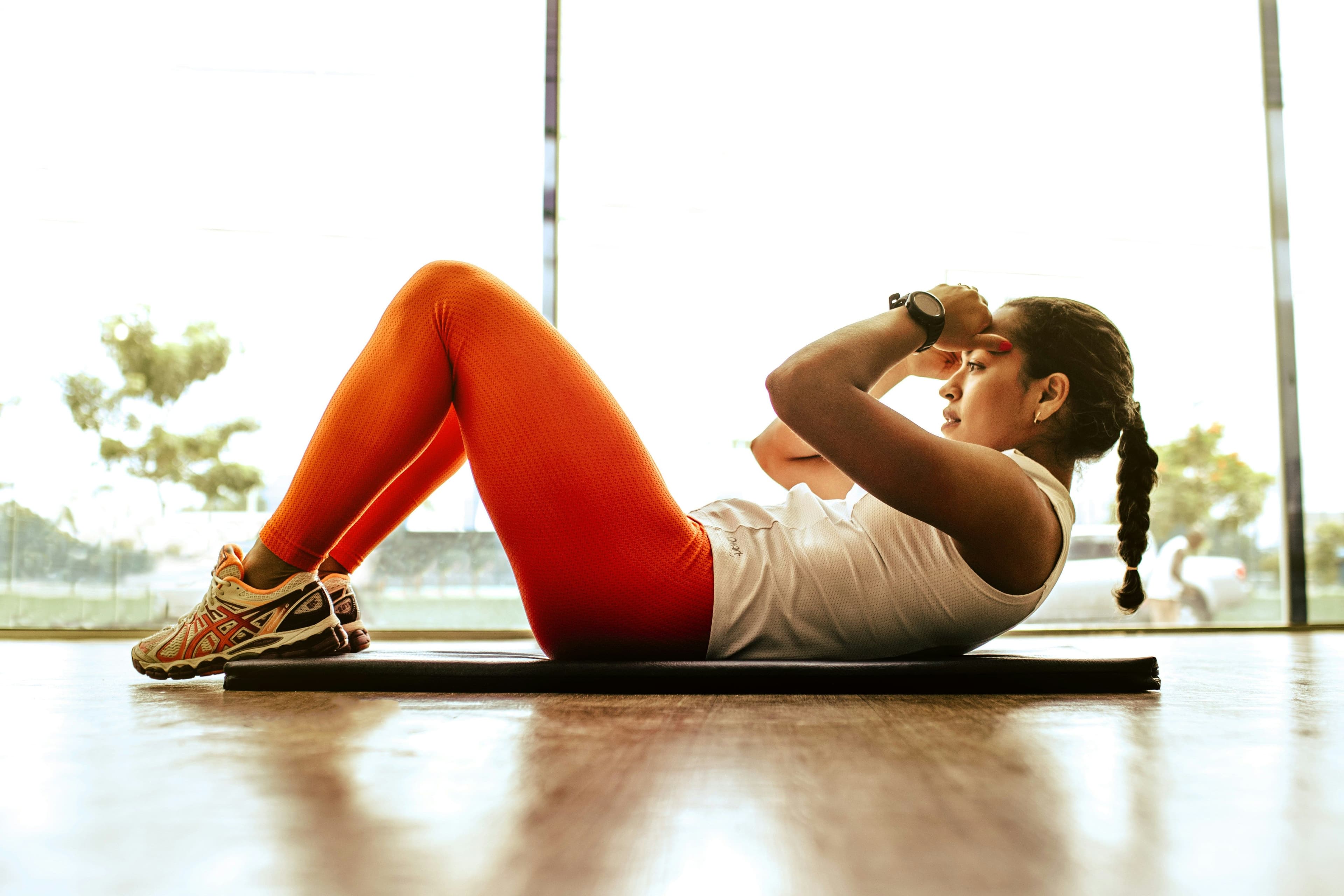
Why Calisthenics Is Perfect for Absolute Beginners
Calisthenics uses your body weight as resistance. You push, pull, squat, and hold your way to strength without touching a single dumbbell. The word comes from greek words meaning “beautiful strength,” and the training method delivers exactly that. Calisthenics exercises include push ups, squats, planks, rows, and dozens of variations that scale to any level.
For beginners, bodyweight training removes every barrier. No gym membership. No equipment costs. No intimidation from crowded weight rooms. You can start calisthenics in your bedroom tonight.
Every calisthenics exercise scales from very easy to very challenging through simple angle changes. Wall push ups become floor push ups. Assisted bodyweight squats become pistol squats. You control your progression based on your current fitness level. Adjust your current routine every 2-3 weeks as you get stronger.
Research shows bodyweight training builds muscle as effectively as weights for beginners. A Harvard Health study found that participants gained around 15% strength improvements from basic calisthenics exercises over 10 months. Your body provides enough resistance to stimulate muscle growth when you train consistently.
The injury risk stays lower because you control the load naturally. Unlike dropping a barbell on your chest, you can adjust your body position instantly if something feels wrong. Calisthenics training builds foundational strength through natural movement patterns you use in everyday life.
What You Need to Get Started (Almost Nothing)
Here is your complete equipment list:
Comfortable clothes that allow movement
Floor space roughly 6 feet by 6 feet
Optional: yoga mat for cushioning
That is everything. No pull ups bar. No weights. No resistance band. No parallel bars. This basic calisthenics workout uses only your body weight as resistance.
You can train in your living room, bedroom, hotel room, or backyard. The entire calisthenics workout routine fits wherever you are. Every calisthenics workout in this guide uses only your body weight.
In the MadMuscles app, select “no equipment” during the setup quiz and the app builds your calisthenics plan around bodyweight-only exercises. If you wonder why some calisthenics plans include equipment, that is for more advanced movements like pull ups or inverted rows.
Essential Warm Up Before Every Session (5 Minutes)
A proper warm up prevents injury and improves performance. Cold muscles and stiff joints lead to strain. Five minutes of dynamic movement prepares your body for the main workout.
Complete this sequence before every training session:
Jumping jacks: 30 seconds to raise your heart rate
Arm circles forward and backward: 30 seconds to loosen shoulder blades
Leg swings front to back: 30 seconds each leg for hip mobility
Hip circles: 30 seconds to prepare for squats and lunges
Bodyweight squats (light and controlled): 30 seconds to activate lower body
Wrist circles: 30 seconds to prepare for push ups and planks
Dynamic stretching works better than static stretching before strength training. Moving through range of motion warms up joints and activates muscles. Save static stretching for after your workout.
The 6 Essential Beginner Calisthenics Exercises (No Equipment)
These six exercises target multiple muscles across your entire body. You will work your upper body, lower body, and core in every session. Each movement includes progressions so you can start today regardless of your current strength.
1. Wall Push Ups (Chest, Shoulders, Arms)
Stand arm’s length from a wall. Place your hands flat on the wall at shoulder height, slightly wider than shoulder width. Your arms should be straight in the starting position.
Lower your chest toward the wall by bending your elbows. Keep your body in a straight line from head to heels. Push back to start with arms extended.
Why this works for beginners: the wall angle reduces the percentage of body weight you lift. As you build strength, move to a kitchen counter, then a sturdy chair, then incline push ups on a low surface, and finally floor push ups.
Target: 3 sets of 8-12 reps
2. Bodyweight Squats (Legs, Glutes)
Stand with feet shoulder width apart. Hold a sturdy chair or doorframe lightly for balance if needed. This is your starting position.
Lower your hips back and down until your thighs are parallel to the floor. Keep your chest up, knees tracking over your toes, and weight in your heels. Push through your heels to stand back up.
Progression: assisted squats → unassisted bodyweight squats → jump squats → eventually pistol squats
Target: 3 sets of 10-15 reps
3. Knee Push Up Plank (Core, Shoulders)
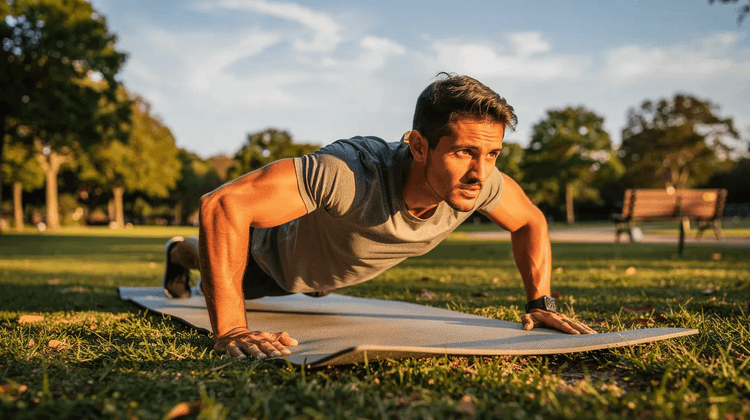
Start on all fours with hands below your shoulders. Walk your hands forward until your body forms a straight line from head to knees. Engage your core and hold this position.
Do not let your hips sag toward the floor or pike up toward the ceiling. Keep breathing throughout the hold. Focus on core control and maintaining good form. Planks develop the same hollow body tension used in advanced calisthenics skills.
Progression: knee plank → full plank on toes → plank with arm lifts → side plank variations
Target: 3 sets of 15-30 seconds
4. Glute Bridges (Glutes, Lower Back)
Lie on your back with knees bent and feet flat on the floor about hip width apart. Arms rest by your sides with palms down.
This lower body exercise targets your glutes and hamstrings. Push through your heels and lift your hips until your body forms a straight line from shoulders to knees. Squeeze your glutes hard at the top. Lower slowly with control.
Progression: two-leg bridges → single-leg glute bridges → elevated feet on a chair
Target: 3 sets of 10-15 reps
5. Modified Mountain Climbers (Core, Cardio)
Start in a full plank position with hands directly below shoulders and arms straight. Your body should form a straight line from head to heels.
Drive one knee toward your chest while keeping your hips level. Return that leg and drive the other knee forward. Move slowly and focus on core control rather than speed.
Progression: slow controlled movement → moderate pace → full speed mountain climbers
Target: 3 sets of 20 total (10 each leg)
6. Assisted Lunges (Legs, Balance)
Stand tall holding a chair or wall for balance support. Step forward with one foot into a lunge position.
Lower your back knee toward the floor while keeping your front knee aligned over your ankle. Push through your front heel to return to standing. Complete all reps on one side before switching.
Progression: assisted lunges → unassisted forward lunges → walking lunges → reverse lunges
Target: 3 sets of 6-8 each leg
Your 4-Week Beginner Progression Plan
This calisthenics workout routine uses progressive overload to build strength over four weeks. You will train 3 times a week with rest days between sessions. Rest days allow your muscles to recover and grow stronger.
Week 1-2: Foundation Phase
Day | Workout | Sets per Exercise | Rest Between Sets |
|---|---|---|---|
Monday | All 6 exercises | 2 | 90 seconds |
Wednesday | All 6 exercises | 2 | 90 seconds |
Friday | All 6 exercises | 2 | 90 seconds |
Focus entirely on learning movement patterns with good form. If you cannot complete 2 sets, do 1 set and build from there. A few reps with perfect technique beats many reps with sloppy form.
Do not rush. This phase builds the foundational strength and body control you need for harder progressions. Your muscles, tendons, and nervous system all need time to adapt.
Week 3-4: Building Phase
Day | Workout | Sets per Exercise | Rest Between Sets |
|---|---|---|---|
Monday | All 6 exercises | 3 | 60 seconds |
Wednesday | All 6 exercises | 3 | 60 seconds |
Friday | All 6 exercises | 3 | 60 seconds |
Add 2-3 reps per exercise compared to weeks 1-2. Begin moving to harder progressions where exercises feel easy with 2-3 reps in reserve.
The shorter rest periods increase workout intensity. Your heart rate will stay higher. This helps you lose weight while you build muscle. Check out more beginner workout options in the MadMuscles app.
How to Progress Beyond 4 Weeks
After completing the foundation program, you are ready for harder variations. Progress gradually to avoid overtraining and injury.
Here are your next steps for each exercise:
Wall push ups → incline push ups on a counter → incline push ups on a chair → floor push ups
Assisted squats → full bodyweight squats → jump squats → deeper range squats
Knee planks → full planks → plank shoulder taps → hollow body hold
Two-leg bridges → single-leg glute bridges → elevated single-leg bridges
Slow mountain climbers → moderate pace → full speed climbers
Assisted lunges → unassisted lunges → walking lunges → reverse lunges
When should you advance? When you can complete all sets and reps with perfect form and feel like you could do 2-3 more reps. This typically happens every 2-3 weeks.
For structured progression, the MadMuscles app adjusts your exercise difficulty automatically based on how you rate each session. You can change your workout type as you progress from beginner friendly exercises to more advanced movements.
Calisthenics Skills You Will Build Toward
Once you master the beginner calisthenics exercises in this guide, a world of impressive bodyweight skills opens up. Here is what your progression path looks like over the coming months.
Pull Ups and Upper Body Pulling
Pull ups are a foundational calisthenics goal. Start with inverted rows using a table, then progress to negative pull ups (jump to the top, lower slowly for 3-5 seconds). A resistance band looped over the bar provides assistance during your first full pull ups. Once you can do 8-10 pull ups, advance to archer pull ups, ring rows on gymnastic rings, and eventually muscle ups. Building grip strength through dead hangs (3 sets of 20-30 seconds) accelerates your pull up progress.
Handstand Progressions
The handstand develops shoulder strength, core strength, and total body control. Begin with wall-supported handstand holds facing the wall. Place your hands shoulder-width apart, walk your feet up the wall, and hold with arms extended overhead. Start with 3 sets of 10-15 seconds. Progress to freestanding handstand holds over several months. Handstand push ups against the wall build serious upper body pressing power that no other calisthenics exercise matches.
L-Sit and Core Skills
The l sit is one of the most effective core exercises in calisthenics. Sit on the floor with straight legs in front of you. Place your hands beside your hips and lift your entire body off the ground with legs fully extended. Begin with a tucked version where your knees are bent. As your core strength improves, extend your legs fully until you hold the full l sit position. The hollow body hold builds the tension needed for the l sit: lie on your back with arms extended overhead and legs straight, then lift your shoulders and feet off the ground. Hold the hollow body hold for 20-30 seconds, building to 60 seconds over time.
Muscle Ups and Advanced Movements
Muscle ups combine a pull up with a dip in one explosive movement. They require both pulling and pushing strength plus technique. Most beginners reach their first muscle ups after 6-12 months of consistent calisthenics training. The path goes: pull ups → explosive pull ups (chest to bar) → transition practice → full muscle ups. Each specific skill in calisthenics builds on the foundations you develop in this beginner program.
Common Beginner Mistakes to Avoid
Learning from others’ errors saves you time and injury. Here are the mistakes that hold most beginners back:
Skipping the warm up. Cold muscles tear more easily. Five minutes of dynamic movement protects your joints and improves performance.
Holding your breath. Breathe continuously during every exercise. Exhale on the effort, inhale on the release.
Rushing through reps. Slower movement creates more time under tension and builds more strength. Control the movement through full range of motion.
Training every day without rest days. Muscles grow during recovery, not during exercise. Take at least one full day off between calisthenics training sessions.
Expecting results too quickly. Strength improvements appear in 2-3 weeks. Even basic movements like jumping jacks and bodyweight squats will feel noticeably easier after the first two weeks. Visible changes take 6-8 weeks of consistent practice with proper nutrition.
Comparing yourself to advanced athlete content online. People doing muscle ups, front levers, handstand holds, and l sit movements have trained for years. You will get there through consistent practice. Everyone who can do a muscle up had to start calisthenics with the same basic exercises you are learning now.
Trying advanced movements too early. Master basic skills before attempting skill training like handstands or advanced progressions. Foundational strength prevents injury and makes skill training safer when you are ready for it.
Basic Nutrition for Recovery
Your muscles need fuel to grow. Training breaks muscle fibers down. Nutrition and sleep build them back stronger.
Protein: Aim for 1.6 grams per kilogram of body weight daily. For a 70kg person, that means roughly 112 grams spread across meals. Protein drives muscle growth and recovery.
Water: Drink 2-3 liters daily. More if you sweat heavily. Dehydration impairs strength and recovery.
Meal timing: Eat a light meal 1-2 hours before training. A mix of protein and carbohydrates provides energy without making you sluggish.
Sleep: Get 7-9 hours per night. Sleep is when your body releases growth hormone and repairs muscle tissue.
Carbohydrates: Roughly 3-5 grams per kilogram of body weight on training days. Carbs fuel your workouts and aid recovery.
The MadMuscles app includes personalized meal plans that complement your calisthenics training.
Start Your Calisthenics Journey Today
You do not need a gym, equipment, or prior experience to build strength. This 6-exercise, 3-day calisthenics workout routine targets your entire body using movements you can do in your living room.
Start with week 1 today. Focus on learning proper form. Progress at your own pace. Within four weeks, you will feel stronger, move better, and understand the basics of bodyweight training.
Beyond this program, the MadMuscles app offers personalized calisthenics programs that match your fitness level, track your progress, and provide video demonstrations for every exercise. For a glimpse of where calisthenics training can take you, explore military-style calisthenics programs once you master these basic skills.
Your body is the only equipment you need. Start moving.