
What Is Chair Yoga
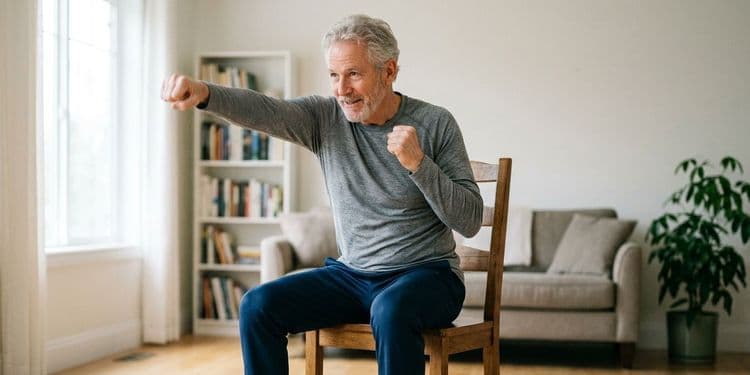
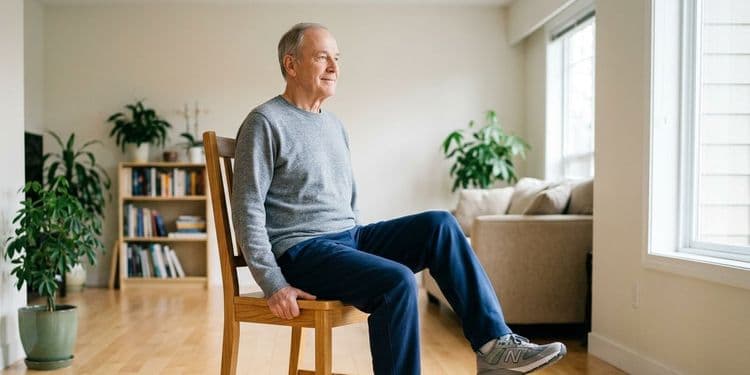
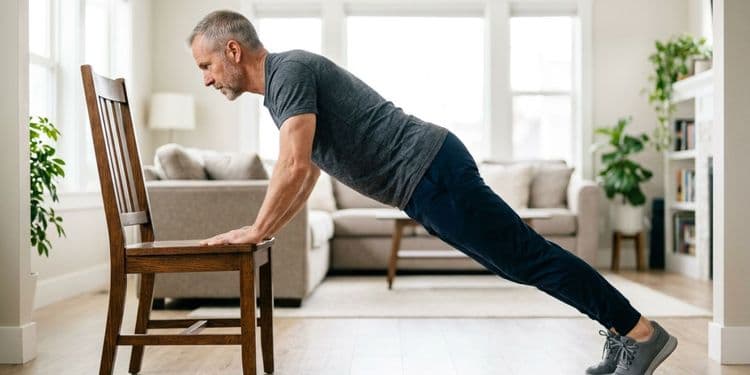
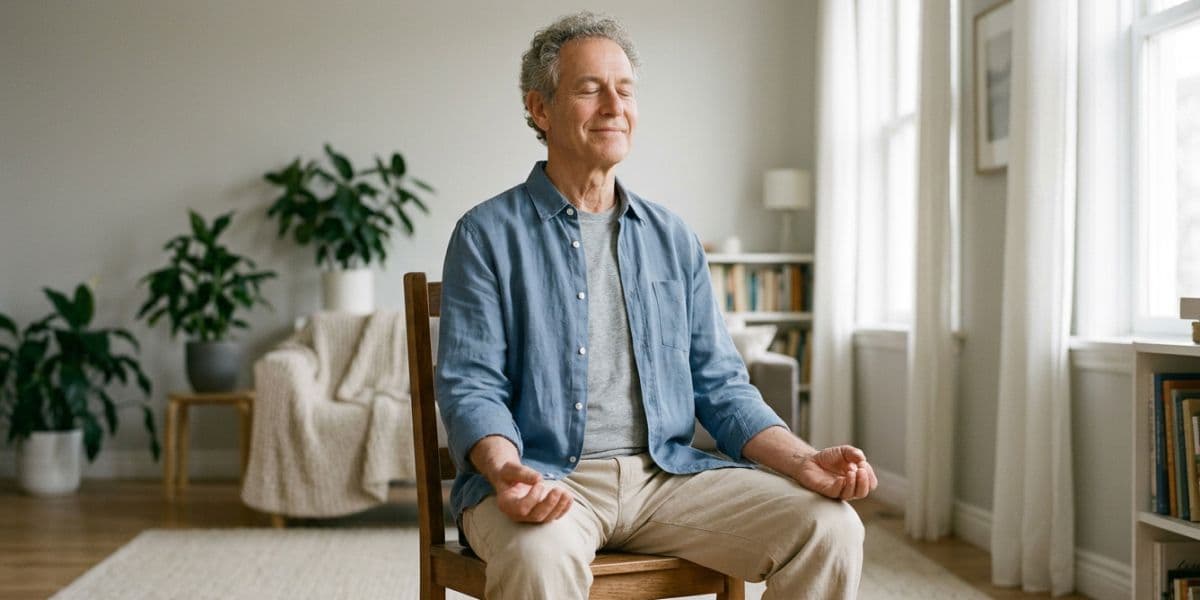
Chair yoga is exactly what it sounds like. A form of yoga where a chair becomes your mat. You stay seated for most poses, and when you do stand, the chair is right there for balance and support. Same breath work, same gentle stretches, same focus on body and mind. Just adapted to your needs and capabilities.
If you cannot get down on the floor easily, or you cannot get back up without help, regular mat classes can feel like a closed door. Chair yoga opens that door again. No wobbling around on a mat, no fancy gear, just a sturdy chair and a little space.
A chair yoga practice usually includes seated versions of familiar yoga poses: cat/cow, warrior, sun salutations, and forward folds, all performed while seated or using a chair for balance. The pace stays slow. Breath leads the movement. Every pose has at least one easier version so you can match the practice to your own pace.
People sometimes assume chair yoga is just stretching in a chair. It is much more than that. The breathing patterns, the alignment cues, the focus, they all carry over from traditional yoga. You build strength, mobility, and a calmer nervous system. You just do it from a seat.
Who Chair Yoga Is For
Chair yoga is for anyone who wants a kinder way into yoga. That covers a large amount of people who feel pushed out by typical mat classes.
Older adults
For older adults, chair yoga checks every box. Low impact. Stable. Gentle on joints. Easy to do at home. The chair removes the fear of falling, which is one of the biggest reasons seniors skip traditional yoga. It is especially helpful if you have difficulty balancing, standing for long periods, or getting up from the floor.
People with limited mobility
If you live with limited mobility, use a wheelchair, are rehabbing after surgery, or manage a chronic illness, chair yoga gives you a safe way to stay active. You do not need to get down to a yoga mat or push through pain. Movements can be changed to smaller or larger to fit how your body feels that day.
Desk workers and beginners
Office workers, drivers, students, anyone who spends hours in a chair already, you are a good fit too. Chair yoga turns the chair you are stuck in into a tool for your spine instead of a slow torture device for it. Five minutes of seated twists and shoulder rolls can undo a surprising amount of tension from a morning at the desk. And if standard yoga classes feel like a room full of pretzel people, this is a gentle on-ramp without the pressure to twist into a shape your body is not ready for.
Real Benefits of Chair Yoga
The promises around yoga can get a little overblown. Here is what chair yoga actually does, based on what the research and practice keep showing.
Better balance and functional fitness
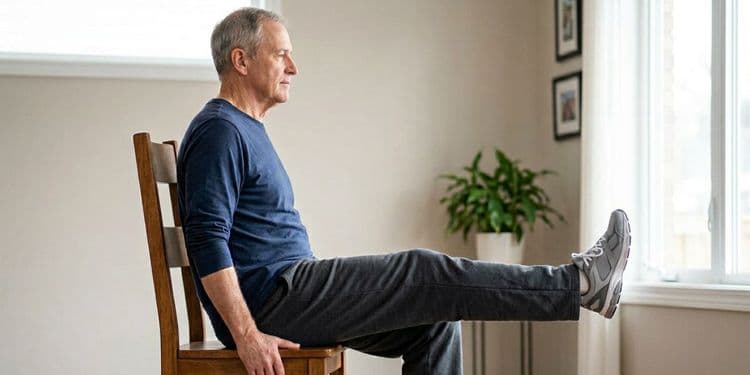
Functional fitness is the strength to do everyday things: stand up from a chair, reach a shelf, carry groceries, climb stairs. Chair yoga trains exactly these patterns. Seated leg lifts strengthen the muscles you use to walk. Twists keep your spine mobile so you can turn to see what is behind you. Shoulder work means you can lift your arms overhead without a struggle. Over weeks, this adds up to a body that handles daily life with less effort.
Less pain and more comfortable joints
Gentle stretching and controlled movements keep joints happier. Moving them through a full range of motion increases synovial fluid, the natural lubricant inside your joints that reduces friction. More fluid. Less friction. Less pain.
For people with knee osteoarthritis, this matters even more. A study of older adults with osteoarthritis (Florida Atlantic University, 2017, published in the journal of the American Geriatric Society) found that participants had less pain and fatigue after practicing chair yoga twice a week for eight weeks. Not a cure, but a real, measurable improvement from two short sessions a week.
Stress reduction and a calmer mood
Slow movement plus mindful breathing flips your nervous system out of fight or flight and into rest and digest mode. That is the parasympathetic nervous system at work, lowering stress hormones and helping you relax. For older adults, chair yoga can lead to greater stress reduction than other forms of seated exercise, like chair aerobics or walking.
Better flexibility and less stiffness
Long hours of sitting tighten the hips, shorten the hamstrings, and lock up the upper back. Gentle stretching loosens all of that. Regular chair yoga increases range of motion and reduces the stiff feeling in muscles and connective tissue. You stand taller, bend down with less effort, and your neck stops complaining every time you turn your head.
Healthier circulation
Sitting still all day lets blood pool in your legs. Even small movements while seated push blood back through the body and improve oxygen delivery to your tissues. A few minutes of chair yoga can leave you feeling more awake than the cup of coffee you were about to make.
What You Need to Get Started
Here is the entire shopping list for a chair yoga practice:
A sturdy chair without arms, so your shoulders can move freely
A flat, non-slip floor that the chair will not slide on
Comfortable clothes that let you breathe and bend
Optional: a folded blanket or thin cushion if the seat feels hard
That is it. No mat, no blocks, no straps. The chair handles the job of all that equipment. Pick one with a flat seat, a solid back, and four legs firmly on the ground. Skip wheels. Skip armrests. Skip the dining chair with the wobbly leg you have been meaning to fix. A wobble in the chair is a wobble in your spine.
7 Best Chair Yoga Poses for Beginners
These seven yoga poses cover the basics: spine mobility, hip opening, hamstring length, shoulder freedom, balance, and breath. You can practice any of them on its own, or string them together into a single session.
Before you start, sit tall at the front of the chair. Feet flat on the floor, hip-width apart. Spine long. Shoulders relaxed. This is your starting position for almost everything that follows.
1. Seated Cat-Cow
Cat-cow mobilizes the spine, opens the chest, and gently releases tension in the lower back. Sit up with feet flat on the floor and hands resting on your thighs. On an inhale, arch your back, lift your chest, and look slightly up (this is cow). Exhaling, bring your spine into a round shape and your chin toward your chest. Hold your stomach muscles in (this is cat). Move slowly. Let the breath lead each shift.
Repeat for 8 to 10 rounds. To deepen the stretch, walk your hands to your knees and let your elbows bend as you arch.
2. Seated Forward Fold
Forward folds calm the nervous system. They also lengthen the hamstrings and stretch the lower back. Sit tall and extend your legs out in front of you. Heels on the floor, toes pointing up. Inhale to lengthen your spine. Then exhale and hinge from the hips, walking your hands down your legs as far as feels comfortable. Let your head and neck hang heavy.
Hold for 5 slow breaths. If your hamstrings are tight, keep a soft bend in the knees. Never force the fold.
3. Seated Spinal Twist
Twists wring out the spine, support digestion, and free up the upper back and ribs. Sit with feet flat on the floor. Place your right hand on the outside of your left thigh and your left hand behind you on the chair seat. On an inhale, lengthen your spine. On the exhale, twist gently to the left, leading with your chest, not your head. Look over your left shoulder.
Hold for 5 breaths, then repeat on the other side. Keep the twist gentle. The point is mobility, not maximum rotation.
4. Seated Crescent Pose
The seated crescent pose stretches the side body, opens the ribs, improves the flexibility of long muscles of your torso and strengthens them. Sit up and reach both arms overhead. Clasp your left hand around your right wrist. On the exhale, lean gently to the left and draw your right side long. Keep both hips planted firmly on the seat.
Hold for 5 breaths, then switch sides. To soften the pose, keep your hands on your hips and just lean to the side without the overhead arms.
5. Seated Warrior II
Warrior II builds strength in the legs, opens the hips, and improves shoulder endurance. Turn sideways on the chair so your left thigh runs along the seat. Drop your right foot to the floor, knee bent, with your left leg extended out long behind you. Open your arms wide at shoulder height, palms down, gaze over your front hand.
Hold for 5 breaths. Then turn around to repeat on the other side. Drop the back arm if your shoulders start to give up.
6. Seated Sun Salutation
A seated sun salutation links breath to movement and warms up the whole body. Start with hands at heart center. Inhale and sweep both arms overhead. Exhale into a seated forward fold, hands walking down your legs. Inhale to a halfway lift, hands on shins, back flat. Exhale to fold again. Inhale to rise all the way up. Exhale to return hands to heart center.
Move through 3 to 5 rounds, one breath per movement. This is your warm-up, light cardio, and mobility work in one.
7. Shoulder Rolls and Neck Stretches
Simple, but criminally underused. Sit up. Inhale as you lift your shoulders up toward your ears. Exhale and roll them back and down. Continue rolling for 8 to 10 repetitions. Reverse the direction. Follow with slow neck stretches: ear toward shoulder on each side. Hold for 3 breaths.
These regular movements break up the sedentary patterns that cause joint and muscle stiffness. Do them every hour at your desk, and your neck will thank you.
A Simple 10-Minute Chair Yoga Routine
If you want one short routine to start with today, here it is. Practiced daily. This little sequence does more good than a long class once a month.
Movement | Duration |
Sit tall, take 5 slow deep breaths | 1 min |
Shoulder rolls, forward and back | 1 min |
Seated cat-cow | 2 min |
Seated spinal twist (both sides) | 2 min |
Seated forward fold | 1 min |
Seated crescent pose (both sides) | 2 min |
Sit tall, eyes closed, 5 deep breaths | 1 min |
Daily for 5 to 10 minute routines are more effective than long but irregular workouts. Five minutes today and tomorrow beats an hour next Sunday.
Safety Tips Before You Start
Chair yoga is one of the safest forms of exercise, but a few common-sense steps keep it that way.
Use a sturdy chair without arms, so you have a full range of motion in your shoulders and torso. Place it on a stable, non-slip surface. A hard floor is fine. Avoid a rug that can slide, and avoid wheels at all costs.
Start slowly. The point of chair yoga is not to push into pain. If a pose hurts, ease off or skip it. Move at your own pace and let your breath lead, not your ego.
If you live with knee osteoarthritis, balance issues, heart conditions, any chronic illness, or had a recent surgery, check with your doctor before you start. Chair yoga is gentle, but it is still exercise.
Focus on deep breathing throughout the practice. This is what separates yoga from plain stretching. Inhale through the nose, exhale through the nose, slow and even. If you ever feel dizzy or short of breath, stop and rest. Chair yoga is real exercise, but no single practice fixes everything on its own. Pair it with daily walks, decent sleep, and food that supports how you want to feel.
How Often to Practice for Real Results
Five to ten minutes a day is enough to start feeling the difference within a couple of weeks. Better posture, less stiffness, more energy, calmer mood. The more often you sit down for a short session, the faster these changes settle in.
For more noticeable physical changes like reduced pain or improved balance, two to three sessions of 20 to 30 minutes a week is a good target. The chair yoga study on knee osteoarthritis used twice-weekly sessions over eight weeks, and that was enough to lower pain and fatigue. You do not need to do all your practice in one chunk. Three minutes after waking, two at lunch, five before bed. It all counts.
Try It Today
If you want a chair yoga program that is built around your age, fitness level, and any limitations you have, MadMuscles can put one together for you in a few minutes. Take a quick quiz and you will get a chair-friendly plan with video demonstrations, voice-guided instructions, and a pace that meets you where you are.
Pick one pose from the list above and try it before you close this page. Taking the first breath is the hardest part.