
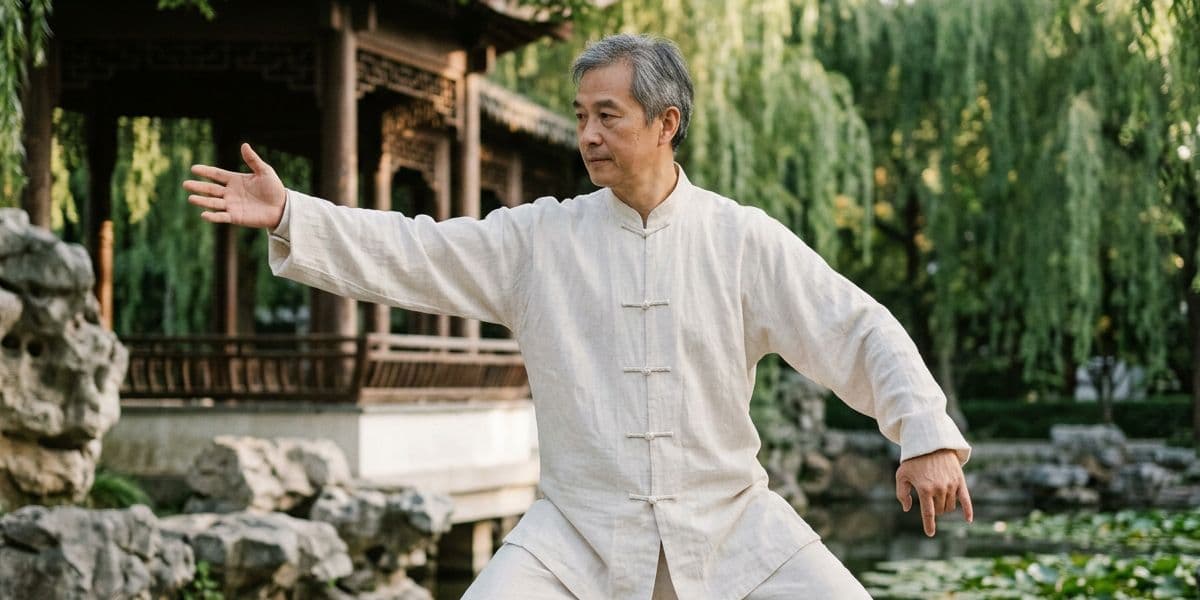
What Is the Tai Chi 24-Form?
The 24-form routine, also called the Yang-style version or Simplified 24-Form, is a short sequence of 24 movements derived from the traditional long form of Yang Chengfu. The original long form contained 85 to 108 moves and took years to learn. In the 1950s, the Chinese government's sports commission sponsored a shorter version so more people could practice tai chi and enjoy its health benefits.
Li Tianji, the son of Li Yulin, was a key figure in the development of the 24-form. He authored the first textbook on it, and the book was distributed to physical education departments across China. Today, the Yang-style sequence is the most popular tai chi form in China and worldwide. It is suitable for all ages and fitness levels.
Tai chi chuan itself is often called moving meditation. This shortened sequence keeps that quality while staying accessible: deliberate and unhurried movements, natural breathing, and soft focus. You do not need to be flexible or strong to begin. You only need to follow along and repeat.
Benefits of the Yang-Style Tai Chi 24 Form
The Yang-style 24-form supports both physical health and mental well-being, with benefits building through consistent practice.
Better Balance and Fewer Falls
Shifting weight from the left leg to the right leg is a core part of the practice. This steady work on one leg trains standing balance and leg strength. Regular tai chi practice can reduce the risk of falls by up to 70% in some populations, which makes the 24-form especially valuable for older adults.
Calmer Mind and Lower Stress
As a form of moving meditation, this practise reduces anxiety and boosts mental well-being. The slow pace, steady breathing, and focus on each posture help the mind settle. Many people feel clearer and lighter after a session.
Heart, Lungs, and Flexibility
Regular practice of the tai chi 24-form provides cardiovascular benefits, lowers blood pressure, and improves lung capacity. The gentle range of motion across hips, knees, shoulders, and spine also improves flexibility over time.
What You Need Before You Start
You do not need equipment. A quiet space of about two meters by two meters is enough. Wear loose clothing and flat, flexible shoes. Maintain an upright stance while staying loose and at ease with shoulders soft, and breathing natural. If you have a knee or back condition, reduce the depth of your stances and talk to your doctor first.
How to Warm Up Before the Tai Chi 24-Form
A short warm-up prepares the joints and the breath for slow practice. Spend about 5 minutes on gentle movements before you start the form.
Neck circles. Slowly roll the head in a small circle, 3 times each direction. Keep the shoulders relaxed.
Shoulder rolls. Lift the shoulders up, back, and down in a smooth circle. Repeat 8 to 10 times.
Waist turns. Place the hands lightly on the hips and turn the waist left and right. Let the arms swing naturally.
Hip and knee circles. Bring the weight onto one leg and circle the opposite knee gently. Switch sides.
Ankle rolls. Lift one foot, rotate the ankle, then place it back. Repeat with the other foot.
If you already practice gentle exercises like Ba Duan Jin, they also work well as a preparation. The goal is warm joints and calm breathing before you move into the form.
Basic Footwork: Working With the Left and Right Leg
Footwork is the foundation of every movement of the Young-style sequence. Each step begins with a clear weight shift to one leg, which frees the other leg to move. Keep the posture tall and the knees soft. The waist leads every turn.
Left Leg Empty Step
Shift your full weight onto the right leg with the knee slightly bent. The left leg becomes “empty,” meaning it no longer supports your weight. Place the left toe lightly in front or to the side. An empty step lets you move, turn, or lift the leg with ease. This pattern appears in several transitions, including White Crane Spreads Its Wings.
Right Leg Empty Step
Mirror the same work on the other side. Transfer the weight onto the left leg, keep the body upright, and let the right leg stay empty. The right foot rests lightly on the floor without pressure. This balance on one leg builds steady strength and trains your sense of grounding.
Left Heel Raise
Many transitions start with lifting the left heel off the floor while the toe stays grounded. This small motion unlocks the hip and prepares the leg to step. Maintain an upright posture and let the waist begin the turn. The heel raise is gentle and controlled, never rushed.
Right Heel Placement
When you step forward or to the side with the right leg, the right heel usually touches the floor first. The toe follows as the weight rolls onto the full foot. In moves like Brush Knee and Twist Step, rotating the right heel helps the body turn smoothly without strain on the knee.
The Tai Chi 24-Form: Full Sequence
This practise flows without pauses. Below is the full sequence, broken down into its 24 individual movements.Learn one move at a time, then gradually link them.
Commencing Form
Part the Wild Horse's Mane (left and right)
White Crane Spreads Its Wings
Brush Knee and Twist Step (left and right)
Playing the Pipa (Hand Strums the Lute)
Repulse Monkey (left and right)
Grasp the Bird's Tail, Left Side
Grasp the Bird's Tail, Right Side
Single Whip
Wave Hands Like Clouds (Cloud Hands)
Single Whip
High Pat on Horse
Kick with Right Heel
Strike Opponent's Ears with Both Fists
Turn Body and Kick with Left Heel
Snake Creeps Down and Golden Rooster Stands on One Leg, Left Side
Snake Creeps Down and Golden Rooster Stands on One Leg, Right Side
Fair Lady Works the Shuttles
Needle at Sea Bottom
Fan Through Back
Turn Body, Deflect, Parry, and Punch
Apparent Close Up
Cross Hands
Closing Form
Key Movements Explained Step by Step
Commencing Form
Stand with feet together and body upright. Step your left foot out to shoulder width. Slowly raise both arms to shoulder level with palms down, then lower them as the knees bend slightly. This opens the form and sets the pace.
Part the Wild Horse's Mane
Transfer your weight onto the right leg and step forward with the left. As you step, one palm moves up to chest height and the other settles down by the hip, like separating a horse's mane. Repeat on the other side by shifting to the left leg and stepping with the right.
White Crane Spreads Its Wings
Bring your weight onto the right leg and place the left toe lightly in front. The right hand rises in front of the forehead while the left hand rests near the hip. Keep your posture tall and shoulders relaxed.
Brush Knee and Twist Step
Step forward while rotating the heel of the back foot. One hand sweeps across the knee in a semi circle and the other hand pushes forward at chest level. Alternate left and right as you move through this section of the form.
Wave Hands Like Clouds
Keep the upper body erect and let the waist serve as the axis. Your hands circle in front of the body in smooth, natural motions while you step sideways. Every movement stays slow and connected.
Single Whip
Form a hook with the right hand and extend it out to the side. Step the left foot forward and push the left palm out to chest level. The stance is wide and grounded, with the body upright.
Turn Body and Pivot
Turn body moves appear several times in the tai chi 24-form, including Turn Body and Kick with Left Heel and Turn Body, Deflect, Parry, and Punch. The turn starts from the waist, not from the shoulders. Pivot on the heel of the supporting foot and let the rest of the body follow as a whole. Maintain the upright posture and avoid leaning into the turn. A smooth pivot keeps the knees safe and the posture steady.
Snake Creeps Down and Golden Rooster
Lower the body with the weight on the back leg and slide one leg forward along the floor. Rise back up and lift the opposite knee into a standing posture on one leg. This builds balance and leg strength.
Cross Hands and Closing Form
Step the right foot back to hip width. Cross the hands in front of the chest with palms facing in. Slowly lower the arms to the sides and bring the feet together. The closing form returns the body to stillness.
How to Practice the Tai Chi 24-Form
Focus on Posture and Breathing
Keep the body upright, the crown of the head gently lifted, and the shoulders relaxed. Breathe through the nose in a slow, natural rhythm. Coordinate the breath with the movements, but never force it.
Move Slowly and Smoothly
The complete form takes about 5 to 6 minutes at a steady, slow speed. Every transition should feel continuous, without stops or sharp changes. Essential elements of tai chi, such as relaxation, balance, and coordination, develop through this slow pace.
Practice Daily
Train consistently. Regular sessions bring the best results. Even 15 minutes a day builds awareness and physical health over time. If 24 movements feel like a lot at first, split the form into three sections and learn one section per week.
Cooldown After Practice
A short cooldown helps the body absorb the benefits of the form and return to daily life gently. Take 3 to 5 minutes after the closing form.
Quiet standing. Stand with feet shoulder width apart, knees soft, and arms relaxed at the sides. Breathe slowly for 1 to 2 minutes and notice how the body feels.
Gentle calf stretch. Step one foot back, press the heel into the floor, and feel a light stretch in the calf. Switch sides.
Shoulder and arm release. Roll the shoulders a few times and shake out the hands and arms.
Hip opener. Step the feet a little wider, bend the knees slightly, and turn the waist side to side. This releases the lower back.
End with a few slow, deep breaths. A calm close leaves you with the steady focus that tai chi builds.
Common Mistakes to Avoid
Rushing the movements. This practise is meant to be slow. Speeding up removes the calming effect and reduces the balance benefit.
Tight shoulders and stiff arms. Keep the shoulders down and the arms soft. Tension blocks the flow between movements.
Skipping the weight shift. Each step starts with a clear transfer of weight to one leg. Without this, your balance suffers and transitions feel unstable.
Leaning or twisting the torso. Keep a tall posture and let the waist turn as the axis. Leaning breaks posture and strains the lower back.
Trying to learn the whole form at once. Learn in sections. Repeat each section until it feels natural, then link them together.
Practice Tai Chi With the MadMuscles App
If you prefer guided practice, the MadMuscles app offers several guided tai chi routines with video instructions, voice guidance, and a schedule built around your level.
Master Lee's Tai Chi. Traditional tai chi with slow, flowing movements. A good match for learners who want to build a classical foundation, including the tai chi 24-form.
Tai Chi Monk Power. Combines tai chi with QiGong for strength, balance, and mental clarity. Suitable for all levels.
Tai Chi Walking. Mindful walking with tai chi principles. A gentle option for seniors and for anyone who wants to start with simple, flowing motion.
Chair Tai Chi. Seated tai chi practice designed for seniors and people with limited mobility.
The app lets you track session consistency, rate perceived difficulty, and adjust the program as you progress. You can also switch between tai chi programs at any time from the My Program tab.
Conclusion
The tai chi 24-form offers a calm, complete introduction to Yang-style tai chi in a short, repeatable sequence. It supports balance, heart and lung health, and peace of mind, and it fits easily into a daily routine.
Pick a quiet time of day, clear a small space, warm up gently, and begin your first practice today. Start with a few movements and build gradually. Consistency matters more than perfection. A few minutes of steady practice, day by day, is the real path of the tai chi 24-form.