
What Are Tai Chi Moves?
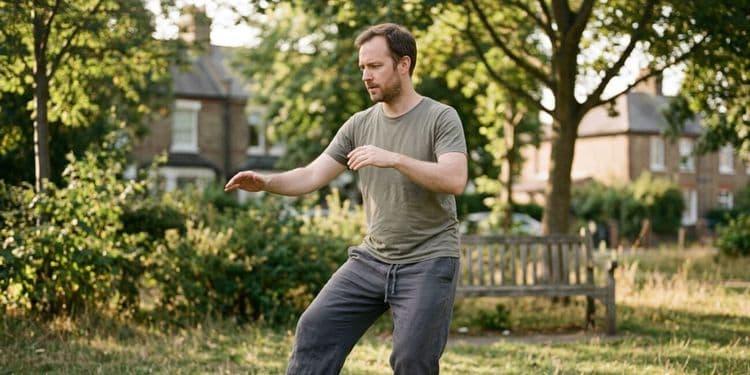
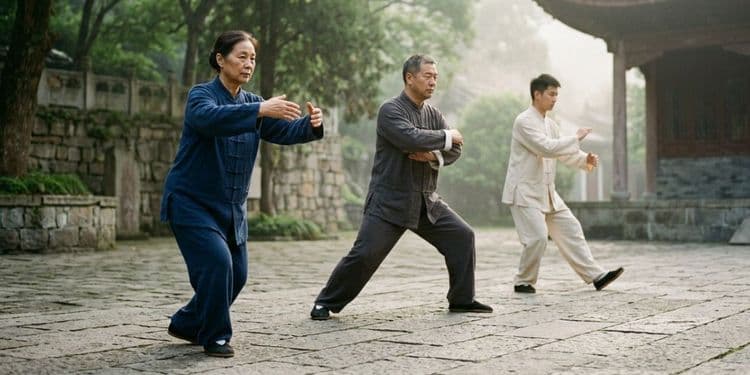
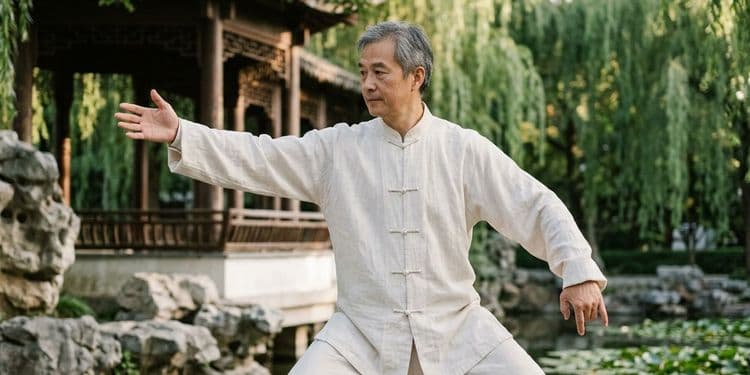
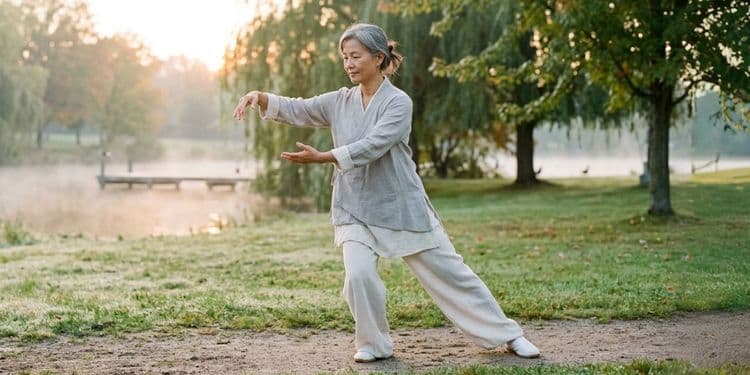
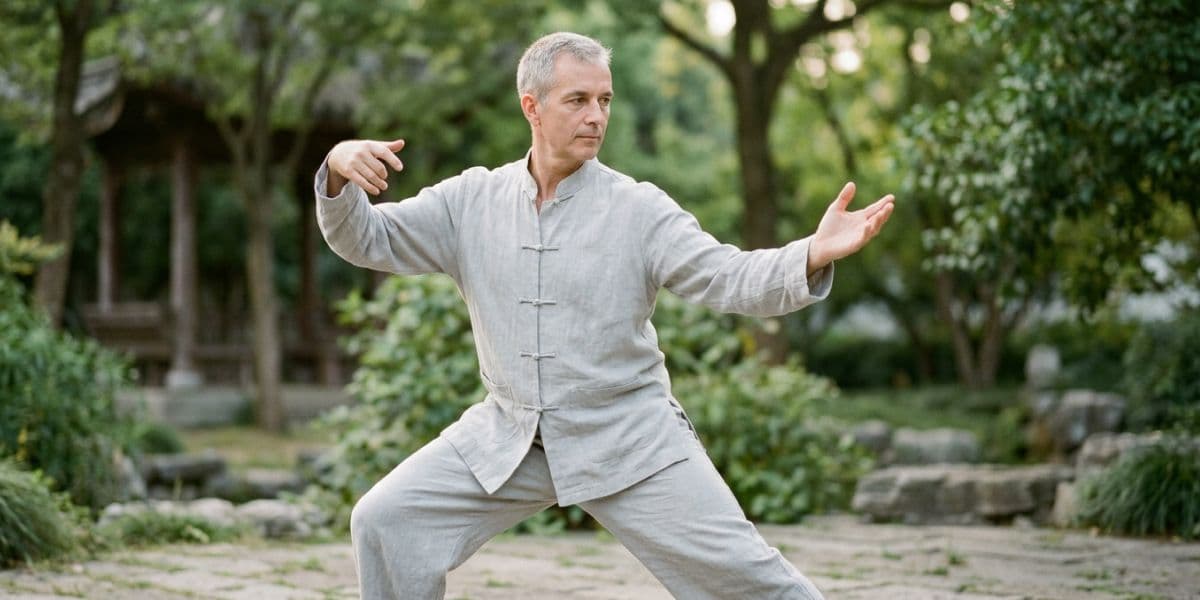
Tai chi movements are unhurried and continuous, linking breath, balance, and posture into a single flowing practice. Each movement carries a distinct rhythm and purpose, often drawing inspiration from nature. Together, they form a sequence known as a tai chi form.
Although tai chi has roots in Chinese martial arts, today most people practice it for health and stress relief. The movements look simple, yet they train the whole body. Weight shifts and breath work together to guide each transition from one posture to the next.
Tai chi works for individuals of all ages and fitness levels. You can follow a standing form, or use a seated version if mobility is limited. There’s no need to rush or get everything perfect right away.
The Foundation of Tai Chi
Before you learn tai chi, it helps to understand what happens underneath each posture. The principles emphasize weight transfer, structural alignment, and fluid transitions.
Weight transfer. The body is almost always shifting from one leg to the other. Even when you look still, your body weight is moving smoothly between feet.
Structural alignment. Your head stays tall, your lower back stays flat, and your knees stay aligned with your toes. This protects the joints and lets energy flow without strain.
Breathing techniques. Breathing stays easy and natural. The tongue rests lightly on the roof of the mouth, which helps calm the nervous system. In many styles, breathing naturally follows the rhythm of each movement.
Gentle power. Tai chi is sometimes called a moving meditation, yet it is also a real workout. The steady pace builds leg strength and body control over time, and it often overlaps with qigong practice.
The Three Main Tai Chi Stances
Stances are the base of every tai chi form. Most movements are simply transitions between three positions.
Bow Stance
The bow stance is a combination of a front and horse stance. Around 70% of your weight rests on the front leg and 30% on the rear leg. The forward knee should not cross the toe, and it should not pitch inward or outward. You will meet this stance in powerful forward moves like Brush Knee or Single Whip.
Empty Stance
The empty stance is a higher stance used to transition between moves. About 70% of your weight stays on the rear leg, while the front foot lightly touches the floor. The knees stay aligned with the toes, and the lower back stays flat. You feel light and ready to step.
Horse Stance
The horse stance faces forward with a 50/50 weight distribution. The feet can be wider apart, and the toes pointed out slightly. The posture stays upright, similar to sitting on an invisible chair. This stance builds leg strength and is often used in qigong and martial arts training.
Essential Tai Chi Moves: Complete List
The following movements appear in many traditional forms, including the popular Tai Chi for Everyone set of 8 basic movements. They let people of all ages and physical capacities enjoy tai chi. The Standing Form is ideal for beginners and features movements such as Repulse Monkey, Brush Knee, and Cloud Hands, which are easy to learn and practice. Seated versions are available for most of them.
1. Brush Knee
One of the most recognized postures in the practice. The movement begins with a step into a bow stance with one arm sweeping across the body to brush past the front knee, and the other hand pushing forward. Brush Knee trains coordination. It helps balance on one leg during the step and transfer weight smoothly.
2. Cloud Hands
Few movements feel as continuous as Cloud Hands, which shifts gently from side to side. Both hands trace soft circular patterns in front of the body, as if moving through mist. The feet step sideways quietly while the waist turns. This move is relaxing and low-impact. The posture stays upright, similar to sitting on an invisible chair. The move is excellent for shoulder mobility and spinal rotation.
3. Repulse Monkey
In Repulse Monkey, you step backward: one arm retreating and the other pushing forward. It trains balance in reverse motion, which most people hardly practice in daily life. That makes it especially useful for improving stability and preventing falls.
4. Grasp Sparrow's Tail
Grasp Sparrow's Tail is a combination of four actions: ward off, roll back, press, and push. It introduces a core tai chi principle, redirecting force rather than meeting it directly. This sequence connects many other moves inside longer forms.
5. Single Whip
After Grasp Sparrow's Tail, many forms transition into Single Whip. One hand forms a relaxed hook, the other extends outward. The stance widens into a long bow stance. Single Whip opens the chest and stretches the arms. It also teaches clean alignment from foot through to the fingertips.
6. White Crane Spreads Wings
One hand lifts upward, and the other lowers toward the hip, like a crane opening its wings. The weight shifts onto one leg while the other foot rests lightly in an empty stance. This posture is very effective for balance and also gently stretches the sides of the body.
7. Parting Wild Horse's Mane
A bow stance with the arms separate in opposite directions, as if parting a horse's flowing mane. This movement helps gain diagonal power and smooth coordination between the upper and lower body.
8. Golden Rooster Stands on One Leg
A classic balance move. Standing on one leg with the opposite knee lifting toward the chest and the same side hand rising upward. This move challenges the balance and helps develop stability and coordination, especially for older adults.
How to Learn Tai Chi Moves
The best way to learn these movements is to do it slowly, one movement at a time. You do not need to memorize a full form in your first week. A few minutes a day, practiced consistently is enough to build a strong foundation.
Follow a qualified instructor in person or through guided lessons. Watching tai chi videos helps you see the shape and timing of each movement.
Practice one movement at a time. Repeat it until the steps feel natural, then add the next one.
Move at your own pace. Tai chi is not a race. Slower is usually better.
Pay attention to posture. Keep the spine tall, shoulders relaxed, and knees soft.
If you prefer a guided path, the MadMuscles app offers several tai chi programs, including Master Lee's Tai Chi, Tai Chi Monk Power, and Tai Chi Walking. Each one uses short tai chi videos and builds up gradually, so it's suitable for beginners.
Benefits of Practicing Tai Chi
Tai chi is a low-impact practice which supports both physical and mental health. Even a short daily session has a lot of benefits:
Improves balance and coordination. Many movements challenge balance, such as standing on one leg, which helps develop stability and coordination.
Helps improve mobility. Calming motion eases stiffness and is especially helpful for people with arthritis.
Helps reduce stress. Calm, steady pace helps your mind settle and reset.
Stronger legs and posture. Holding low stances builds quiet leg strength and steady posture with time.
Better breathing. Controlled breathing techniques can improve lung function and reduce symptoms of conditions like asthma.
Fewer falls in older adults. The practice enhances proprioception, which is crucial for reducing falls among older adults.
Practicing daily, even for just 5 minutes, can lead to better mobility and decreased pain. Consistency is far more important than length.
Seated Tai Chi for Every Level
Tai chi can be a good choice for those with limited mobility through seated forms. Seated versions of Brush Knee, Cloud Hands, and Repulse Monkey keep the same arm motion, breathing, and intention, without the need to stand. It is a simple way to get started for seniors, or for recovery after injury. Basically, this practise is suitable for anyone who prefers an easier beginning.
Common Mistakes to Avoid
A few simple adjustments can make your practice much more comfortable:
Moving too fast. The practice feels easier when you don't rush. If you rush, you lose balance and breath.
Tension in the shoulders. Let them drop. Arms should float, not grip.
Locking the knees. Keep them soft and aligned with the toes in every stance.
Forgetting to breathe. Breathe slowly through the nose, with the tongue lightly touching the roof of the mouth.
Learning too much at once. Pick one movement this week. Add the next one next week.
Conclusion
Tai chi moves look simple, yet they can train the whole body. Each posture, from Brush Knee to Cloud Hands, improves balance, breath, and awareness little by little. The practice meets you exactly where you are. You can exercise standing or sitting, move at a comfortable pace, learn one movement or a full form.
Consistency is the main secret here. A few minutes every day will carry you further than an hour once a month. Simply choose one or two movements from this list and make them part of your routine. As time goes by, they will become comfortable and genuinely relaxing.
If you would like a guided path, the MadMuscles app offers programs like Master Lee's Tai Chi, Tai Chi Walking, Tai Chi Monk Power, and Chair Tai Chi, with clear video instructions and gentle progressions for all levels. Start where you are, breathe slowly, and let the movement teach you the rest.