
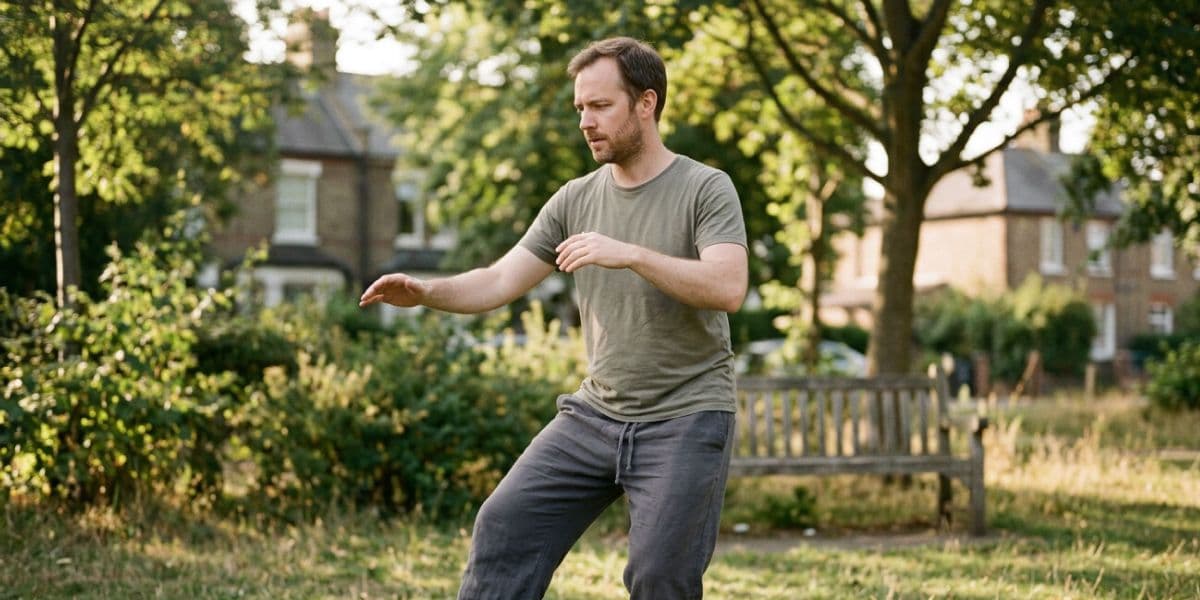
What Is Tai Chi?
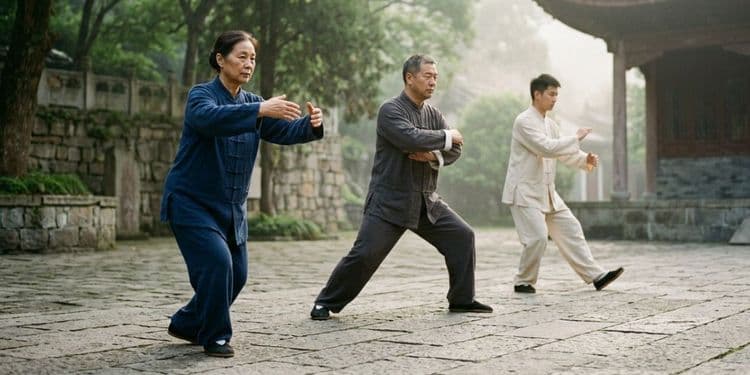
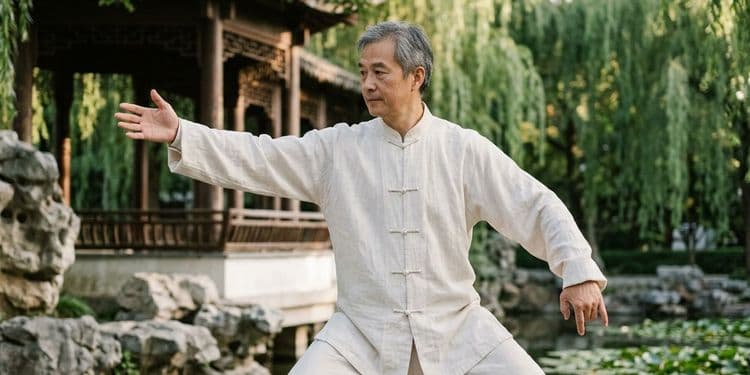
Tai chi is a gentle, low-impact mind-body practice built around smooth, continuous movements paired with deep breathing and meditation. Often called "meditation in motion," tai chi helps you cultivate internal energy known as qi or life force while gently strengthening the body. The practice comes from an ancient Chinese martial art tradition, but today most people use tai chi as an exercise routine for health, balance, and stress reduction.
Unlike high-intensity fitness formats, tai chi moves at a calm, steady pace. Each form embodies a continuous flow, with the knees slightly bent and the body relaxed. You stay grounded, breathe deeply, and let one movement melt into the next. What makes tai chi so accessible is that almost anyone can practice, regardless of age or current fitness level.
There are several existing forms of tai chi forms, including Yang, Chen, Wu, and Sun. For most beginners, the Yang style is the best place to start. Its slow, expansive movements give you time to focus on posture, balance, and breathing — the core principles every beginner needs to build first.
Who Is This Guide For?
This guide is for anyone curious about how to take up tai chi for beginners. If you want a calm, sustainable form of exercise that supports both body and mind, you are in the right place.
This practice is especially beneficial for:
People who find high-intensity workouts too demanding and want a more gradual, lighter path to fitness and health
Older adults looking to improve balance, coordination, and mobility
Anyone dealing with stress, anxiety, or sleep issues who wants a calming daily practice
Beginners returning to exercise after injury, illness, or a long break
Busy people who want a short, mindful routine they can fit into any day
You do not need any experience to learn tai chi. The movements start simple, and progress is measured by comfort and consistency, not speed or strength.
Health Benefits of Tai Chi for Beginners
Health benefits of tai chi are well researched, and they show up quickly for beginners who practice consistently. Because tai chi combines gentle exercise with focus and breath, these effects extend across the body, mind, and overall well-being.
Better balance and coordination
Research shows that people who practice tai chi for over a year have a noticeably better dynamic standing balance than those who do not. This makes tai chi one of the most recommended practices for fall prevention in older adults.
Increased strength
Tai chi is gentle, but it is not passive. One study found that practicing tai chi for 40 minutes six times a week over four months significantly improved muscle strength, especially in the lower body. Holding low stances and shifting weight slowly is a real workout for your legs and core.
Lower stress and better mood
Regular tai chi practice improves mood, reduces stress, and supports mental clarity. The mindful, meditative aspect of tai chi helps calm the mind, while deep abdominal breathing activates the body's natural relaxation response.
Flexibility, posture, and mental clarity
Soft, continuous flow movements gently mobilise the joints and lengthen tight muscles. Over time, you stand taller, move more freely, and feel more mentally present throughout the day.
Support for overall wellbeing and sleep
Many beg more energy, and a calmer mindset within a few weeks of consistent sessions. Tai chi is a full mind-body practice, so the benefits show up in your body, your mood, and your daily life.
What You Need to Start Practicing Tai Chi
One of the best things about tai chi for beginners is how little you need to start. Tai chi is one of the most accessible ancient practices on earth, and most people can begin immediately:
Comfortable, loose-fitting clothes that do not restrict movement
Flat, supportive shoes or bare feet on a non-slip floor
A quiet space with enough room to step forward, backward, and to the sides
10–20 minutes of uninterrupted time
If you have health conditions, recent injuries, or concerns about balance, check in with your doctor before you start practicing tai chi. The risk of injury in tai chi is low, but a quick conversation with a professional helps you practice with more confidence.
Prefer to practice at home on your phone? The MadMuscles app offers beginner-friendly tai chi programs like Master Lee's Tai Chi, Tai Chi Monk Power, and Tai Chi Walking. Each session has video demonstrations and voice-guided instructions, so you can learn tai chi forms at your own pace.
Key Principles of Tai Chi for Beginners
Before you try full tai chi forms, focus on the foundational principles that make the practice work. These core ideas show up in every movement and are the real foundation of effective practice.
Strong, upright posture
Stand tall with a relaxed spine, shoulders down, and chin slightly tucked. Good posture is the foundation of tai chi for beginners: it protects your joints and allows energy to flow smoothly through the body.
Low, stable center of gravity
Keep your knees slightly bent and gently sink your hips downward. This low center makes you more stable, builds strength in the legs, and helps every tai chi movement feel grounded.
Mindful weight shifting
Tai chi is full of smooth transitions from one leg to the other. Move slowly and feel your weight travel from one side to the other. In tai chi walking, for example, you step heel-to-toe and make sure one foot is completely unweighted before you lift it.
Relaxed muscles and soft joints
Tension blocks movement and qi. Keep your muscles relaxed and your joints soft so your body can move as one limber unit. Imagine your waist staying fluid and your arms moving like a silk ribbon.
Deep abdominal breathing
Breathe slowly and deeply into your lower belly. Coordinating breath with movement — inhaling on opening movements and exhaling on closing ones — is a key skill to build from day one.
Calm, focused mind
A peaceful mindset is essential during tai chi practice. Stay present, notice your body, and let go of any rush. Mindfulness is what turns simple movements into a true mind-body practice.
6 Essential Tai Chi Movements for Beginners
These beginner-friendly tai chi movements and qigong exercises teach you the core skills you will use in every form. Aim for slow, controlled motion. Quality matters far more than quantity. This is the golden rule of tai chi for beginners.
1. Tai Chi Standing Posture (Wu Chi)
Stand with feet shoulder-width apart, knees slightly bent, arms hanging relaxed. Imagine the top of your head lifting gently toward the sky and your tailbone sinking down. Hold for 1–2 minutes and focus on steady breathing. This is the starting point for every tai chi practice.
2. Mindful Weight Shifting
From the standing posture, slowly shift 100% of your weight to your right leg, then to your left leg. Move with control. This simple drill builds balance, leg strength, and body awareness — all essential for tai chi forms.
3. Tai Chi Walking
Step forward by placing the heel down first, then rolling through to the toes. Only fully transfer your weight once the foot is stable. Keep the knees slightly bent and the upper body tall. Tai chi walking is one of the best drills for coordination and balance, especially for older beginners.
4. Cloud Hands
Stand with knees bent and shift your weight from side to side while your hands gently circle in front of the body, as if softly brushing clouds. Move the waist and arms together in a continuous flow. Cloud hands teach smooth coordination between the upper and lower body.
5. Opening and Closing (Qigong)
Raise both arms slowly to shoulder height as you inhale, then lower them as you exhale, letting the knees bend a little deeper. Repeat 8–10 times. This qigong exercise links breath and movement and is a calming way to begin or end your practice.
6. Single Whip (Simplified)
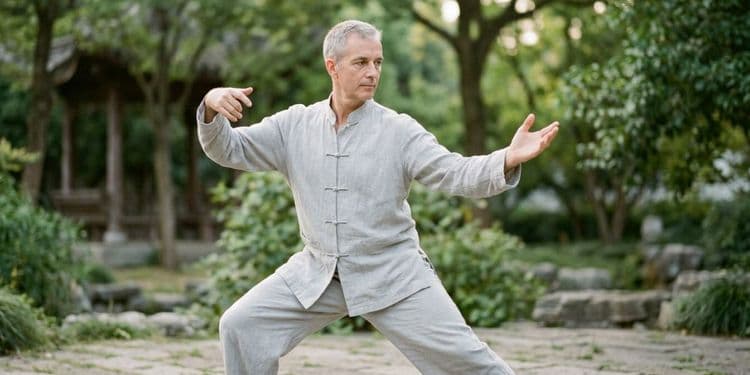
From a wide stance, shift your weight slowly to one leg while extending one arm out to the side with a soft hook of the fingers, and curling the other hand close to the body. Then shift back. This introduces a graceful, expansive feel of Yang style tai chi forms.
Your First 4-Week Tai Chi Practice Plan
This simple plan helps beginners build a consistent tai chi habit without feeling overwhelmed. Short, regular sessions are more effective than long, infrequent ones, especially at the beginning.
Weeks 1–2: Building the Foundation
Practice 4–5 days per week, 10–15 minutes per session. Focus entirely on posture, breathing, and weight shifting.
Day | Focus | Exercise | Duration |
Mon | Posture | Standing posture + breathing | 10 min |
Tue | Balance | Weight shifting drill | 10 min |
Wed | Coordination | Tai chi walking | 15 min |
Thu | Rest / gentle stretch | Optional light walk | — |
Fri | Breath + flow | Opening and closing qigong | 15 min |
Sat | Full practice | All drills combined | 15 min |
Weeks 3–4: Connecting Movements into Forms
Practice 5 days per week, 15–20 minutes per session. Start adding cloud hands and the simplified single whip, and link movements together in a smooth sequence.
Day | Focus | Exercise | Duration |
Mon | Flow | Cloud hands + walking | 15 min |
Tue | Breath + form | Opening and closing + single whip | 15 min |
Wed | Mini sequence | Combine 3 movements | 20 min |
Thu | Rest | Optional walk | — |
Fri | Full flow | Full beginner sequence | 20 min |
Sat | Mindful practice | Full flow + relaxed breathing | 20 min |
By the end of four weeks, you will have a short but complete tai chi routine you can return to any day. Many beginners already feel better balance, less stress, and more body awareness by this point.
How to Learn Tai Chi the Right Way
There are several solid ways to learn tai chi as a beginner. The best approach depends on your goals, schedule, and learning style. Tai chi for beginners is most effective when you combine consistent home practice with good guidance.
Join a beginner class with a certified tai chi instructor
A good tai chi instructor can correct your posture, guide your breathing, and introduce tai chi forms step by step. Typical beginner classes last 40 minutes to an hour, and students learn basic moves individually before combining them into a smooth sequence.
Use beginner-friendly videos and books
Instructional DVDs, online videos, and beginner books, such as Dr. Lam's "Tai Chi for Beginners", are a flexible way to learn at home. Watch a short segment, practice alongside it, then replay it to refine your form.
Practice with a guided app
If you want structure and variety in one place, the MadMuscles app offers several tai chi programs designed for every level, from Master Lee's Tai Chi for traditional slow flowing movements to Tai Chi Walking for seniors and mindful daily routine, to Chair Tai Chi for a seated option with limited mobility. The app also adjusts the difficulty of your routine based on how each session feels.
Common Beginner Mistakes to Avoid
A few simple habits will help you get the fullrange of beginner benefits and avoid the most common pitfalls:
Rushing the movements. Tai chi resembles slow dancing for a reason. Move slowly enough to feel every transition.
Standing with locked knees. Always keep the knees slightly bent. Locked knees remove the softness and grounding that tai chi depends on.
Holding tension in the shoulders. Let your shoulders drop and your arms stay light. Relaxing muscles and softening joints helps movement and energy flow.
Holding the breath. If you notice you are holding your breath, pause and take a few slow abdominal breaths before continuing.
Practicing only once a week. Short daily sessions build the habit much faster than one long weekly class.
Expecting perfect forms from day one. Tai chi is a lifelong practice. Give yourself permission to learn slowly.
How to Progress Your Tai Chi Practice
Progress in tai chi does not come from lifting more or moving faster. It comes from deeper understanding, smoother flow, and more mindfulness. For tai chi for beginners, long-term progress is about staying curious and consistent.
Extend your practice time gradually. Move from 10 minutes to 20, then to 30, as your body adapts.
Learn longer tai chi forms. Once you are comfortable with short sequences, try an 8-form or 24-form Yang style routine.
Deepen your stances. Sink a little lower as your leg strength grows. This builds strength and improves balance.
Add qigong exercises. Breath-focused qigong sets build even more awareness of qi and help you relax faster.
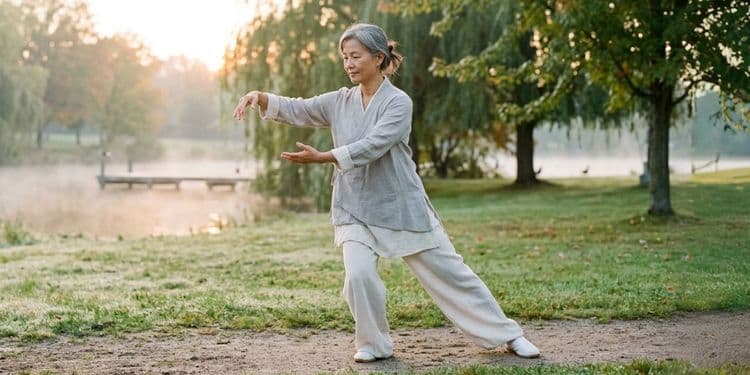
Practice in nature when you can. Parks and gardens add a natural, calming element to your tai chi practice.
Conclusion
Tai chi for beginners is one of the most accessible ways to build balance, strength, and calm. You do not need equipment, a gym, or perfect fitness — only a little space, a few minutes a day, and patience. Focus on good posture, soft knees, steady breathing, and mindful weight shifting, and you are already practicing tai chi the right way.
Start with short sessions, follow the 4-week tai chi for beginners plan in this guide, and let the practice grow with you. Over time, you will notice better balance, deeper sleep, calmer emotions, and more ease in your daily movements.
If you would like a guided way to learn tai chi at home, the MadMuscles app offers beginner-friendly programs, including Master Lee's Tai Chi, Tai Chi Monk Power, Tai Chi Walking, and Chair Tai Chi — with video demonstrations, voice guidance, and a routine that adapts to your level.
Take one slow breath, lower your knees a little, and begin. Your journey starts with a single mindful step.