
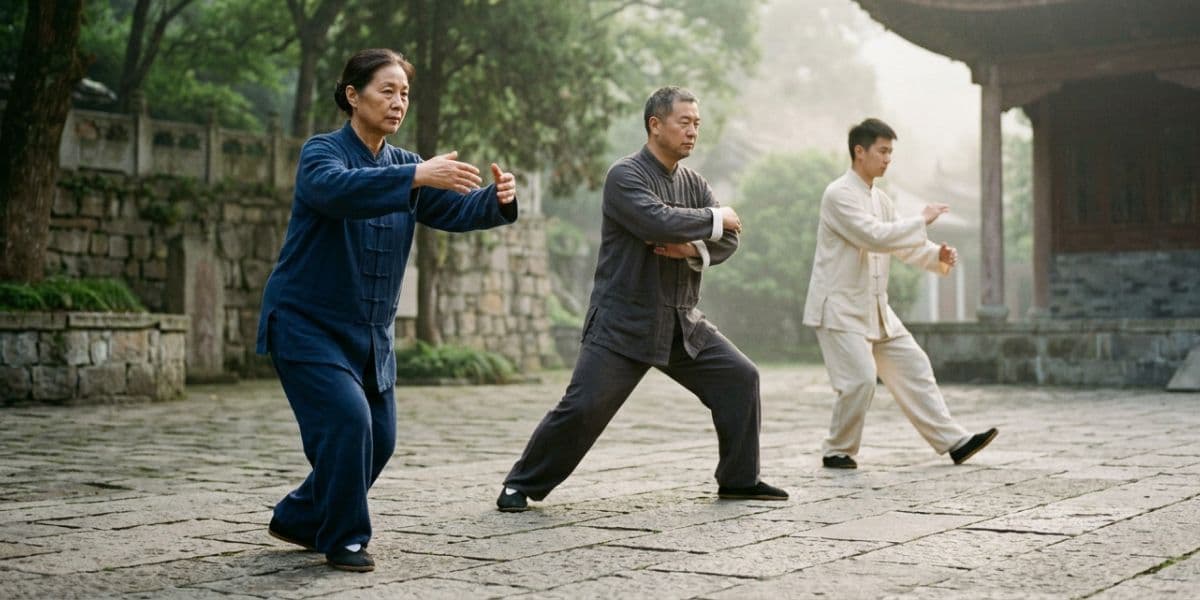
What Are the Forms of Tai Chi?
Tai chi, also known as tai chi chuan or taijiquan, is a centuries-old Chinese practice which combines slow, fluid movements with deep, focused breathing. The practice integrates Yin-Yang philosophy and works with internal energy, balance, and the connection between mind and body. Practitioners move through set sequences called forms, which sit at the heart of every tai chi style.
Over the centuries, different families developed their own approach to the practice. This is how the five main family styles of tai chi, sometimes called the primary tai chi styles, came to be. Each style comes from the same roots, but it expresses those ideas a little differently. Some keep strong martial arts influence while others focus more on health and gentle movement.
Understanding different forms of tai chi helps you pick the one that fits your goals and your lifestyle.
The Five Main Family Styles of Tai Chi
The five main tai chi styles trace back to the Chen family in the 16th century. Every style that followed grew from this same origin, which is why the five styles share many similarities in philosophy and core principles. At the same time, each one has its own character and feel.
Here is a short overview of the main tai chi styles before we look at each one more closely:
Chen style: the oldest and most dynamic, with both soft and explosive movements
Yang style: the most widely practiced style, slow and graceful
Wu style: compact movements with a leaning posture and medium stance
Wu (Hao) style: a more advanced style focused on internal qi and subtle outer movements
Sun style: flowing movements with unique footwork, gentle on the body
Style | Founder & Era | Pace & Movements | Stance | Best For |
Chen | Chen Wangting, 16th century | Mix of soft flow and explosive cannon fist bursts | Low, demanding on legs | Martial arts focus, active adults |
Yang | Yang Lu-ch'an, 19th century | Slow, large, graceful moving meditation | Medium, upright | Beginners, seniors, calm practice |
Wu | Wu Ch'uan-yu, 19th century | Small, compact, subtle outer movements | Medium with forward lean | Body awareness, small spaces |
Wu (Hao) | Wu Yuxiang, 19th century | Very subtle outer shape, strong internal qi work | Medium, upright | Experienced practitioners |
Sun | Sun Lutang, early 20th century | Flowing circular hands, step-follow footwork | High, easy on joints | Seniors, joint concerns, beginners |
Chen Style Tai Chi: The Original Style
Origins of Chen Style Tai Chi
Chen style is the original tai chi style and the oldest form of tai chi. It was created in the 16th century by Chen Wangting in Chen village in Henan province, China. For generations, the style stayed inside the Chen family and kept strong ties to martial arts. Masters like Chen Fake and later Chen Xiao Wang helped spread Chen tai chi beyond the family in the 20th century.
Cannon Fist and Martial Arts Characteristics
Chen-style tai chi is known for its mix of soft, flowing motions and sudden explosive bursts of power. Practitioners learn two forms. The first is slower and softer. The second, called cannon fist, includes jumps, stomps, and fast strikes. Cannon fist is the most energetic form in tai chi and proves the martial roots of the practice.
The style puts a strong emphasis on internal force, spiral movements, rooted stances, and coordinated whole body power. Chen tai chi asks for more leg strength than other styles, so practitioners often feel it in the thighs and hips as they progress through the form. It suits people drawn to martial arts and those who want to build strength alongside balance and flexibility.
Yang-Style Tai Chi: The Most Popular Style
History of Yang Style
Yang-style tai chi was developed by Yang Lu-ch'an in the 19th century. After training under the Chen family, he adapted the style into something slower and easier to learn. He later became so respected that he started teaching the Chinese Imperial Guards, and that role helped Yang style spread across China and the rest of the world.
Key Characteristics of Yang Style
Yang style is the most widely practiced style of tai chi today. It is known for large, slow, and graceful movements that can look like a graceful dance when performed well. Many people call it moving meditation, because the entire form flows as one calm, continuous sequence. Instead of sudden bursts of power, practitioners focus on relaxed posture and smooth weight shifts from one leg to the other.
Yang style works well for beginners, seniors, and anyone who wants a calm, meditative practice. The movements are easy to follow and forgiving on the joints, which makes this style the most natural entry point into the wider world of tai chi.
Wu-Style Tai Chi: Compact and Focused
History of Wu-Style Taijiquan
Te founder of Wu-style taijiquan was Wu Ch'uan-yu, a military officer who trained under Yang Lu-ch'an in the 19th century. His son and later generations refined the style into the one we know today. The name is sometimes confused with Wu (Hao) style, but these are two different family styles with different founders.
Key Characteristics of Wu Style
Wu-style tai chi uses smaller, more compact movements and a medium stance. One of its signature features is a slight leaning forward of the body, instead of staying fully upright. This posture helps strengthen the lower back and core, with the back leg acting as a stable base for each movement. The style focuses on subtle outer movements, careful weight shifts, and quiet balance.
Wu-style taijiquan suits practitioners who want a traditional style with a strong focus on body awareness, posture, and core control. The compact nature of the movements also makes it a good fit for practicing in smaller spaces.
Sun-Style Tai Chi: Flowing and Gentle
History of Sun-Style Taijiquan
Sun-style taijiquan is the youngest of the five main family styles. It was created by Sun Lutang in the early 20th century. Sun Lutang was already a master of other martial arts, including hsing-i and bagua, and he brought those influences into his new style. The result is a form that blends smooth tai chi movements with unique footwork borrowed from hsing-i.
Key Characteristics of Sun Style
Sun-style tai chi features flowing, circular hand movements and a higher stance that is easy on the knees and hips. The footwork has a step-follow pattern, where the back leg follows the front leg in small, steady steps.The style feels light and easy to move through.
Sun-style tai chi is often recommended for seniors, people recovering from injury, and anyone with joint concerns. Among the styles of tai chi suited to older practitioners, sun-style tai chi stands out for how gentle it feels. The higher stance and soft steps place less stress on the lower body, while the practice still offers all the balance and coordination benefits of tai chi.
Hao-Style Tai Chi: The Advanced Style
Hao-style tai chi, also called Wu Yuxiang style, is the most advanced style of the five. It was developed by Wu Yuxiang in the 19th century. The style is practiced by a smaller circle of experienced practitioners, because it focuses heavily on internal qi and very subtle outer movements. To the outside eye, the movements can look small and plain, but inside the body a lot is happening. Many practitioners move to Hao style only after years of training in one of the more physical styles.
How to Choose Between the Main Tai Chi Styles
Choosing from the styles of tai chi comes down to what you want from your practice. Many practitioners try more than one style before settling into the one that fits them. Here are a few simple pointers to help you narrow it down:
For a martial arts focus: Chen style is the clearest match, since the cannon fist form and explosive movements keep the martial roots alive.
For a gentle, meditative practice: Yang style is the most popular choice, and the slow, flowing sequences suit almost everyone.
For deeper body awareness: Wu-style taijiquan, with its leaning posture, helps you feel every small shift in balance.
For seniors or joint concerns: Sun-style taijiquan is often the easiest and safest entry point, thanks to its higher stance and softer steps.
For experienced practitioners: Hao-style tai chi offers a path deeper into internal energy work once you already have a few years of practice behind you.
Any tai chi style can bring real benefits over time. Regular tai chi practice improves leg strength and balance, while also supporting mental well-being.
Modern Tai Chi Forms and Simplified Versions
Alongside the traditional family styles, several modern tai chi forms were created to make the practice more accessible:
The 24-Form, also called the Beijing Form: a condensed version of Yang style created in 1956 for beginners, and one of the most widely practiced tai chi forms in the world today.
The 42-Combined Form: a sequence that brings together movements from Chen, Yang, Wu, and Sun styles, often used in competition.
Cheng Man-ch'ing's simplified form: a shorter 37-posture form derived from Yang style that became very influential in the spread of tai chi in the West.
These modern forms are a good starting point if you are not yet sure which traditional style fits you best.
Start Your Tai Chi Journey
Every form of tai chi has something to offer. Chen-style tai chi connects you with the martial roots of the practice. Yang style invites you into calm moving meditation. Wu-style taijiquan builds deep body awareness. Sun-style taijiquan gives you a gentle path to balance and mobility. Hao-style tai chi waits for you further down the road, once your practice has matured.
The best style is the one you will actually practice. Start with whatever feels doable, stay consistent, and let the benefits of tai chi come to you step by step. With time, you may find yourself moving between styles or settling into the one that feels most like home.
In the MadMuscles app, you can explore tai chi through programs like Master Lee's Tai Chi, Tai Chi Monk Power, Tai Chi Walking, and Chair Tai Chi. Each program is built to suit different levels and lifestyles, so you can begin at your own pace and grow from there.