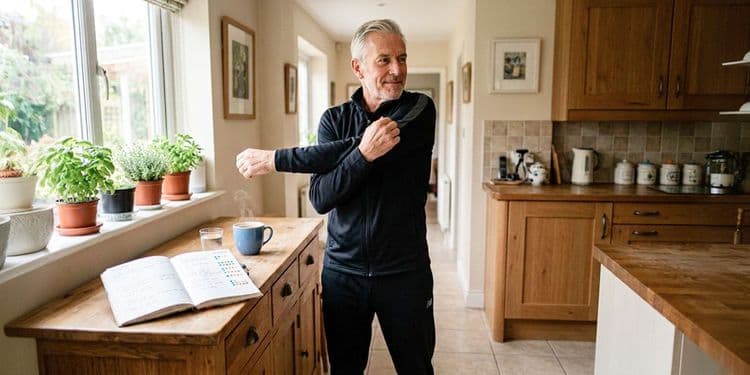

Staying active in your later years is one of the kindest things you can do to your body. Mild, regular exercise helps you stay strong and independent. This guide walks you through the best exercises for seniors. Most of them, you can do at home, with little or no equipment and at a comfortable pace.
Why Exercise Matters for Healthy Aging
Your body changes with age, but regular movement can shape how those changes affect you. Regular exercise helps you stay strong and steady on your feet and confident in everyday activities be it climbing stairs or carrying groceries.
If you're an older adult, engaging in aerobic exercise can lower the risk of heart disease, hypertension, diabetes, and stroke. Strength training is key for muscle and bone health. It reduces the risk of osteoporosis and falls. Older adults, who engage in higher levels of physical activity, have a significantly lower risk of developing dementia.
The impact isn’t just physical. Participating in regular physical activity can reduce the feeling of loneliness and the prospect of depression. Better sleep, more energy... all that within just a few weeks.
Healthy aging doesn't mean pushing yourself hard. It means moving regularly in ways that feel safe and enjoyable.
Who This Guide Is For
This guide can help anyone in their later years who wants to stay active and feel better in their daily life. It works for:
Beginners taking up exercise when they want a simple starting point.
Active seniors looking to round out their routine with balance and flexibility work.
Older adults with mild chronic conditions, like arthritis or high blood pressure, who need low-impact options.
People with limited mobility, since many of the exercises can be done seated in a sturdy chair.
You do not need any prior fitness experience. You do not have to be flexible or strong. All you need is a bit of space, comfortable clothing, and a will.
Before You Begin: Safety First
A few easy steps make your exercise routine safer and more enjoyable:
Consult a doctor before starting a new workout regimen, especially if you have heart conditions, recent surgeries, joint problems, or other conditions. Your doctor can tell you which movements to enjoy and which to adjust.
Set up a safe, clutter-free space. Clear the floor of rugs, cords, or anything that might cause a slip. Have a sturdy chair or wall close by for support if you need it.
Wear comfortable, supportive shoes and unrestrictive clothing that lets you move freely.
Listen to your body. A little muscle effort is normal. Sharp pain, dizziness, chest discomfort, or shortness of breath is a clear signal to stop and rest. If symptoms don't stop, contact your doctor.
Stay hydrated. Drink water before, during, and after your session.
Warm-Up Routine for Seniors
Start each session with 5 to 10 minutes of light movement. A good warm-up raises your heart rate gradually and loosens joints. It prepares your muscles for work while lowering the risk of strain.
Try this simple 5 to 10 minute warm-up before each session:
Marching in place (1 to 2 minutes): lift your knees carefully, swing your arms naturally.
Shoulder rolls (30 seconds each direction): roll your shoulders forward, then backward.
Gentle neck stretches (30 seconds): tilt your head toward each shoulder to relieve tension in the neck area.
Ankle circles (30 seconds each foot): seated or standing, slowly rotate each ankle in both directions to improve mobility.
Side bends (30 seconds): reach one arm overhead and lean gently to the opposite side, then switch.
Slow arm circles (30 seconds each direction): warm the shoulders and upper body.
Move slowly and breathe naturally. The goal is to feel warmer and looser, not exhausted.
Strength Training Exercises for Seniors
Strength training gains more importance with age. Loss of muscles has a significant effect on a person's life, and it begins at 30 with the muscle mass declining by 8% every decade. This decline only speeds up after 60.
Building muscle strength protects your joints. It helps you get up from a chair, carry your grandchildren and engage in other everyday activities.
Set a goal for 8 to 12 repetitions of each exercise, targeting major muscle groups. Start with 1 set and build to 2 or 3 sets as you feel ready. Train 2 to 3 days per week, with rest days in between.
Wall Push-ups (Upper Body Strength)
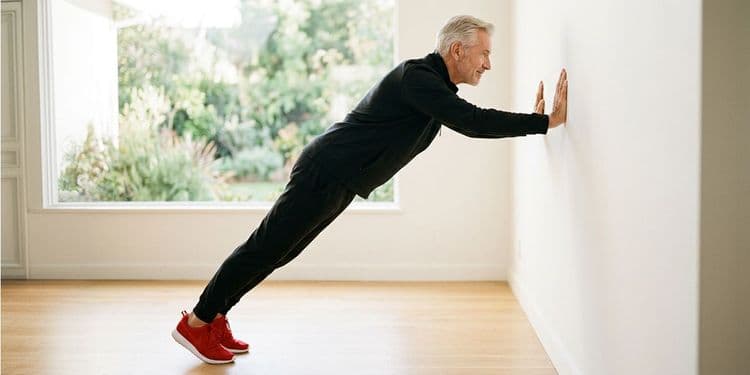
Wall push-ups are a gentle way to build upper body strength without the strain of floor push-ups.
How to do them:Stand facing a wall, about an arm's length away.
Place your hands flat on the wall at shoulder height, slightly wider than shoulder width. This is your starting position.
Lean carefully forward by bending your elbows, bringing your chest toward the wall.
Pause briefly, then slowly push back to the starting position.
Maintain a straight line through your body and keep your abdominal muscles gently engaged. Complete around 8 to 12 reps. To make it easier, stand closer to the wall. To make it more challenging, step your feet a little farther back.
Chair Squats (Lower Body Strength)
Chair squats build the leg strength you use every time you stand up or sit down.
How to do them:Stand in front of a sturdy chair with your feet hip width apart.
Cross your arms in front of your chest or hold them out for balance.
Lower yourself toward the chair carefully as if you were going to sit. Keep your knees bent over your feet.
Lightly touch the seat, then slowly stand back up.
Stay within 8 to 12 rep range. Use the chair for full support if needed by sitting all the way down and standing back up.
Seated Leg Raises
To strengthen the front of your thighs and support knee health, try seated leg raises.
How to do them:Sit in a sturdy chair with your back straight and feet flat on the floor.
With control, lift your right leg straight out in front of you until it is parallel to the floor.
Hold for 2 to 3 seconds, then slowly lower it back down.
Repeat with the opposite leg.
Do 8 to 12 reps on each leg. Let your shoulders stay relaxed and your core gently engaged.
Glute Bridges
For spine and balance support, do glute bridges. They strengthen your hips, glutes, and lower back.
How to do them:Lie on your back with your knees bent and feet flat on the floor, hip width apart.
Rest your arms at your sides.
Slowly lift your hips until your body forms a straight line from shoulders to knees.
Hold for 2 seconds, then lower back down carefully.
Complete around 8 to 12 repetitions. Move with control rather than speed.
Calf Raises
To improve balance, walking, and ankle strength, include calf raises in your routine.
How to do them:Stand behind a sturdy chair and rest your hands lightly on the back for support.
With feet flat on the floor and hip width apart, lift your heels until you are standing on the balls of your feet.
Hold for 1 to 2 seconds, then lower your heels back down.
Do 10 to 15 reps. Keep the movement slow and steady.
Balance Exercises for Seniors
Balance declines with age, making these exercises especially important. The CDC recommends that older adults engage in balance exercises at least three times a week. Balance exercises help improve stability and lower the risk of fall, which can lead to serious injuries. Incorporating strength and balance exercises can reduce the risk of falls among seniors timefold.
Always have a sturdy chair, counter, or wall nearby for support.
Single-Leg Stand
Single-leg stands help improve balance and stability.
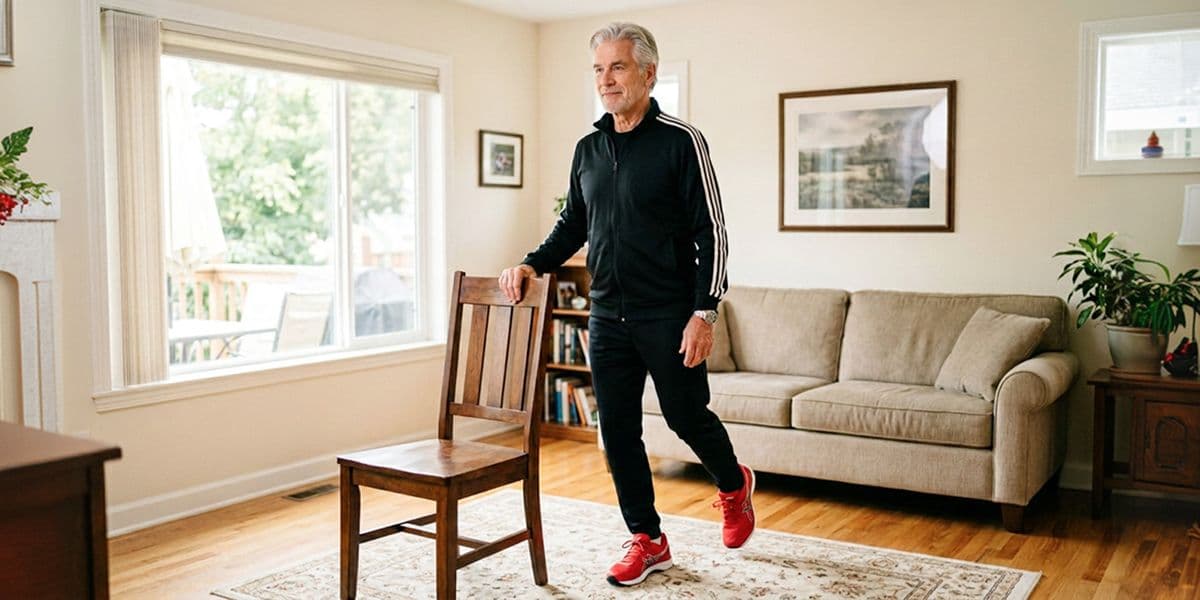
How to do them:Stand behind a sturdy chair with one hand on the back for support.
Slowly lift your right foot off the floor, balancing on your left foot.
Hold for 10 to 30 seconds, keeping your spine neutral and gaze forward.
Lower your right foot and repeat with the opposite side.
Start with 10 seconds and work up gradually. Begin holding the chair with both hands, then progress to one hand, and eventually to no hands as your stability improves.
Heel-to-Toe Walks
Doing Heel-to-toe walks, you enhance balance by placing one foot directly in front of the other, similar to walking a tightrope.
How to do them:Stand near a wall or counter for safety.
Place your right foot directly in front of your left foot, so the heel of your right foot touches the toes of your left foot.
Step forward with your left foot, placing the heel right in front of the toes of the right foot.
Continue for 10 to 20 steps, looking ahead, not down.
Move slowly and stop if you feel unsteady. This is one of the most effective balance training exercises for fall prevention.
Tai Chi Movements
Tai chi is an ancient practise that improves, among other things, coordination and stability through slow, flowing movements. It is a gentle, low-impact, and effective for balance and flexibility improvement, as well as calming the mind. Many seniors find Tai chi enjoyable because it does not feel like a hard workout, yet it brings impressive results.
If you are new to Tai chi, look for beginner videos or local classes. The MadMuscles app also includes guided programs like Tai Chi Walking and Chair Tai Chi, which are designed with older adults in mind.
Flexibility Exercises for Seniors
Flexibility work helps your joints move more freely and keeps muscles from tightening, which makes everyday activities easier and more comfortable. Mobility exercises are essential for seniors as they help maintain agility and flexibility. Practices like Tai Chi and yoga can also support joint health. They can help decrease arthritis symptoms and improve posture. Yoga also builds core strength and flexibility and can be advantageous for your routine.
Stretch gently, only to a comfortable point. Never bounce or force a stretch.
Seated Neck Stretches
Gently pull your right ear toward your right shoulder until you feel a light stretch on the left side of your neck. Hold for 15 to 20 seconds, then switch to the opposite side. Keep your shoulders relaxed.
Shoulder Blade Squeeze
Sit tall with feet flat on the floor. Slowly draw your shoulder blades together as if trying to hold a pencil between them. Hold for 5 seconds, then release. Repeat 8 to 10 times. This relieves tension in the upper back and improves posture.
Seated Hamstring Stretch
Sit on the edge of a sturdy chair. Extend your right leg straight in front of you with the heel on the floor and toes pointing up. Lean forward carefully from the hips until you feel a stretch behind your right leg. Hold for 20 to 30 seconds. Switch to the other leg.
Ankle Circles
In seating position, ankle circles can improve flexibility and mobility in the ankle joint. Lift one foot off the floor and slowly rotate your ankle 10 times in each direction. Repeat with the opposite leg.
Cardio Workouts for Seniors
Your heart and lungs get stronger with moderate cardio exercises. They also help lower blood pressure and give you more energy for daily living. The goal is to get your heart pumping at a steady, comfortable pace, where you can still hold a conversation.
Brisk Walking
Brisk walking is a simple and reliable way for older adults to stay active. It is effective for maintaining cardiovascular health and coordination, and the general recommendation is 30 minute sessions, five days a week.
You can break this into shorter walks. Three 10-minute walks across the day count just as much as one 30-minute walk. Walk in safe, flat areas, wear supportive shoes, and bring water in warm weather.
Water Aerobics
Water aerobics is ideal for individuals with arthritis. The buoyancy of water reduces joint impact while still providing resistance, so you build strength and endurance without straining your joints. Look for senior-friendly classes at a local pool.
Seated Marches
If standing cardio is too much, seated marches give you a heart-pumping workout from a chair. Sit tall in a sturdy chair with feet flat on the floor. Lift your right knee toward your chest, then lower it. Lift your left knee, then lower it. Continue for 30 to 60 seconds, swinging your arms naturally. Rest, then repeat for 2 to 3 rounds.
Seated exercises, such as seated marches and chair stands, can be very effective and improve strength, flexibility, and cardiovascular health. Chair exercises help older adults remain healthy, happy, and independent. They provide a safe way to engage in physical activity without the risk of falling or injury.
Sample Weekly Workout Plan for Seniors
Here is a simple, balanced workout plan you can follow at home. Swap exercises or adjust the schedule to fit your week. Always warm up first.
Day | Focus | Suggested Exercises |
Monday | Strength + Balance | Wall pushups, chair squats, seated leg raises, single-leg stand |
Tuesday | Cardio + Flexibility | 20 to 30 minute brisk walk, seated stretches |
Wednesday | Rest or Gentle Movement | Light walk, ankle circles, neck stretches |
Thursday | Strength + Balance | Glute bridges, calf raises, heel-to-toe walks |
Friday | Cardio + Flexibility | Seated marches or walking, full stretch routine |
Saturday | Tai Chi or Yoga | 20 to 30 minute gentle session for balance and flexibility |
Sunday | Rest | Light walking and rest |
This plan brings together strength, balance, flexibility, and cardio in a simple way. Stick with it for 4 weeks and see how easier everyday activities get.
How to Progress Safely
Progressive overload is a key principle in strength training. It focuses on 8 to 12 repetitions targeting major muscle groups. As your body gets stronger, you slowly add a little more challenge.
For seniors, safe progression looks like this:
Add reps first. Move from 8 to 10 to 12 reps before changing anything else.
Add a second or third set once you can complete all reps without effort.
Hold balance positions longer. Work from 10 seconds to 30 seconds on a single-leg stand.
Lengthen your walks. Build from 10 minutes to 20, then to 30 minutes.
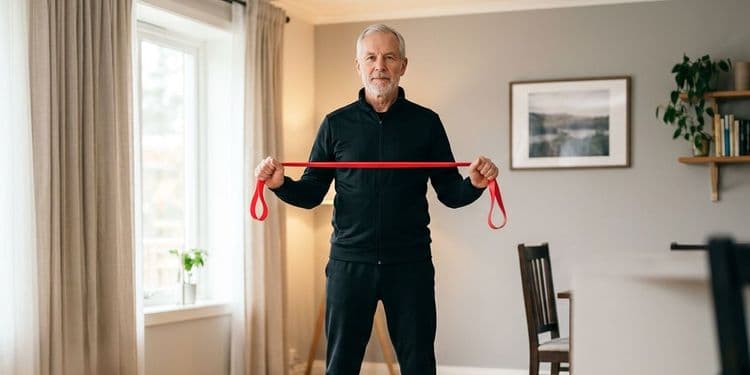
Add light resistance bands. Resistance bands provide joint-friendly exercises with adjustable resistance, and they are gentle on aging joints.
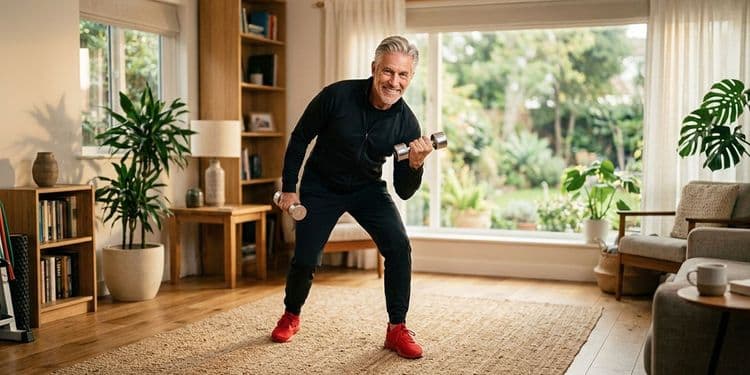
Try gentle hand weights. Once bodyweight feels easy, light hand weights can deepen your strength training.
Stay at each level for 1 to 2 weeks before progressing. There is no rush. The goal is steady, comfortable progress that builds confidence.
Common Mistakes to Avoid
A few simple corrections will keep your exercise program safe and rewarding.
Skipping the warm-up. Cold muscles strain more easily. Always warm up for at least 5 minutes before strength or cardio work.
Holding your breath. Breathe naturally throughout each exercise. A good rule is to exhale during the effort and inhale on the easier part of the movement.
Doing too much too soon. Starting at a comfortable level and building gradually leads to better results than pushing hard for a few days and burning out.
Ignoring pain. Mild muscle effort is healthy. Sharp or lasting pain is a signal to stop and check in with your doctor.
Forgetting balance and flexibility. Many people focus only on strength or walking. A complete routine includes balance and flexibility exercises, too. They protect you from falls and stiffness.
Exercising alone with no support nearby. Always keep a sturdy chair, counter, or wall close, especially during balance work.
Nutrition and Recovery for Seniors
Exercise is only one part of staying healthy. What you eat and how you rest matter just as much.
Protein supports your muscles. Older adults often need a little more protein than younger adults to maintain muscle. Try to include a protein source like eggs, fish, chicken, dairy, beans, or tofu in each meal.
Hydration matters. Older adults sometimes feel less thirsty, so drink water regularly throughout the day, not only when you feel thirst.
Sleep is when your body repairs. Get 7 to 9 hours of sleep per night. A consistent sleep routine helps recovery and energy levels.
Eat plenty of plants. Fruits, vegetables, whole grains, and healthy fats support heart and brain health.
If you want personalized meal support, the MadMuscles app offers customized meal plans built around your goals, your dietary preferences, and your fitness routine.
Take the First Step Today
The best exercises are the ones you can stick with, the ones that feel safe and good. You do not need a gym or fancy equipment. A sturdy chair, a little space, and 20 to 30 minutes a day are enough to make a real difference in your strength, balance, flexibility, and confidence.
Pick one exercise from this guide and try it today. Tomorrow, add another. After a few weeks, you may notice that you climb stairs with ease, sleep better, and feel steadier on your feet.
If you would like a guided plan that adjusts to your level, the MadMuscles app offers programs built for older adults, including Basic Workouts for Seniors, Chair Workout Challenge, Chair Tai Chi, Tai Chi Walking, and Indoor Walking: Cardio Kickstart. Each program includes video demonstrations and voice-guided instructions, so you always know what to do next.
Staying active means doing a little, doing it often, doing it right.