
Why Exercise at Home Matters for Older Adults
Staying physically active is one of the best things you can do for yourself as you age. The good news is you do not need a gym or fancy machines. Exercise at home for elderly people removes common barriers like travel and cost. You can train at your own pace, in a space you already know.
Regular physical activity supports your heart, bones, mood, and independence. The goal is to keep doing the daily tasks you enjoy, like carrying groceries or playing with grandchildren, without strain or fear of falling.
Health Benefits of Regular Physical Activity for Older Adults
Regular exercise brings with it invaluable gains for people in later stages in life. It transforms the quality of life and allows senior to enjoy it for years to come.
Stronger Muscles, Bones, and Better Balance
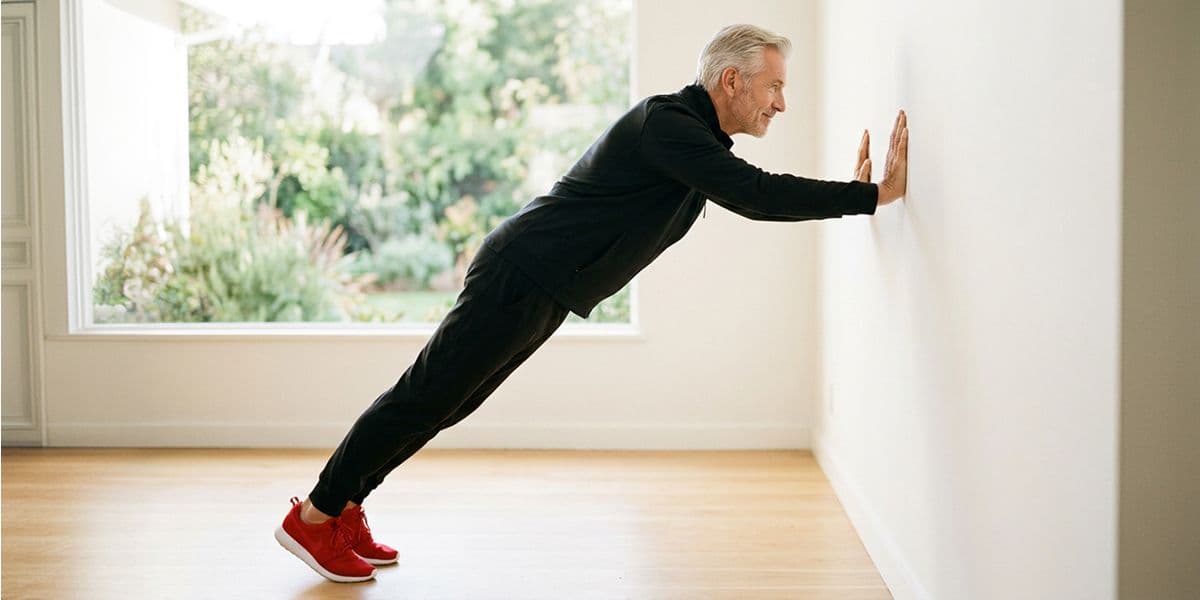
Muscle mass declines by up to 8 percent per decade after age 30, and the loss speeds up after 60. Strength training is the most direct way to slow this decline. Resistance training using your body weight helps preserve muscle and improves bone density. It may reduce the risk of osteoporosis and fractures, and help with fall prevention. Wall push-ups, chair squats, glute bridges and some other exercises are good muscle strengthening activities for a home workout. Balance also declines with age, but balance training works fast. Even simple movements practiced 3 times a week can improve balance and lower fall risk.
Lower Blood Pressure and Heart Health
Aerobic exercise like brisk walking or water aerobics can with time lower blood pressure and resting heart rate. Regular aerobic physical activity supports cardiovascular health and lowers the risk of heart disease, hypertension, diabetes, and stroke. Resistance training and any amount of weight training are indispensable for helping lower blood pressure for people 60+.
Mobility and Joint Health
To retain agility and flexibility, do mobility exercises. They will make daily living tasks easier. Yoga and tai chi can improve overall range of motion and preserve joint health. Simple stretches like overhead reaches reduce stiffness, supporting healthy aging and an active lifestyle.
Before You Start: Safety First
Talk to Your Doctor or a Physical Therapy Professional
Before starting a new workout routine, especially if you have a chronic condition or recent injury, consult with a doctor. A physical therapy professional can also adapt these exercises to your needs and check your form.
Set Up a Safe Space
Choose a clear area free of rugs and slippery floors. Keep a sturdy chair within reach for balance support. Wear comfortable clothes and supportive shoes. Sharp pain, dizziness, nausea, or breathlessness is a signal to stop and rest.
The 5-Minute Warm-Up Routine
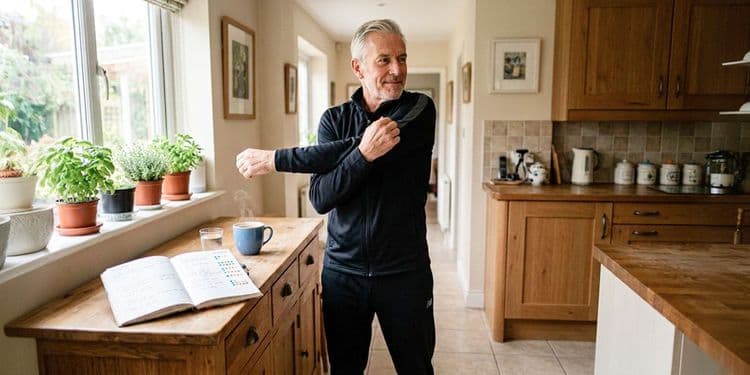
Always warm up before any physical activity. Five to ten minutes of light movement, including shoulder rolls and easy steps, raises your body temperature, loosens your joints, preparing you for the workout.
Exercise | Time | Focus |
Marching in place | 60 seconds | Heart rate, leg activation |
Shoulder rolls (forward and back) | 30 seconds each way | Loosen the upper body |
Arm circles | 30 seconds each way | Shoulder mobility |
Side-to-side steps | 60 seconds | Hip activation |
Gentle neck turns | 30 seconds each way | Neck mobility |
Ankle circles | 30 seconds each foot | Ankle mobility |
Strength Training Exercises to Improve Strength at Home
These muscle strengthening exercises use only body weight and cover your upper body, lower body, and core. Set the goal of 2 sessions per week with at least one rest day between them.
Wall Push Ups for Upper Body Strength
Wall push ups improve strength in your chest, shoulders, and arms with very little stress on your wrists or back.
Stand facing a wall, about an arm's length away, with hands flat on the wall at shoulder height. Bring your chest toward the wall by bending the elbows. Your body should form a straight line. Push back to the starting position with your arms straight.
Do 2 sets of 8 to 12 reps. If too challenging, step closer to the wall for an easier version.
Chair Squats for Lower Body Strength
To build lower body strength and improve your ability to stand up safely from a chair or a couch, include chair squats in your exercise routine.
Stand in front of a sturdy chair with feet hip width apart and arms crossed over your chest. Lower your hips back as if you are sitting down, keeping your knees behind your toes. Touch the chair lightly, then drive through your heels to return to the starting position.
Do 2 sets of 8 to 10 reps. If you feel unsteady, use the chair for support.
Glute Bridges
Strengthening your hips, glutes, and lower back is very important because it makes walking, climbing stairs, or rising from a chair much easier. Glute bridges are an effective tool to achieve that.
Lie flat on your back, keep the feet on the floor hip width apart, knees bent. Lift your hips and squeeze the glutes at the same time. Do it till your body forms a straight line from shoulders to knees. Then move back slowly to the floor, maintaining control the whole time.
Do 2 sets of 10 to 12 reps.
Standing Calf Raises
Do this exercise to strengthen bones in your lower legs and gain better balance and ankle stability.
Stand behind a sturdy chair with feet flat on the floor, holding the chair lightly for balance. Lift your heels until you are on the balls of your feet, hold for 1 second, then lower. Do it slowly.
Do 2 sets of 10 to 15 reps.
Seated Leg Raises
Leg raises can be done in both seating and standing positions. They help improve core strength with very low strain on the joints.
Sit tall in a sturdy chair with feet flat on the floor. Slowly lift your right leg straight until it is parallel to the floor, hold for 2 seconds, then lower to the starting position. Switch and repeat with the opposite leg.
Do 2 sets of 8 to 10 reps per leg.
Balance Exercises to Improve Balance
Balance exercises are vital for fall prevention. The CDC recommends balance training at least 3 days per week. Always perform these exercises with a sturdy chair, counter, or wall nearby for support.
Single-Leg Stand on One Foot
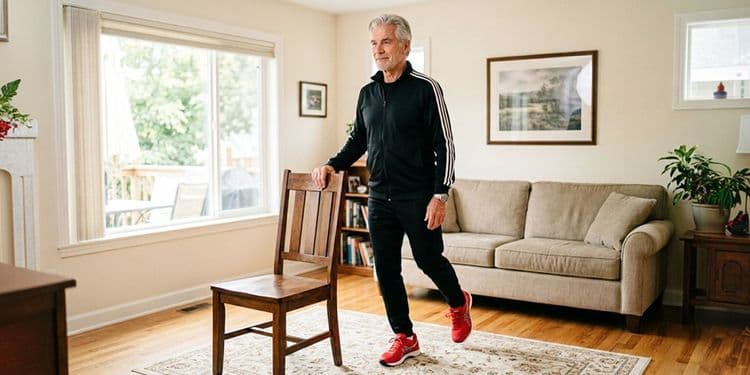
For this simple move that trains small stabilizing muscles around your ankles, knees, and hips, use a sturdy chair for support.
Stand behind a chair, holding it lightly with both hands. Lift your left foot off the floor carefully and balance on one foot for 10 seconds. Switch and balance on the opposite leg.
Do 3 reps per leg. Build up gradually to 30 seconds on each leg.
Heel-to-Toe Walk
Challenging balance in a way that mimics real-life movement, this pattern helps maintain balance during everyday tasks.
Stand near a wall or counter for support. Place your right foot directly in front of your left foot, heel touching toe, then step forward with your left foot in front of your right foot. Continue for 10 to 20 steps, looking forward, not down.
Side Leg Raises
To strengthen the hip muscles that support balance and walking, include side leg raises in your exercise routine.
Stand behind a sturdy chair, holding it lightly with both hands. Keep your back straight and slowly lift your right leg out to the side, hold for 1 second, then slowly lower. Repeat with your left leg.
Do 2 sets of 8 to 10 reps per side. Keep the movement slight at first to enhance balance safely.
Knee Lifts
Knee lifts improve hip mobility and challenge your balance training in a very gentle way.
Stand tall behind a sturdy chair, holding it for support. Lift your right knee toward your chest carefully, as high as is comfortable, then lower with control. Lift the opposite leg, alternating sides at a steady pace.
Do 2 sets of 8 to 10 reps per leg.
Back Leg Raises
Glutes and lower back support you upright posture and walking. Back leg raises help strengthen them very effectively.
Stand behind a sturdy chair, holding it lightly with both hands. Keep your back straight and lift your right leg straight back, without bending your knee. Hold for 1 second, then lower, and repeat with the back leg on the opposite side. Careful. controlled movements.
Do 2 sets of 8 to 10 reps per side. Keep the lifting motion small.
Core and Mobility Exercises
With a strong core, you can stand and walk with confidence. These exercises target your abdominal muscles and improve hip mobility without floor work.
Seated Marches
Seated marches gently strengthen the core and hip flexors. Sit tall in a sturdy chair with feet flat. Lift your right knee toward your chest, then lower. Lift your left knee, then lower. Continue alternating at a comfortable pace. Do 2 sets of 12 to 16 reps total.
Seated Twists and Overhead Reaches
To relieve back tension, include seated twists in your regimen. Sit tall, hands on knees, and slowly turn your upper body to the right as far as is comfortable. Hold 2 seconds, then twist to the left. For overhead reaches, raise both arms toward the ceiling and gently pull your spine tall. These movements support your shoulder blade mobility. Do 2 sets of 8 to 10 reps each.
Aerobic Exercise You Can Do at Home
Older adults should aim for at least 150 minutes of moderate aerobic exercise each week. Aerobic activity supports the heart, lungs, and overall stamina. Brisk walking can be effective even in short 10-minute sessions.
Marching in Place
This is a safe form of moderate aerobic exercise at any fitness level. Stand tall with feet hip width apart. Lift your right knee, then your left knee. Keep a steady rhythm. Swing your arms naturally as you march. Continue for 1 to 5 minutes.
Indoor Walking and Water Aerobics
Walking around your home is one of the simplest forms of physical activity. Walk through your hallway and rooms at a steady pace, adding a few extra minutes each week. If you have access to a pool, water aerobics is one of the best low-impact options for older adults. The water is very kind on your joints while still providing resistance.
Sample Weekly Workout Plan
This simple weekly schedule combines strength, balance, and aerobic work. Each session takes 20 to 30 minutes.
Day | Focus |
Monday | Warm-up + strength training exercises |
Tuesday | Warm-up + balance exercises + 10 min indoor walking |
Wednesday | Rest or gentle stretching |
Thursday | Warm-up + strength training exercises |
Friday | Warm-up + balance exercises + 10 min indoor walking |
Saturday | Aerobic activity (marching, step touches, walking) |
Sunday | Rest or gentle tai chi |
Listen to your body. If a day feels too tiring, don't push through. Swap it for a rest day.
How to Progress Safely
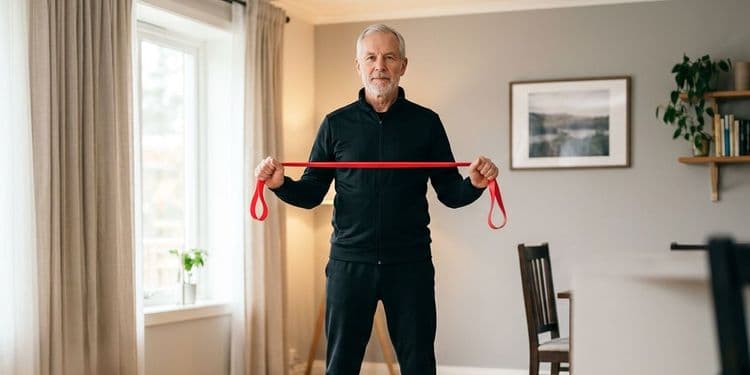
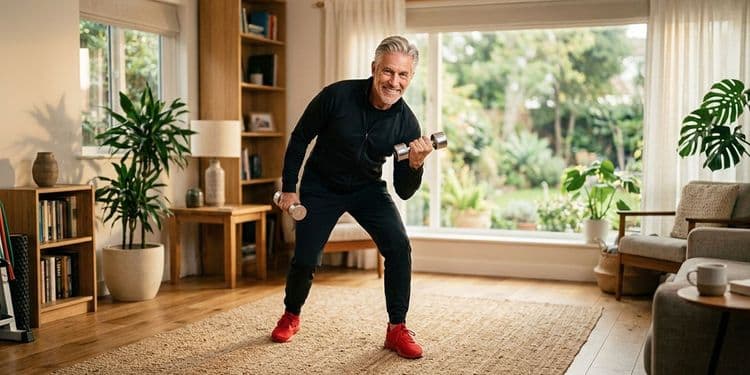
Progress is small and steady. Start with the lower rep range and add 1 or 2 reps every 1 to 2 weeks. For balance work, build your single-leg stand from 10 seconds to 30 seconds over a few weeks. Once basic exercises feel easy, add the next challenge with lightweight resistance bands or hand weights. Walking, aqua aerobic, gentle yoga, and tai chi all support healthy aging, so mix and match to keep things interesting.
Common Mistakes to Avoid
Skipping the warm-up. Cold muscles are more likely to strain. Always start with 5 to 10 minutes of light movement.
Holding your breath. Breathe naturally throughout each exercise. Exhale on the effort, inhale on the release.
Pushing through pain. Mild muscle effort is normal. Sharp or joint pain is not. Stop and rest if anything feels wrong.
Skipping rest days. Two strength sessions and a few balance sessions per week is plenty when you are starting out. Take at least one full day off each week.
Tai Chi as a Gentle Alternative
If traditional strength training feels intimidating, tai chi is a wonderful option. It is a slow, flowing practice that improves balance, muscle strength, joint mobility, and a calm mind. You can start with just 10 minutes a day. Exercise standing or seated, depending on your comfort level.
How MadMuscles Supports Senior Workouts
The MadMuscles app offers programs designed for older adults and people who prefer mild, low-impact training. Options include Basic Workouts for Seniors, Chair Workout Challenge, Chair Tai Chi, Tai Chi Walking, and Indoor Walking: Cardio Kickstart. Each program comes with video demonstrations and voice-guided instructions. The app builds your personalized weekly schedule around your fitness level. You can also change your workout type at any time if your needs change.
Start Today, One Small Step at a Time
You do not need a gym, special equipment, a huge space, or hours of free time. A sturdy chair, a wall, and 15 to 30 minutes a day are enough to build strength, sharpen balance, improve stamina, and protect your independence for years to come. Start with the warm-up. Try one or two exercises from each section. Add a little more next week.
The MadMuscles app offers personalized programs adapted to your fitness level, with video demonstrations and voice guidance for every exercise. Whichever path you choose, the most important step is the first one. Pick a day. Set a time. Begin.