
Why Strength Training Matters for Older Adults
After age 30, your body naturally starts losing muscle. Muscle mass declines by up to 8 percent per decade, and this rate increases after 60. This gradual loss affects how easily you stand up from a chair, carry groceries or grandchildren, or climb the stairs.
Regular strength training reverses much of this decline. As your muscles work against resistance, they rebuild. The bone density improves, too. Stronger bones and stronger leg muscles lower your fall risk and reduce stiffness in the joints.
The benefits are even broader. Regular exercise lowers the risk of such chronic diseases as heart disease, hypertension, diabetes, or stroke. No less important, physical activity supports mental health and reduces the feelings of isolation or depression while improving overall quality of life. That is why resistance work is one of the most effective tools for healthy aging and staying active.
Who These Senior Strength Exercises Are For
This guide is for adults aged 50 and older who want to build strength in a safe home environment. It works whether you have never lifted a weight in your life or are returning to physical activity after a break.
If you have a chronic condition or undertook recent surgery, speak with your doctor or a physical therapist before starting. Physical therapy professionals can adapt any exercise to your needs. The goal is always to feel stronger and enjoy yourself.
What You Need to Get Started
You need very little to begin: a sturdy chair, comfortable clothes, and enough floor space to step in any direction. As you progress, two simple tools help.
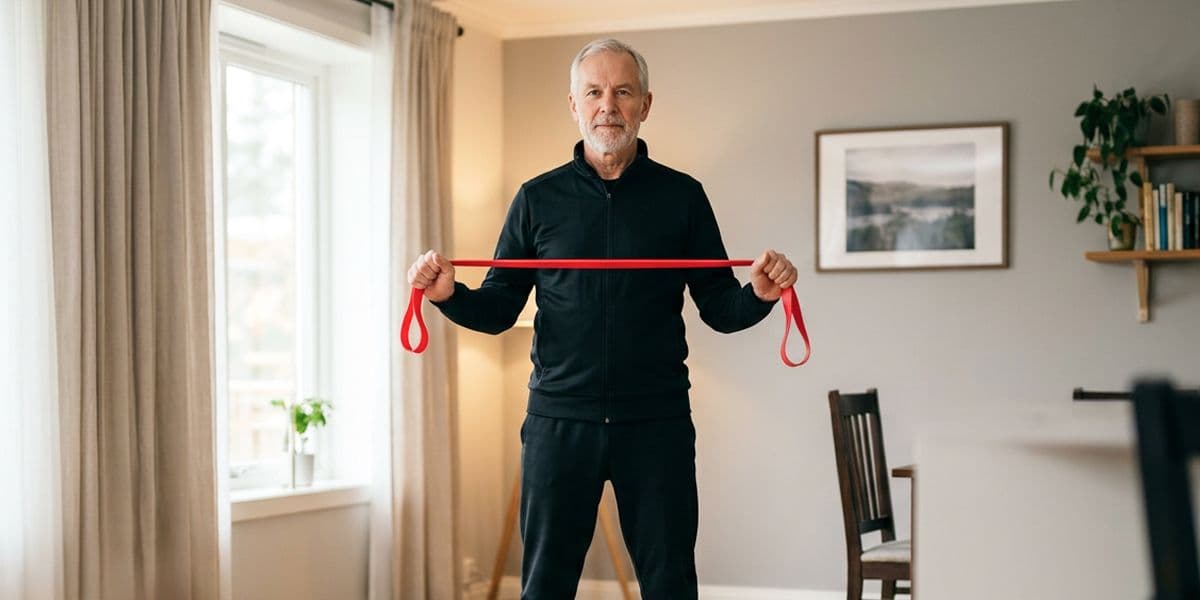
Resistance bands are light and gentle on joints. Adjustable dumbbells (1 to 5 pounds is plenty to start) work well for arm exercises. Wear flat, supportive shoes and keep a chair within arm's reach for balance work.
In the MadMuscles app, you can choose your equipment level during setup, and the program adjusts to what you have at home. Learn more about equipment options for senior workouts.
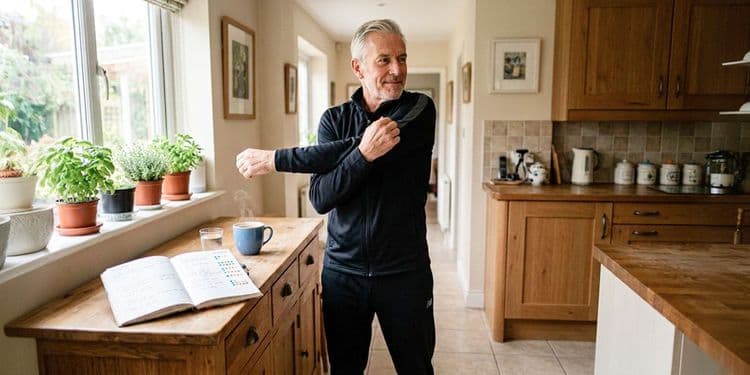
How to Warm Up Before a Workout
Take 5 minutes to wake up your body. A gentle warm-up sends blood to your muscles and loosens stiff joints. This effectively lowers injury risk.
March in place for 1 minute
Roll your shoulders forward and back, 10 times each direction
Reach your arms overhead and lower them slowly, 8 times
Do 8 gentle sit-to-stands from a chair
Step side to side for 1 minute
Move and breathe steadily. Don't rush. Skip any movement that causes pain and ask a physical therapist for a swap if needed.
Best Senior Strength Exercises
These foundation movements target every major muscle group. Start with 1 set of 10 to 15 repetitions and progress to 2 to 3 sets as you grow stronger. Proper form is crucial; ensure a slow performance and stay in control to avoid injury.
Chair Squats
Chair squats strengthen the quadriceps, glutes, and core. They mirror the motion of standing up, one of the most important skills for daily living.
Stand in front of a chair with your feet shoulder-width apart. Lower yourself toward the seat as if sitting down. Tap the chair, then push through your feet to return to the starting position. Keep your chest lifted and your knees tracking over your toes.
Heel Raises
If you need to improve balance and lower-leg strength, heel raises are a wise choice. Stand behind a chair with your feet hip-width apart and your hands on the chair back for support. Lift your heels until you are on the balls of your feet, hold for a second, then lower gradually.
Aim for 10 to 15 heel raises. As you build strength, try heel raises on one foot at a time.
Stationary Lunges
Strengthening the entire lower body and single-leg stability are the main goals of this exercise. Step your right foot forward and your left foot back. Bend both knees to lower your back knee toward the floor. Keep your chest lifted, then push through your front foot to stand. Complete all reps, then switch to the other leg.
You can hold to a wall lightly with your left hand for balance until you feel steady.
Glute Bridges
Glute bridges strengthen the glutes and lower back, which helps keep a good posture and protect the spine. Flat on your back, knees bent and hip-width apart. Lift your hips by pressing on your heels until your body is a straight line from shoulders to knees. Then return back down. Don't rush.
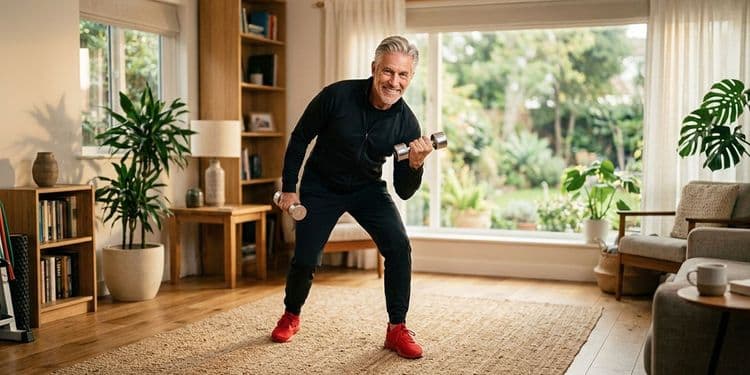
Bicep Curls
To make carrying objects easier, include bicep curls in your routine. This exercise involves lifting weights toward the shoulders. Hold dumbbells in each hand with arms by your sides. Bend your elbows to lift the weights toward your shoulders, then slowly lower with control. Keep elbows close to your body.
If dumbbells feel too heavy, do bicep curls with a resistance band by standing on the middle and curling the handles.
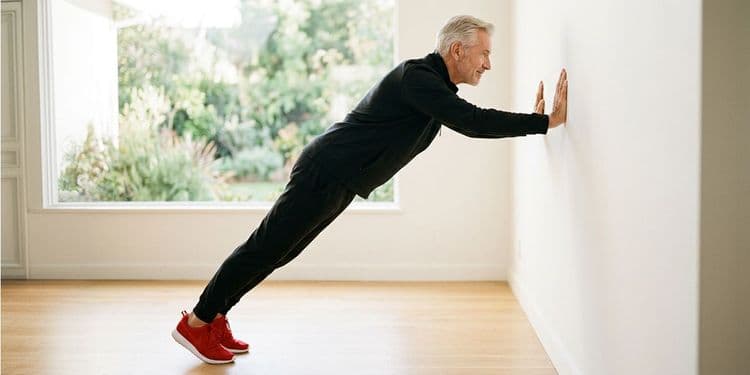
Wall Push-Ups
Unlike floor push-ups, wall push-ups are a joint-friendly alternative to build chest and arm strength. Stand an arm's length from a wall with your feet shoulder-width apart. Place your hands on the wall at shoulder height. Bend your elbows to bring your chest toward the wall, then push back to the starting position.
Overhead Press
Reaching high objects on shelves gets easier with overhead press. Hold dumbbells at shoulder height with elbows bent. Press the weights straight up until your arms are almost completely extended, then slowly lower back to shoulder height.
Seated Row
A seated row performed with a resistance band strengthens the back and improves posture. Sit on a sturdy chair with your legs extended. Loop the band around your feet and hold one handle in each hand. Pull the handles toward your sides, squeezing your shoulder blades together. Slowly return to the starting position.
Focus on bringing your shoulder blades down and back. This is important for building muscles that keep your posture tall.
Dead Bugs
For core stability and preventing lower back strain, dead bugs are truly effective. Lie down. Bend your knees at the right angle and hold your hands out toward the ceiling. Lower your right arm gradually overhead and extend your left leg at the same time. Return to the start and repeat with the other side. Strong core muscles support every other movement in this list.
Balance Exercises for Fall Prevention
Balance work is essential for fall prevention and minimizing slip-and-fall accidents. These movements train the small stabilizing muscles that keep you upright when you step off a curb or turn quickly.
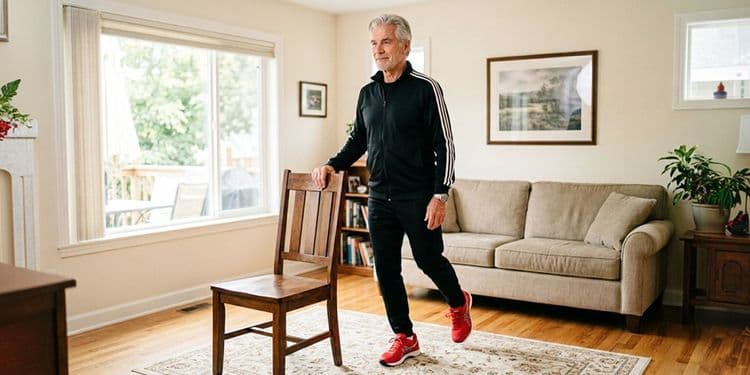
Single Leg Stands
Single leg stands, also called single-leg stances, are simple and very effective. Stand behind a chair with your hands resting on the back. Lift one foot off the floor and balance on the other leg for 10 to 30 seconds. Switch and repeat.
Practice single leg stands daily. Over time, try holding lightly with one finger, then no hands at all.
Heel-to-Toe Walking
The goal of heel-to-toe walking is increasing stability and coordination. Place your right foot directly in front of your left, so the heel touches the toes. Take 10 steps in a straight line, then turn around and return.
Tai Chi for Balance
Experts worldwide recommend Tai chi for older adults because it combines slow, flowing movements with mindful breathing. Even a short tai chi session a few times a week can improve balance and prevent falls, while also lowering blood pressure.
Aerobic Exercise to Pair With Strength Work
Strength training builds muscle. Aerobic exercise supports your heart and lungs. Together they form a complete exercise regimen.
Walking is the simplest option, with 20 to 30 minutes most days. Indoor walking, swimming, and stationary cycling are all gentle on joints. Tai chi walking blends light movement with mindful breathing and works well on rest days.
A Sample Weekly Workout Routine
Set a goal for two strength training sessions per week on non-consecutive days. Add balance exercises and aerobic activity on the other days. On lighter days, a single workout that includes a few of each type works.
Day | Focus | Time |
Monday | Strength session (full body) | 30 minutes |
Tuesday | Walking + balance work | 30 minutes |
Wednesday | Tai chi or gentle stretching | 20 minutes |
Thursday | Strength session (full body) | 30 minutes |
Friday | Walking + balance work | 30 minutes |
Saturday | Rest or gentle activity | Optional |
Sunday | Rest | Rest day |
Common Mistakes to Avoid
Skipping the warm-up. Cold muscles strain easily. Always start with 5 minutes of light movement.
Holding your breath. Breathe out as you lift and in as you lower. Steady breathing helps lower blood pressure spikes during effort.
Moving too quickly. Slow, controlled movement protects your joints and trains muscles better than speed.
Using too much weight. Start light. Finish each set with one or two reps left in the tank.
Doing too much too soon. Build gradually. Add a set, increase reps, or move to a harder version only when your routine feels comfortable.
Start Building Strength at Any Age
Two short sessions a week protect your bones and build your muscles. Add a few minutes of balance work and a little aerobic activity, and you have a complete routine that makes your daily life easier and supports your independence for years to come.
The MadMuscles app offers Basic Workouts for Seniors and Chair Workout programs adapted to your fitness level and the equipment you have. Each session includes video demonstrations and voice guidance while allowing you to progress gently. You can change your workout type at any time, and the program adjusts automatically.
Pick one exercise from this guide and try it today. Tomorrow, add another. Building strength at any age starts with one small, consistent step.