
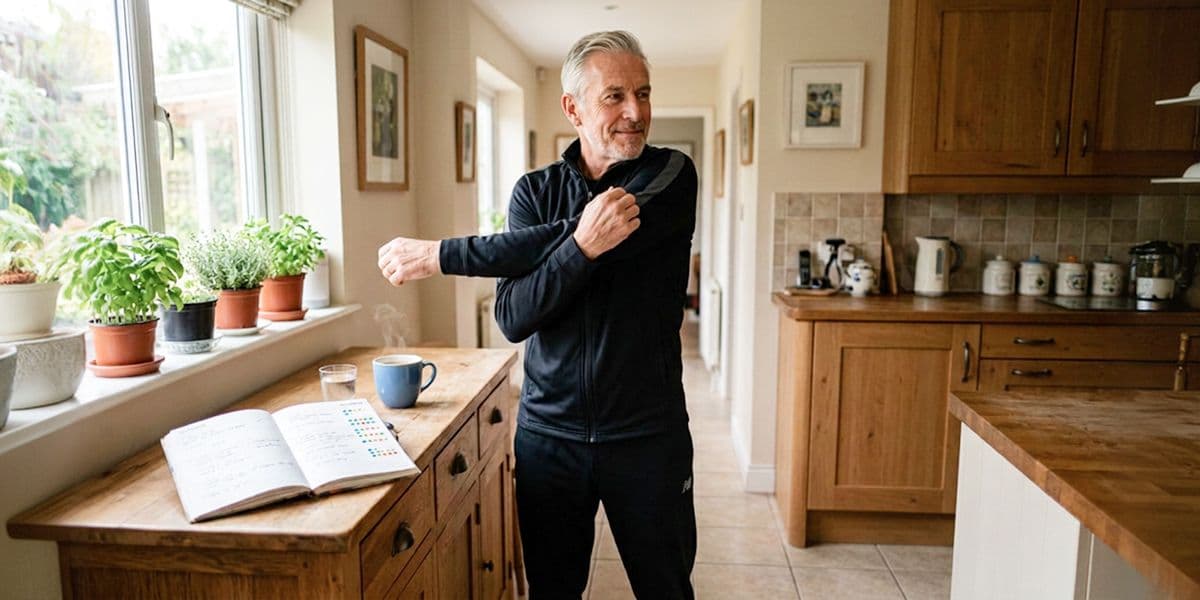
Why Regular Exercise Matters for Older Adults
Staying active is one of the greatest gifts you can give to your body as you get older. Regular exercise for seniors can increase both energy and happiness levels, and lead to improved overall quality of life. Physical activity reduces the risk or lessens the symptoms of chronic diseases such as heart disease and high blood pressure. It supports functional ability, which means that you handle daily tasks like climbing stairs or carrying groceries with more ease.
Mental health benefits of physical activity are just as real. Exercise has been shown to improve mental health and cognitive function in seniors, adding to better brain health. A simple workout routine becomes part of your week, and that consistency is what brings results over time.
Balance naturally declines with age, which is why fall prevention is one of the biggest health gains of an exercise plan for seniors. Strength training, stretching, balance, and mild cardio work together to support functional ability and protect joints. Regular physical activity also helps lower blood pressure and support cardiovascular health. Many older adults find that consistent physical activity provides strong support for healthy and happy aging.
This guide gives you a full weekly workout plan with simple exercises and clear safety tips, so you can begin your fitness journey at your own pace.
Who This Exercise Plan for Seniors Is For
This program is built for older adults who want a safe and mild way to stay physically active. It welcomes:
Active beginners who want to start a new exercise program with simple, doable steps
Returning exercisers who have been less physically active and want to rebuild their fitness routine gradually
People with limited mobility who need chair-based options and seated exercise workouts
Anyone aiming for healthy aging through strength, stretching, balance, and mild aerobic activity
You do not need to be in great shape to begin. Every exercise has easier and more advanced versions. The goal is to stay active, build muscle strength in the legs, core, and upper body, and improve balance at a pace that feels comfortable.
Talk to Your Doctor Before You Begin
Consult with a healthcare provider before starting a new exercise regimen, particularly if you are managing chronic conditions or have a history of falls. A short check-in with your doctor helps you understand which specific exercises are safe and which to adapt. This shoukd be the first step in any responsible exercise plan for seniors.
If you experience pain, dizziness, or shortness of breath during any physical activity, stop and rest. Listen to your body and adjust the workout plan. You shoud feel comfortable with your routine.
What You Need to Get Started
You can begin this fitness program with very little equipment:
A sturdy chair without wheels for support and seated exercises
Comfortable clothes and supportive shoes
A small open space, about the size of a yoga mat
Resistance bands (optional) to add challenge as you progress
Light hand weights (optional) for upper body work
A water bottle, as staying hydrated is critical
The MadMuscles app builds personalized exercise programs that adapt to your level and goals. You can choose seated, standing, or mixed sessions, and the app adjusts difficulty based on how each session feels. Learn more about workouts for beginners.
Warm-Up Before Every Session
Warm up and cool down for 5 minutes with light movement and stretching before and after a workout. A short warm-up wakes up your muscles and raises your heart rate gradually. It also lowers the risk of a strain.
Try this 5-minute warm-up before any session of physical activity:
Movement | Duration | Focus |
Marching in place (or seated) | 60 seconds | Heart rate, leg muscles |
Shoulder rolls | 30 seconds | Upper body warmth |
Arm circles (small) | 30 seconds | Shoulder mobility |
Ankle circles | 30 seconds each foot | Foot and ankle warm-up |
Neck stretches (slow) | 30 seconds | Neck flexibility |
Side bends | 30 seconds | Spine mobility |
Knee lifts (gentle) | 60 seconds | Hips and core muscles |
Stay relaxed. Each movement feel comfortable, not rushed.
Your Weekly Exercise Plan for Seniors
This weekly routine spreads strength training, balance work, stretching, and aerobic activity across the week. The structure follows current health guidelines for physical activity in older adults and gives your body time to rest and recover.
Day | Focus | Time |
Monday | Strength training (full body) | 25-30 minutes |
Tuesday | Aerobic activity (brisk walking or water aerobics) | 30 minutes |
Wednesday | Stretching and mobility | 20 minutes |
Thursday | Strength training (lower body and core) | 25-30 minutes |
Friday | Balance exercises and tai chi | 25 minutes |
Saturday | Light aerobic exercise | 30 minutes |
Sunday | Gentle stretching and rest | 15-20 minutes |
The CDC recommends that adults aged 65 and older aim for at least 150 minutes a week of moderate-intensity activity, such as brisk walking, or 75 minutes a week of vigorous intensity activity, such as jogging. Vigorous intensity activity is optional. Most older adults reach their goals through brisk walking or water aerobics. This weekly plan helps you reach those targets in a way that feels manageable.
Tip: If a full 30-minute session feels daunting, take a friendlier approach called "exercise snacking". Break exercise into smaller 10-minute bursts throughout a day. Three short sessions equal one full workout and count toward your weekly physical activity.
Strength Training Exercises for Seniors
Engaging in muscle strengthening activities on at least two days a week is a comfortable and effective way to maintain muscle mass and strength. Strength training exercises, including bodyweight movements like wall push ups and calf raises, can improve muscle strength and balance, indispensable for maintaining independence in older adults.
These exercises use your own body weight to build leg muscles, back muscles, abdominal and core muscles gradually. Move slowly and stop if anything feels uncomfortable.
Sit-to-Stand
Sit on a sturdy chair with feet flat on the floor. Stand up slowly without using your hands, then lower yourself back down. This exercise builds leg strength and supports the muscles you use every day for daily living and tasks like carrying groceries.
Target: 2 sets of 8-10 reps.
Wall Push-Ups
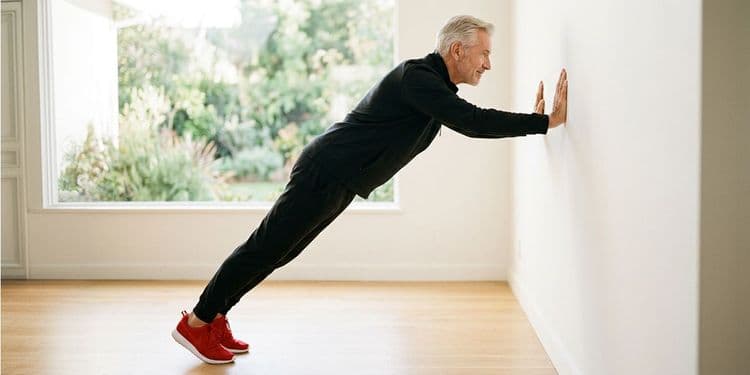
Stand facing a wall, arms extended at shoulder height with hands flat against the wall. Slowly bend your elbows and lower your chest toward the wall, then push back to the starting position. Keep your body in a straight line and your right elbow and left elbow tucked close to your sides.
Target: 2 sets of 8-12 push ups.
Calf Raises
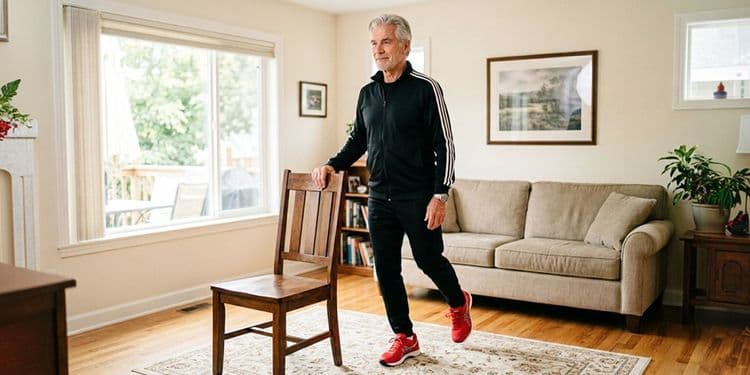
Stand behind a chair with feet hip width apart. Hold the chair lightly. Slowly rise onto the balls of your feet, hold for 1 second, then slowly lower. This movement strengthens the lower leg muscles and supports steadiness.
Target: 2 sets of 10-15 reps.
Glute Bridges
Lying on a flat surface, position your feet flat and bend the knees. Lift up the hips, pushing the heels down. Your body should become a straight line. Squeeze your glutes at the top and hold for 2 seconds. move back carefully. Glute bridges are very effective at strengthening the hips, abdominal and lower back muscles.
Target: 2 sets of 8-10 reps.
Seated Leg Lifts
Sit tall on a chair with feet flat. Slowly extend your right foot straight out, hold for 2 seconds, then lower. Repeat with the other leg. This exercise strengthens the muscles around your knees and supports leg strength.
Target: 2 sets of 10 reps each leg.
Wall Slides for Shoulders
Stand with your back against a wall, feet hip width apart. Raise your arms to shoulder height, palms facing forward. Slowly slide your arms up the wall and back down, keeping the shoulder blade pressed gently against the wall. This builds shoulder muscles and supports posture.
Target: 2 sets of 8 reps.
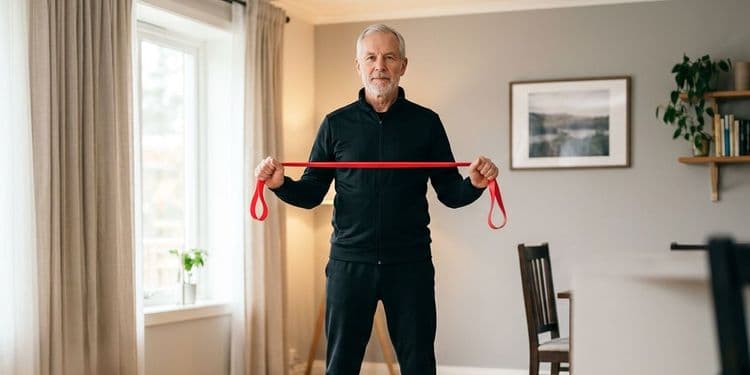
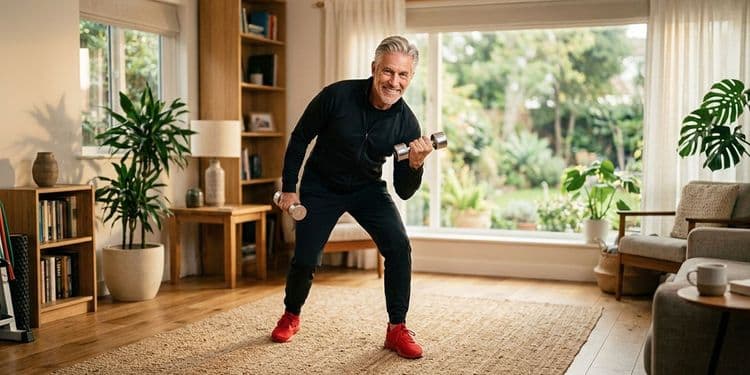
You can add light bands or hand weights once these specific exercises feel comfortable. Building strength in the major muscle groups is part of healthy aging.
Stretching Exercises to Improve Flexibility
Gentle stretching exercises can help in maintaining flexibility and reducing stiffness. Mobility exercises are essential to maintain agility and flexibility. They help make everyday tasks more manageable and enjoyable.
Neck Stretches
Sit tall and slowly tilt your head toward your right shoulder, then your left. Hold each side for 15-20 seconds. Don't rush and never force the stretch.
Shoulder Rolls
Roll your shoulders forward 10 times, then backward 10 times. Squeeze your shoulder blades together gently at the end of each backward roll. Shoulder rolls loosen the upper body and help relieve tension in the neck and shoulders.
Ankle Circles
Sit and lift one foot off the floor. Slowly rotate your ankle in circles, 10 in each direction. Switch feet. Your ankles will gain mobility and your walk will get steadier.
Seated Forward Fold
Sit with both feet resting on the floor. Slowly lean forward from the hips and gently pull your hands toward your shins or feet. Hold for 20 seconds. Forward fold supports flexibility through the back muscles and hamstrings.
Cat-Cow Stretch
On all fours (or seated, if more comfortable), arch your back upward carefully, then slowly let it dip downward. Move with your breath. Tension along the spine eases and back mobility returns.
Stretch only to a point of mild tension, never pain. Hold each position calmly while breathing deeply.
Balance Exercises for Fall Prevention
Balance exercises, such as standing on one leg and walking heel to toe, are vital for older adults because balance naturally declines with age. Doing balance training at least three days a week helps you improve balance over time and supports fall prevention. Incorporating exercises that strengthen the back, abdomen, and leg muscles not only builds strength but also helps you improve balance, making it easier to perform daily activities safely and improving the quality of life.
Single-Leg Stand
Stand behind a chair, holding the back lightly. Lift your right foot just off the ground and stand on the other leg for 10-15 seconds. Switch legs. As you build confidence, try holding for 30 seconds without the chair.
Heel-to-Toe Walk
Walk in a straight line by placing the heel of one foot directly in front of the toes of the other. Take 10-15 careful steps. Heel-to-toe wal improves coordination and steadies your gait.
Side Steps
Stand with feet hip width apart. Step your right foot to the side, then bring your left foot to meet it. Take 10 steps in one direction, then 10 in the other. The goal of this exercise is to build lateral steadiness and leg strength.
Tai Chi Movements
Tai chi is known for significantly improving stability and is often referred to as "meditation in motion." Even a few simple movements practiced regularly can build steadiness and a calm, focused mind. The slow practice also relieves body tension.
The MadMuscles app includes a Tai Chi Walking program, a low-impact, mindful walking practice based on these principles. It is a gentle way to combine balance work and aerobic activity in one session. Explore how to change your workout type.
Aerobic Exercise Options for Seniors
Strive for 30 minutes of aerobic exercise five days a week. Include options like brisk walking, swimming, water aerobic, or cycling. Regular aerobic activity supports cardiovascular health and helps lower blood pressure. You stay physically active without stressing the joints. The CDC also notes that 75 minutes a week of vigorous intensity activity, such as jogging, can give similar health benefits if it suits your level. For most older adults, moderate aerobic activity is enough, while vigorous intensity activity is optional.
Low-impact activities, such as swimming or using an elliptical machine, are easier on the joints: they minimize pressure on the knees and hips. Water aerobics is another excellent option. The AEA Arthritis Foundation Aquatic Program is a recreational group exercise program conducted in warm water. It was designed to improve mobility, muscle strength, and functional ability for seniors. Water aerobics is also a kind way to begin physical activity when joints feel stiff.
Other gentle aerobic exercise ideas include:
Brisk walking around the neighborhood at a comfortable pace
Stationary cycling or a recumbent bike
Dancing to favorite music at home
Tai chi walking for low-impact mindful movement
Group aerobic activity classes designed for older adults
Regular aerobic activity is one of the most powerful tools for healthy aging. It helps reduce the risk of heart disease and supports a healthy weight. It brings indispensable benefits for both body and mind.
Chair Exercises for Limited Mobility
Chair exercises like seated marches or seated leg lifts are effective alternatives for enhancing balance for individuals who cannot stand for long periods. A seated workout routine is a safe, friendly way to stay active and continue your fitness journey.
Try these chair-based exercises:
Seated Marches: Lift one knee at a time, alternating, for 1 minute
Seated Leg Lifts: Extend one leg straight out, hold 2 seconds, then slowly lower
Seated Arm Circles: Make small circles with arms, both directions, 30 seconds each
Seated Side Bends: Reach one arm overhead, lean gently to the side, alternate
Seated Toe Taps: Tap toes up and down to activate the lower leg muscles
The MadMuscles app offers a Chair Tai Chi program that brings the calm and steadiness of this practice into a fully seated session. It is well suited for anyone who prefers to sit during exercises.
Cool Down Exercises After Each Session
End every workout with 5 minutes of cool down exercises and gentle stretching. Cooling down helps your heart rate return to normal slowly and supports muscle recovery.
A simple cool down routine includes:
Slow walking for 1-2 minutes to ease the heart rate
Standing or seated forward fold (15 seconds)
Gentle shoulder rolls (30 seconds)
Slow deep breathing with eyes closed (1 minute)
Decrease your activity level slowly instead of stopping suddenly. You will protect your heart and feel calm and centered.
Adapting the Plan to Your Fitness Level
This exercise plan for seniors is flexible. You can adjust each session to match your energy and ability:
Lower energy days: Reduce sets or use the seated version of each exercise
Higher energy days: Add a few more reps or longer holds
Building strength: Slowly add resistance bands or hand weights
Improving steadiness: Try standing exercises without holding the chair
There are also supportive exercise programs you might explore. EnhanceFitness is a low-cost, adaptable exercise program for older adults that includes stretching, flexibility, balance work, low-impact aerobics, and strength training. The Geri-Fit program is a progressive resistance strength training exercise program designed to increase strength, flexibility, range of motion, mobility, and balance for seniors. Tai Chi for Arthritis and Falls Prevention is another option that aims to improve movement, strength, flexibility, and relaxation, while decreasing pain and working on fall prevention. These exercise programs all support an active lifestyle in older adults.
Tracking Progress and Staying Active
Small, steady progress is the goal. Notice how getting up from a chair feels easier, how your shoulders feel less tight, how a flight of stairs feels lighter, and how happier you feel. These are real signs that fitness improves.
Helpful ways to stay consistent over time:
Mark each session on a calendar or fitness app
Set small, kind goals for the week instead of big monthly ones
Share your progress with a friend or family member
Celebrate consistency over perfection
Reward yourself with something pleasant after every full week
The MadMuscles app tracks your workouts, your progress, and your weekly stats so you can see how far you have come on your fitness journey.
Common Mistakes to Avoid
Skipping the warm-up. Cold muscles are less flexible and more prone to strain. Always start with 5 minutes of light movement.
Pushing through pain. Mild discomfort is normal when starting a new exercise program. If you experience pain, stop and rest.
Holding your breath. Breathe steadily during every exercise. Exhale on effort, inhale on release.
Doing too much too soon. Build up gradually. A light pace today supports stronger workouts next month.
Forgetting to cool down. Cool down exercises help your heart and muscles recover after physical activity.
Skipping rest days. Rest is essencial part of progress. Your muscles repair and grow stronger between sessions.
Comparing yourself to others. Everyone has their own pace. Focus on your own progress and well being.
Tips for Building an Active Lifestyle
Make exercise a daily habit, even if only 10 minutes a day
Pair workouts with something pleasant like music or a podcast
Stay hydrated and eat balanced meals to support recovery
Join a class or walking group for social motivation
Keep your chair and resistance bands in a visible spot
Build an active lifestyle around small, joyful habits
Active Choices is a six-month physical activity program that helps seniors incorporate preferred physical activities into their daily lives, providing individualized support and guidance. The same idea works at home: choose the physical activity you enjoy and let consistency follow naturally.
How MadMuscles Helps Seniors Stay Active
MadMuscles is a personalized fitness app that builds an exercise program around your level, goals, and preferences. For older adults, it offers gentle exercise routines, stretching, chair-based programs, and tai chi sessions, all guided by clear video demonstrations.
You can choose:
Simple home workouts for seniors with low-impact movement
Chair workouts for limited mobility
Tai chi walking for low-impact balance work
Stretching and mobility programs for daily flexibility
Gentle strength training using your own body weight
Each session adjusts based on your feedback. If a workout feels too easy, the app makes the next one more challenging. If something feels too hard, the intensity backs off. This keeps you progressing safely while you stay active. Learn about MadMuscles premium access.
Start Your Exercise Plan for Seniors Today
You now have a complete weekly routine that brings together strength training, stretching, balance work, and aerobic exercise in a way that fits real life. Each workout is short and built around safety and comfort.
The most important step is the first one. Pick a day this week, follow the warm-up, and try one of the simple exercise routines from this plan. Small steps build the kind of strength and steadiness that supports a healthy and active future.
The MadMuscles app is here to walk with you. With personalized exercise programs, video guidance, and progress tracking, it helps you stay consistent without pressure. Explore the MadMuscles guides and printable workouts and start your journey to a healthy life today.