
How This Calisthenics Exercises List Works
Most lists dump a hundred moves on you and quit. This one is sorted by the muscle group the moves hit hardest. You can see what trains your chest, back, legs, and core and pull one or two from each group into a session. No gym, no machines, just your body weight and a bit of floor space.
Calisthenics is bodyweight training: your own body weight provides the resistance. New to the idea? The full guide to what calisthenics is covers the basics. Every entry below follows the same shape: a quick note on what the move trains and how to do it, a line with sets and reps, and then a way to make it harder. Different muscle groups, one simple format.
How to Use This Bodyweight Training List
Pick the version of each move you can do with clean form, not the hardest one you can survive. Match your pushing volume to your pulling volume, work the major muscle groups in one session, and give any muscle group 24 to 72 hours before you work it hard again. That recovery window is when strength shows up, so each bodyweight exercise here trains your entire body without burning you out.
Warm Up First
Five minutes of easy movement before you train saves weeks on the sidelines. Run this, then add a few light reps of whatever move you are about to do.
Warm-Up Move | Time | What It Preps |
Jumping jacks | 30 sec | Heart rate |
Arm circles, forward and back | 30 sec | Shoulders |
Leg swings, each leg | 30 sec | Hips |
Bodyweight squats, light | 30 sec | Knees and hips |
Wrist circles and rocks | 30 sec | Wrists for planks and presses |
Scapular pull-ups or dead hang | 30 sec | Pulling muscles |
Brand new to all this? Start with the how to start calisthenics guide and check whether MadMuscles has workouts built for beginners before you load up the harder moves.
Chest and Triceps: Push-Ups and Dips
Push-ups are the foundation of upper body calisthenics. They train your chest, shoulders, and triceps at once and stimulate multiple muscle groups. Think you need a bench press for a strong chest? You do not. Acording to an eight-week study, push-up training at a matched load builds muscle and strength comparable to the bench press. That is real upper body strength from the floor, and progressions keep it going for years.
Standard Push-Ups
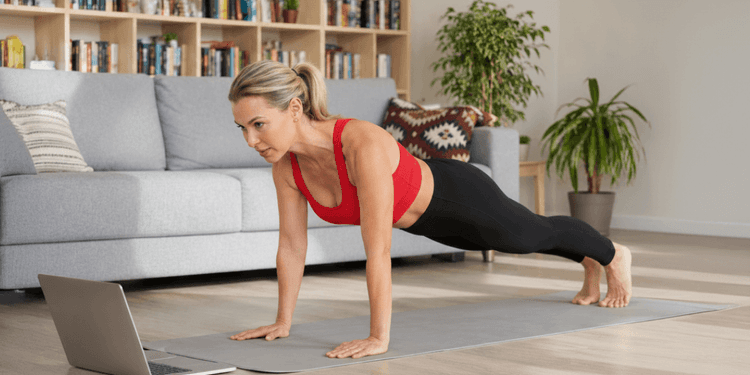
Standard push-ups train your chest, shoulders, and triceps while your core muscles hold a straight line. Hands slightly wider than shoulder-width, feet planted, brace head to heels. Lower your chest with elbows tucked near 45 degrees, then press up without letting your hips sag.
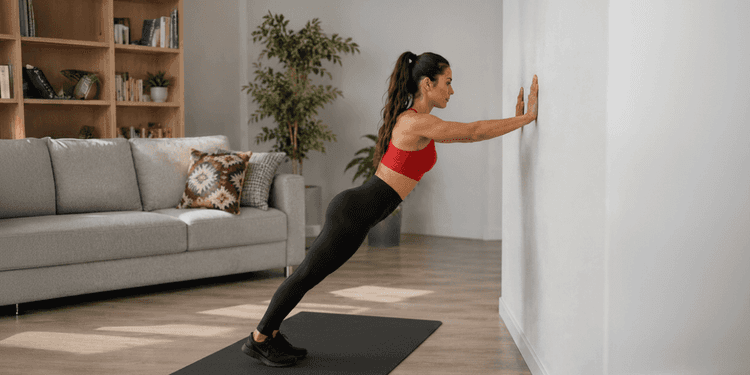
3 sets of 8 to 15 reps. Too hard? Hands on a wall or bench first.
Incline Push-Ups
Incline push-ups raise your hands onto a bench or step to take weight off your arms. Same straight body, easier angle, ideal for building pressing strength before the floor version.
3 sets of 8 to 12 reps. Drop to a lower surface each week until you are flat.
Decline Push-Ups
Decline push-ups put your feet on a chair, shifting more body weight onto your upper body and loading the upper chest and shoulders. Keep your midsection tight so your lower back does not dip.
3 sets of 8 to 12 reps. Raise your feet higher to make it tougher.
Diamond Push-Ups
Diamond push-ups bring your hands together under your chest into a triangle, hammering your triceps and inner chest. Keep your elbows close to your ribs all the way down.
3 sets of 6 to 12 reps. Elevate your feet for more load.
Archer Push-Ups
Archer push-ups bridge toward the one-arm push-up. Hands wide, lower toward one side while the far arm stays nearly straight, so one arm does most of the work. Push to center and alternate.
3 sets of 5 to 8 reps each side. Straighten the support arm more to near a true one arm push-up.
Bench Dips
Bench dips train your triceps and chest off a chair. Sit on the edge, hands beside your hips, slide off the front, lower until your elbows reach 90 degrees. Keep your shoulders down, away from your ears.
3 sets of 8 to 12 reps. Straighten your legs out to add load.
Parallel Bar Dips
Parallel bar dips are heavy hitters of bodyweight pushing. Support yourself on two bars with locked arms, lean forward for chest or stay upright for triceps, and lower until your shoulders drop below your elbows. Press back up with control.
3 sets of 6 to 10 reps. Add a weighted vest once bodyweight reps feel easy.
Shoulders: Pike Push-Ups to Handstand Push-Ups
Press your body weight overhead and you build the shoulder muscles and upper body pressing power. These moves also prep you for the handstand.
Pike Push-Ups
Pike push-ups turn a push-up into a vertical press. Start in a downward dog, hips high, body in an upside-down V. Bend your elbows to lower your head between your hands. Pike push-ups build the shoulders that handstand push-ups demand.
3 sets of 6 to 10 reps. Put your feet on a box to stack more weight overhead.
Wall Handstand Push-Ups
Wall handstand push-ups give you the inverted press without the balance. Kick up chest to the wall, hands shoulder-width. Lower your head under control, then press to locked arms.
3 sets of 3 to 8 reps. Start with slow negatives if a full rep is out of reach.
Handstand Push-Ups
Freestanding handstand push-ups pair a press with full balance. Hold a handstand, lower your head to the floor, press back up, body straight and core tight. Most people earn this after months of wall work.
3 sets of 2 to 5 reps. Build wrist strength and long handstand holds first.
Planche Push-Ups
Planche push-ups are a straight-arm press where your whole body floats parallel to the floor on your hands alone, no feet. Pseudo planche push-ups, hands by your hips and torso leaning far forward, are the realistic start. They build the strength the full planche push-ups need.
3 sets of 4 to 8 reps of the pseudo planche push-ups. The full version is a long-term skill.
Back and Biceps: Pull-Ups and Rows
Pull exercises work on your back, biceps, and grip strength. Most people pull weaker than they push, so give pull-ups real attention. Everything here hangs off a pull-up bar, rings, or a low bar for rows. Match your pulling volume to your pushing volume, and your shoulders will stay healthy.
Pull-Ups
Pull-ups are the backbone of upper body calisthenics, hitting your lats, biceps, and upper back. Grip the bar wider than your shoulders, palms away, hang with locked arms. Pull until your chin clears the bar. Lower with control. No swinging.
3 sets of 5 to 10 reps. No pull-ups yet? Use a band or do slow pull-up negatives from the top.
Chin-Ups
Chin-ups flip your grip palms-toward-you, pulling your biceps deep into the lift more than pull-ups do. Same vertical path, friendlier angle for a first rep. Many people get chin-ups before pull-ups.
3 sets of 5 to 10 reps. Add weight once you clear 12 clean chin-ups.
Scapular Pull-Ups
Scapular pull-ups teach the shoulder blades to work before your arms bend. Hang with straight arms, pull your shoulder blades down and together to raise your body an inch, no elbow bend. This protects your shoulders and starts every good pull-up.
3 sets of 8 to 12 reps. Pause a second at the top with your shoulder blades pulled down.
Australian Pull-Ups
Australian pull-ups, or inverted rows, are horizontal pulls you scale by body angle. Set a bar at hip height. Hang underneath in a straight line. Pull your chest to the bar. Squeeze your shoulder blades. The flatter you lie, the harder it gets.
3 sets of 8 to 12 reps. Elevate your feet to load it more.
Wide-Grip Pull-Ups
Wide-grip pull-ups widen your hands to bias the outer lats and upper back. Slightly shorter range, more demand on the big back muscles. Chest proud, no shrugging up to your ears.
3 sets of 5 to 8 reps. Pause at the top to kill momentum.
Archer Pull-Ups
Archer pull-ups load one arm at a time toward the one-arm pull-up. Pull toward one hand while the other arm stretches straight along the bar as a light assist. Alternate sides.
3 sets of 3 to 5 reps each side. Straighten the assist arm more to shift load to the working arm.
Typewriter Pull-Ups
Typewriter pull-ups keep your chin over the bar while you slide side to side like a carriage. Pull up, shift right until the right arm bends and the left straightens. Return to center. Slide left. Brutal on the lats and grip strength.
3 sets of 5 reps each side. Slow the slide to make it harder.
Commando Pull-Ups
Commando pull-ups put one hand in front of the other along the bar, pulling your head to alternating sides. The offset grip lights up your biceps and makes your core fight the rotation.
3 sets of 5 to 8 reps total. Alternate which side clears the bar.
Muscle-Ups
Muscle-ups are the headline skill of the bar: one explosive move that pulls you up and over into a dip on top. A muscle-up combines pulling and pushing strength, so you need a fast pull-up plus a clean transition. Most people train muscle-ups after a strong chest-height pull-up.
3 sets of 3 to 5 muscle-ups. Train the pull and the dip separately, then join them into the muscle-up.
Core Exercises for Strength and Body Control
Core exercises build the abdominal muscles and deep stabilizers that keep your spine safe and pass force between your upper body and legs. A strong core is what gives advanced calisthenics its body control. These holds, the plank and the L-sit among them, climb from simple to full-body tension.
Plank
The plank is the entry point for core strength and full body tension. Forearms down, elbows under your shoulders, legs extended behind you. Hold a dead-straight line head to heels without sagging or piking. Brace your core muscles like someone is about to push you.
3 sets of 30 to 60 seconds. Lift one foot to make it harder.
Hollow Body Hold
The hollow body hold is the gymnastics shape behind almost every skill. On your back, press your lower back into the floor, lift your shoulders and legs a few inches, arms overhead, body like a shallow banana. This is the full body tension levers and handstands run on.
3 sets of 20 to 40 seconds. Keep your legs straight and arms overhead for the full version, tuck your knees if it is too much.
L-Sit
The L-sit is a hold where you support the whole body on your hands and lift your legs out in front into an L. The L-sit torches your abdominal muscles, hip flexors, and triceps together. Start on the floor or parallel bars with knees tucked.
3 sets of 10 to 20 seconds. Extend your legs fully to move from a tucked L-sit to a full L-sit.
Hanging Leg Raises
Hanging leg raises build lower-ab strength through a range the floor cannot match. Hang from a bar, raise your legs with control until your toes reach the bar. Lower slowly so you do not swing.
3 sets of 8 to 12 reps. Bend your knees if straight legs are too hard, then straighten them.
Dragon Flag
The dragon flag is one of the hardest core moves in calisthenics, which became popular thanks to Bruce Lee. On a bench, grip behind your head, raise your whole body until only your shoulders touch, then lower in one rigid line without folding at the hips.
3 sets of 5 to 8 reps. Tuck your knees to shorten the lever while you build strength.
Skin the Cat
Skin the cat is a rings or bar move that builds shoulder mobility and core control at once. Hang with locked arms, tuck your knees, roll backward through your shoulders until your body inverts and folds behind you, then reverse under control. Skin the cat rewards patience, so go slow.
3 sets of 3 to 5 slow skin the cat reps. Keep the range small first, open up as your shoulders loosen.
Legs: Squats, Lunges, and Single-Leg Strength
Leg exercises in calisthenics develop your quads, hamstrings, glutes, and calves, climbing from two-leg basics to single-leg strength that rivals barbell work. Pistol squats wait at the top. No rack needed.
Bodyweight Squats
Bodyweight squats are the foundation of lower body training. Feet about shoulder-width, push your hips back, bend your knees until your thighs hit parallel, chest up, weight on your heels. Drive up through the floor.
3 sets of 15 to 25 reps. Slow the lowering to three seconds to make light squats burn.
Jumping Squats
Jumping squats add power to the squat. Drop into a squat. Explode straight up off the floor. Land soft with knees slightly bent. Reset before the next jump. They build explosive strength your slow reps miss.
3 sets of 10 to 12 reps. Pause at the bottom before each jump to remove momentum.
Bulgarian Split Squats
Bulgarian split squats put one foot back on a chair so the front leg does the work, exposing strength gaps between your legs. Lower until your front thigh is parallel and your back knee dips low, then drive up through the front heel.
3 sets of 8 to 12 reps per leg. Hold a loaded backpack for extra resistance.
Step-Ups
Step-ups look simple and crush the glutes and quads. Plant one full foot on a sturdy box, drive through that heel to stand all the way up, then lower under control instead of dropping back down.
3 sets of 10 to 15 reps per leg. Raise the box or hold weight to push the legs harder.
Pistol Squats
The pistol squat is the gold standard of single-leg calisthenics: a full squat on one leg while the other stays out in front. Pistol squats demand strength, balance, and ankle mobility together. Most people build up with assisted pistol squats holding a doorframe.
3 sets of 5 to 8 reps per leg. Hold a light weight in front as a counterbalance if you tip back.
Calf Raises
Calf raises fill the gap squats and lunges leave behind. Stand on a step edge. Drop your heels below it for a full stretch. Press up onto your toes and squeeze at the top. Pair them with Nordic curls for the back of your legs.
3 sets of 15 to 20 reps. Do them one leg at a time to double the load.
Advanced Calisthenics Skills for Every Muscle
These advanced calisthenics skills fill your feed: levers, the planche, the human flag. They reward years of patient practice, not weeks. Each is a straight-arm or full-body hold demanding real strength and the body control built by the basics. From muscle-ups to the planche, these calisthenics skills never come fast.
Why These Advanced Exercises Take Time
Advanced exercises load your joints and tendons in ways your muscles outpace by months. Connective tissue strengthens slowly, so rushing these advanced exercises leads to injuries instead of progress. Earn ten clean pull-ups and a solid handstand before the holds below.
Ring Support Hold
The ring support hold is the first skill on gymnastic rings and the gateway to ring dips and muscle-ups. Press to the top of a ring dip, lock your arms, turn the rings slightly out, hold tall and steady. Rings wobble, so ring support builds stabilizers a fixed bar never touches.
3 sets of 10 to 30 seconds. Shoulders down, rings turned out, building toward your first muscle-up.
Front Lever
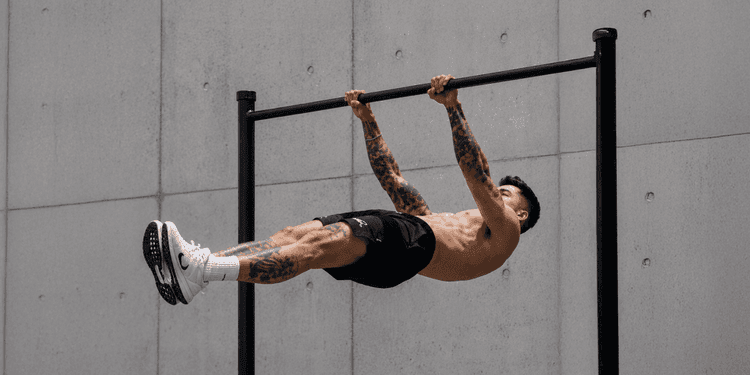
The front lever is the signature pulling skill: hang from a bar and pull your whole body up until it floats horizontal and face-up, arms straight, in a rigid line. It builds huge lat, core, and straight-arm strength, and nobody gets it without the progression. Begin with the tuck front lever, knees to chest, back parallel to the floor. Then the advanced tuck front lever opens the hips, the straddle front lever spreads the legs to lighten the load, and the full front lever holds with legs together. Front lever rows, pulling your chest to the bar from a tuck or straddle front lever, build the pulling power the hold needs.
3 sets of 10 to 15 seconds in the hardest front lever progression you can hold clean. Advance only when your current front lever stays dead straight.
Back Lever
The back lever mirrors the front lever: hang, rotate backward through your shoulders, hold horizontal and face-down with straight arms. It loads the shoulders and biceps in a deep stretch, so ease in. The back lever often comes sooner than the front lever. Work the tuck back lever, then the straddle back lever, then the full back lever with straight legs.
3 sets of 8 to 15 seconds. Arms locked, shoulders open through each back lever hold.
Planche
The planche is the push answer to the front lever: your whole body parallel to the ground, face-down, balanced on your hands with straight arms, nothing on the floor. It is one of the hardest calisthenics skills and longest projects in calisthenics, often years through the tuck planche, straddle planche, and full planche. Pseudo planche push-ups and planche leans build the forward shoulder strength it needs.
3 sets of 5 to 15 seconds in your hardest clean planche progression. Build wrist strength first.
Human Flag
The human flag stops people mid-scroll: grip a vertical pole, press with the top arm, pull with the bottom, hold sideways like a flag in the wind. The human flag needs a strong core plus shoulder and grip strength. Train it with vertical pole holds and flag raises into the human flag.
3 sets of 5 to 10 seconds. Tuck your knees to shorten the lever toward a straight-body human flag.
One-Arm Pull-Up and Advanced Movements
The one-arm pull-up is the peak of bodyweight pulling: one arm hauls your whole body to the bar. The one-arm chin-up, palm facing you, usually comes first because the biceps assist more. Both need brutal grip strength and lats forged through archer pull-ups, typewriter pull-ups, and weighted pull-ups. These advanced movements take years, so use a towel or one finger of a free hand to assist the one arm version.
3 sets of 2 to 4 reps per arm at assisted one-arm pull-ups. Train the one-arm chin first, then the one arm pull-up.
Want the high-volume, military-style spin? The Military Calisthenics program pushes endurance and discipline once your base is solid.
How to Fit These Into Your Calisthenics Training
A list of calisthenics exercises only helps once it becomes a routine. Balance the four jobs, push, pull, legs, and core, across your week, match your push-up volume to your pull-up volume, and give every muscle group its 24 to 72 hours before the next hard session. That is smart calisthenics training for you.
Beginners thrive on three full-body days: one push, one pull, one squat, one core hold like the L-sit, two or three sets each. Stronger lifters split into upper and lower days, or run a push, pull, legs rotation that balances pull-ups against push-ups across different muscle groups each session. For a day-by-day map, the 30-day beginner plan and the routine guide for every level lay it out.
A Simple Push, Pull, Legs Split
Day | Focus | Sample Moves |
Day 1 | Push | Push-ups, parallel bar dips, decline push-ups |
Day 2 | Pull | Pull-ups, Australian pull-ups, scapular pull-ups |
Day 3 | Legs and core | Bodyweight squats, pistol squats, plank, L-sit |
Days 4 to 6 | Repeat or rest | Rotate the cycle, or take a full rest day |
Equipment: Pull-Up Bar, Parallel Bars, and Rings
You can train most of these calisthenics exercises with zero gear. Push-ups, squats, planks, and lunges need only floor space. It is the whole point of the no-equipment beginner workout. A pull-up bar opens up the entire pull column for pull-ups, chin-ups, and rows, so buy that first. Parallel bars, or two solid chairs, open up dips and L-sits. Gymnastic rings are the most versatile piece you can own, adding ring support work, ring dips, rows, and muscle-up training for clean muscle-ups with shoulder-friendly rotation.
If your MadMuscles plan lists gear you lack, here is why a calisthenics plan includes equipment and what equipment you actually need.
Calisthenics, Strength, and Body Composition
Calisthenics is real strength training, not a warm-up. Two studies put the push-up against the bench press. Progressive calisthenic push-up training over four weeks raised strength and muscle thickness comparably to bench pressing in trained men, and the eight-week load-matched study found similar muscle growth between push-ups and the bench press. Stack progressive overload through harder variations and you keep building for years. Skills like muscle-ups scale the same way.
What about fat loss and body composition? Bodyweight training and the bodyweight exercises on this list burn calories and build lean muscle, which improves body composition over time. Every bodyweight exercise works multiple muscle groups and your entire body at once. Be honest though: no exercise spot-reduces fat, and you cannot crunch your way to visible abs. Real body composition change comes from training plus a calorie deficit and enough protein, not any single move on this list.
Common Mistakes to Avoid
Skipping the pull column. Push-ups feel easy, pull-ups feel hard, so people do triple the pushing. That imbalance rounds your shoulders forward and breeds pain. Match pull volume to push volume.
Rushing progressions. Jumping to archer pull-ups before ten clean pull-ups just drills sloppy form. Stay on a variation until you hit the top of its rep range with two or three reps left.
Training to failure every session. Skill work, the levers and the planche, must stay crisp. Grinding advanced skills to failure is how you tweak a shoulder.
Ignoring rest. Muscle grows on rest days, not during the workout. If your plan gives you a rest day, take it. And if something sharp shows up, back off and read what to do about an injury before you push through.
Skipping the warm-up. Five minutes of jumping jacks, arm circles, and wrist prep keeps you training instead of healing.
Build Your Plan and Start Today
Want all of this turned into a plan that fits your level, your time, and your gear? MadMuscles builds you a personalized calisthenics program in a few minutes. Take the quick quiz and you get video demos, voice guidance, and automatic progression that bumps the difficulty as you get stronger. You can switch your workout type to Calisthenics any time, or grab the printable workout guides to take with you.
Pick one move from each muscle group above and train it today. The first set is the only hard part.